This learning resource is available in interactive and printable formats. The interactive worksheet can be played online and assigned to students. The Printable PDF version can be downloaded and printed for completion by hand.
This passage examines the 'Era of Good Feelings,' a period often described as a time of national unity and harmony in U.S. history. Students will explore the underlying complexities, including the rise of sectionalism, the decline and transformation of political parties, and the ways in which the myth of unity was both created and challenged. The passage analyzes multiple perspectives, integrates a primary source quote, and supports historical reasoning with evidence. Activities include a comprehension quiz, writing prompts, a graphic organizer, and a timeline of key events. This resource aligns with C3 Framework (D2.His.2.3-5, D2.His.3.3-5) and Common Core standards (RI.4.3, RI.4.4, W.4.2), and includes a Spanish translation and read aloud audio for accessibility. Key vocabulary is highlighted and defined to support academic language development. Ideal for students seeking to deepen their understanding of this pivotal era in American politics.
CONTENT PREVIEW
Expand content preview
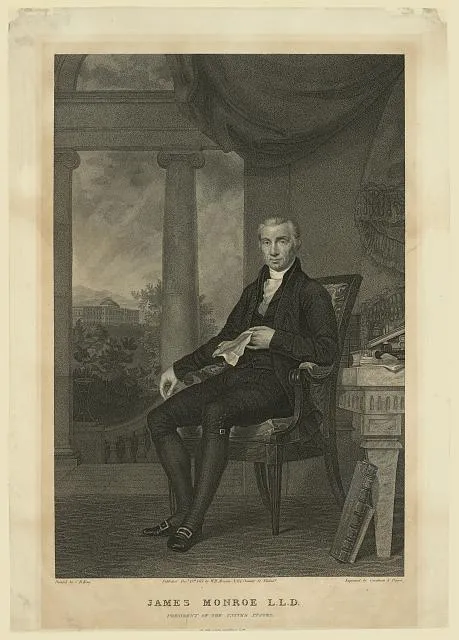
"James Monroe, L.L.D., President of the United States" by King, Charles Bird, 1785-1862 / Library of Congress.
The Era of Good Feelings was a unique period in United States history that lasted from 1817 to 1825. During these years, James Monroe served as the nation’s fifth president. The country experienced a sense of national unity and political harmony, with only one major political party, the Democratic-Republicans, holding most of the power. This political calm was unusual, especially compared to earlier years filled with heated debates between Federalists and Democratic-Republicans.
The nation’s prosperity grew during this era. The War of 1812 had recently ended, and Americans began to feel more confident about their future. As industries expanded and new factories were built, the United States became less dependent on foreign goods. This growth in manufacturing created new jobs and helped the economy. Improved infrastructure, such as roads and canals, also made it easier to move people and goods across the country, supporting even more economic development.
Another key feature of the Era of Good Feelings was the rise of nationalism. Citizens began to see themselves as Americans first, rather than identifying mainly with their home state. This pride was strengthened by victories in the War of 1812 and by major achievements, such as the construction of the Erie Canal. The federal government worked to protect U.S. industries through tariffs—taxes on imported goods designed to encourage people to buy American products.
However, the period was not free from problems. While surface-level unity seemed strong, serious differences remained beneath it. Regional tensions grew, especially between the North and South. The North’s economy was becoming more industrial, while the South depended heavily on agriculture and slavery. These differences led to debates over new territories and whether they would allow slavery. The Missouri Compromise of 1820 was one attempt to solve this issue by balancing free and slave states, but it only provided a temporary solution.
Territorial expansion was another hallmark of the era. The United States acquired Florida from Spain in 1819 through the Adams-Onís Treaty. At the same time, Americans began moving westward, settling land that had previously been home to Native American nations. This westward push brought new opportunities but also conflicts, especially for indigenous peoples who were forced to leave their lands.
The Era of Good Feelings ultimately laid the groundwork for future growth, but it also set the stage for conflicts that would become more intense over time. The period’s legacy includes both the strengthening of national identity and the growing sectionalism that would eventually lead to the Civil War. By looking carefully at both the successes and challenges of this era, historians can better understand how the United States developed as a nation.
Interesting Fact: The phrase “Era of Good Feelings” was first used by a newspaper reporter after President Monroe’s goodwill tour of New England in 1817.
Who was president during the Era of Good Feelings?
James MonroeJohn AdamsAndrew JacksonThomas Jefferson
What was a major result of prosperity?
More factories and jobsEnd of the Civil WarCreation of the Bill of RightsA new capital city
Which treaty gave Florida to the U.S.?
Adams-Onís TreatyTreaty of ParisMissouri CompromiseLouisiana Purchase
Why did tariffs help U.S. factories?
Made American goods cheaperBanned foreign goodsEnded westward expansionBuilt more schools
What was the Missouri Compromise about?
Balancing free and slave statesBuilding the Erie CanalMaking new tariffsEnding the War of 1812
How did nationalism change the U.S.?
More pride in being AmericanMore political partiesLess trade with EuropeA smaller government
The Era of Good Feelings lasted from 1817 to 1825.
TrueFalse
What does 'prosperity' mean in this passage?
Wealth and successFighting in warsWriting new lawsLosing territory
Perfect For:
👩🏫 Teachers
• Reading comprehension practice
• Auto-graded assessments
• Literacy skill development
👨👩👧👦 Parents
• Reading practice at home
• Comprehension improvement
• Educational reading time
🏠 Homeschoolers
• Reading curriculum support
• Independent reading practice
• Progress monitoring
Reading Features:
📖
Reading Passage
Engaging fiction or nonfiction text
❓
Comprehension Quiz
Auto-graded questions
📊
Instant Feedback
Immediate results and scoring
📄
Printable Version
Download for offline reading
🔊
Read Aloud
Voice-over with word highlighting
Reviews & Ratings
No reviews yet. Be the first to share your experience!
Related Content
Native American Tribes Across America
This engaging history reading passage introduces students to Native American tribes across America, focusing on their da...
D2.HIS.1.3-5D2.HIS.2.3-5RI.4.1RI.4.2
Teepees: Homes on the Great Plains
This engaging history reading passage introduces students to teepees, the unique homes of Native American tribes on the ...
D2.HIS.2.3-5D2.HIS.14.3-5RI.4.1RI.4.2RI.4.4
Traditional Native American Clothing
This engaging history passage explores traditional Native American clothing and how it reflected the environment, values...
D2.HIS.2.3-5D2.HIS.3.3-5RI.4.3RI.4.4
The Iroquois Confederacy: A System of Peace
This engaging U.S. History reading passage introduces students to the Iroquois Confederacy, a powerful alliance of Nativ...
D2.HIS.2.3-5D2.HIS.3.3-5RI.4.3RI.4.4
The Cherokee Nation: History and Culture
This reading passage explores the rich history and culture of the Cherokee Nation, one of the largest Native American tr...
D2.HIS.2.3-5D2.HIS.14.3-5RI.4.3RI.4.4RI.4.10
The Sioux: Warriors and Tribal Leaders
This history reading passage explores the Sioux Nation, focusing on their roles as warriors and tribal leaders. Students...
D2.HIS.1.3-5D2.HIS.2.3-5RI.4.1RI.4.3
Native American Respect for Nature
This engaging history reading passage explores Native American respect for nature, emphasizing the close relationship be...
D2.HIS.2.3-5D2.HIS.3.3-5RI.4.3RI.4.4
Jamestown: The First Permanent English Colony
This engaging history passage explores the founding of Jamestown, the first permanent English colony in America. Aligned...
D2.HIS.1.3-5D2.HIS.2.3-5RI.4.3RI.4.4
Pocahontas and the Powhatan People
This engaging reading passage explores the life of Pocahontas and the Powhatan people and their important role in early ...
D2.HIS.1.3-5D2.HIS.2.3-5RI.4.1RI.4.3
Colonial Children: School and Chores
This reading passage explores the daily lives of colonial children, focusing on their experiences at school and their ma...
D2.HIS.2.3-5D2.HIS.3.3-5RI.4.1RI.4.2RI.4.4
Colonial Clothing and Homemade Goods
This engaging U.S. history passage explores the daily life of early American colonists with a focus on colonial clothing...
D2.HIS.2.3-5RI.4.3RI.4.4
Colonial Jobs: Blacksmiths, Bakers, and Craftsmen
This engaging history reading passage explores the vital roles of blacksmiths, bakers, and craftsmen in colonial America...
D2.HIS.2.3-5D2.HIS.3.3-5RI.4.3RI.4.4
Colonial Towns and Village Life
This engaging history reading passage explores the daily life, work, and unity found in colonial towns and villages. Ali...
D2.HIS.1.3-5D2.HIS.2.3-5RI.4.3RI.4.4
Colonial Trade with England and Africa
This history reading passage explores colonial trade between the American colonies, England, and Africa, focusing on the...
D2.HIS.2.3-5D2.HIS.14.3-5RI.4.3RI.4.4
Benjamin Franklin: Printer, Inventor, and Leader
This history reading passage explores the life and achievements of Benjamin Franklin, one of America's most important ea...
D2.HIS.2.3-5D2.HIS.3.3-5RI.4.1RI.4.3
George Washington Leads the Army
This engaging history reading passage explores how George Washington bravely led the Continental Army during the America...
D2.HIS.1.3-5D2.HIS.2.3-5RI.4.3RI.4.4
Women and Children During the Revolutionary War
This reading passage explores the important roles women and children played during the Revolutionary War. Students will ...
D2.HIS.2.3-5RI.4.3RI.5.3
African Americans Fight for Freedom
This educational passage explores the brave and inspiring story of how African Americans fought for freedom in the Unite...
D2.HIS.2.3-5D2.HIS.3.3-5RI.4.3RI.4.4
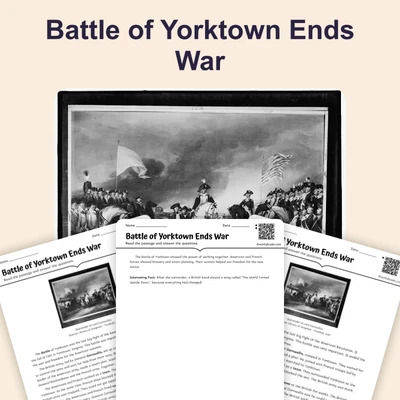
The Battle of Yorktown Ends War
This engaging U.S. history reading passage explores the Battle of Yorktown, a key event that ended the American Revoluti...
D2.HIS.1.3-5D2.HIS.2.3-5RI.4.1RI.4.3
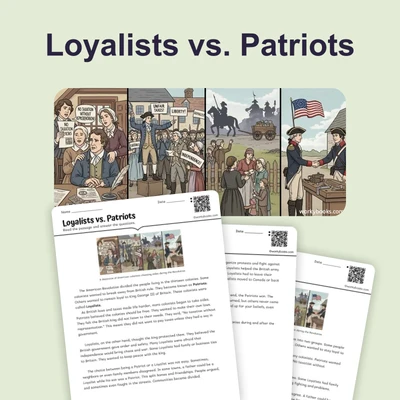
Loyalists vs. Patriots: Divided Families
This engaging U.S. history reading passage explores the division between Loyalists and Patriots during the American Revo...