Life During the Cold War
Interactive passage with audio narration, comprehension questions, and printable PDF.
By completing this purchase you agree to our Terms of Use and Privacy Policy. Your subscription renews automatically until you cancel. You can cancel anytime from your account settings. All sales are final and non-refundable. Digital content is available for download in your account immediately upon purchase.
What's included
Life During the Cold War preview and details
About this printable Life During the Cold War reading passage (Grades 5-8)
Sample passage and quiz from Life During the Cold War
Reading passage and comprehension quiz preview
Life During the Cold War
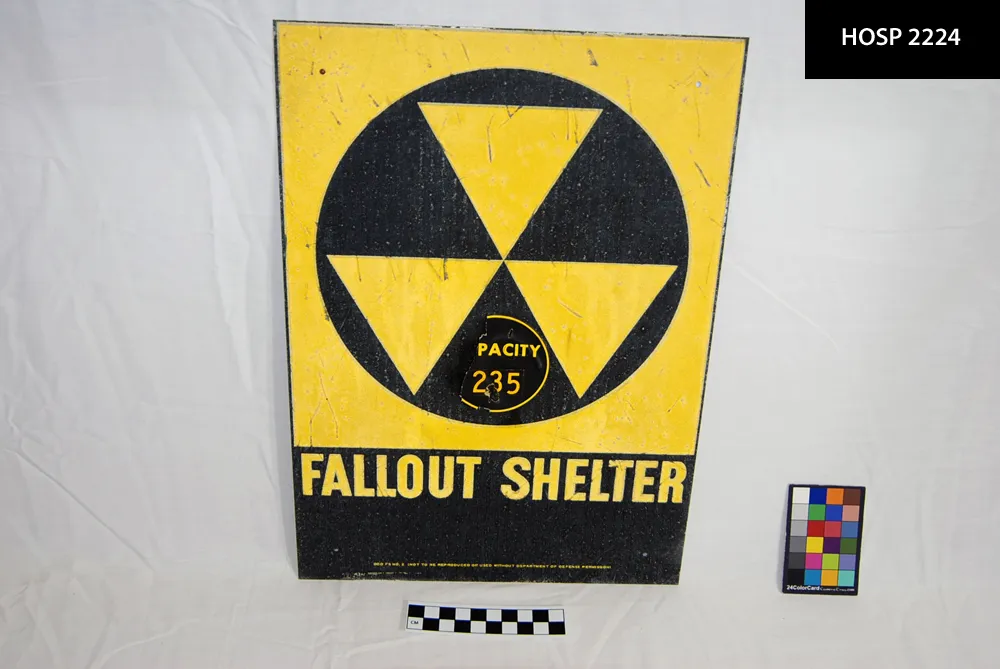
"Metal Civil Defense sign by National Park Service Picture – Courtesy of Hot Springs National Park Archives / Wikimedia Commons (Public domain).
The Cold War was a period of intense rivalry between the United States and the Soviet Union that lasted from the late 1940s to the early 1990s. During this time, the world was divided into two major sides, each with its own allies, beliefs, and ways of life. The Cold War did not involve direct fighting between the two superpowers, but it created a climate of fear, suspicion, and competition that affected people across the globe.
One defining feature of the Cold War was the constant fear of nuclear war. The United States and the Soviet Union both built massive arsenals of nuclear weapons. People in cities such as Moscow and New York lived with the knowledge that a conflict could destroy their homes in minutes. Governments conducted air raid drills in schools, asking children to "duck and cover" under their desks. In the United States, the federal government issued pamphlets about building fallout shelters—special rooms meant to protect families from radiation after a nuclear attack. Historical photographs and official documents from the 1950s show families practicing emergency routines and stocking up on canned food and supplies.
Another key aspect was the use of propaganda to shape public opinion. Both the United States and the Soviet Union used newspapers, films, and posters to promote their own values and criticize the other side. A famous example is the U.S. government's "Duck and Cover" film, which taught children how to protect themselves in the event of a nuclear explosion. In the Soviet Union, posters celebrated the strength of the worker and warned citizens about the dangers of Western influence. These materials are examples of primary sources that historians study to understand how ordinary people thought and felt during the Cold War.
Daily life was shaped by government policies and international events. In the United States, the Red Scare led to investigations of suspected communists. Many people lost their jobs or were questioned by Congress. Citizens watched the news for updates on crises such as the Cuban Missile Crisis in 1962, when the world came close to nuclear war. In Eastern Europe, people living under communist governments sometimes faced shortages of goods, restrictions on travel, and strict censorship. Despite these challenges, families still went to school, worked, and celebrated holidays. Letters, diaries, and artifacts from the period show how people adapted to uncertainty and tried to maintain normal routines.
The experiences of ordinary people during the Cold War show how global conflict can shape everyday life. The era demonstrates the power of governments to influence beliefs and behaviors through fear and information. By studying primary sources, we can better understand how individuals and societies responded to the challenges of living in a divided world.
This topic connects to broader themes in world history, such as the impact of conflict on society and the importance of understanding multiple perspectives.
Interesting Fact: During the Cold War, some American families built underground shelters in their backyards, hoping to survive a nuclear attack.
Comprehension quiz (8 questions)
1. When did the Cold War start?
2. What is a fallout shelter?
3. Which event nearly caused nuclear war?
4. How did propaganda affect people?
5. Why did people build fallout shelters?
6. What was the Red Scare?
7. The Cold War ended in the early 1990s. True or false?
8. What does censorship mean?
Perfect for the way you teach
- Build comprehension skills
- Auto-graded quiz
- Differentiated reading
- Read together at home
- Improve fluency
- Quiet reading time
- Reading curriculum support
- Independent practice
- Track Lexile growth