This learning resource is available in interactive and printable formats. The interactive worksheet can be played online and assigned to students. The Printable PDF version can be downloaded and printed for completion by hand.
This passage explores the essential role of the Nile River in shaping Ancient Egyptian civilization. Students discover how the river’s annual flooding enabled farming, supported the rise of complex society, and inspired the creation of the world’s first known calendar. The passage examines primary evidence from archaeological sources, explains cause-and-effect relationships between geography and human adaptation, and highlights how the Nile’s rhythms influenced daily life, religion, and social hierarchy. Activities include a glossary, multiple-choice quiz, writing prompts, graphic organizers, and a timeline. The resource is aligned with California HSS Framework Standard 6.2 and Common Core CCSS RH.6-8.1, and offers both a read aloud audio and Spanish translation, making it accessible for diverse learners.
CONTENT PREVIEW
Expand content preview
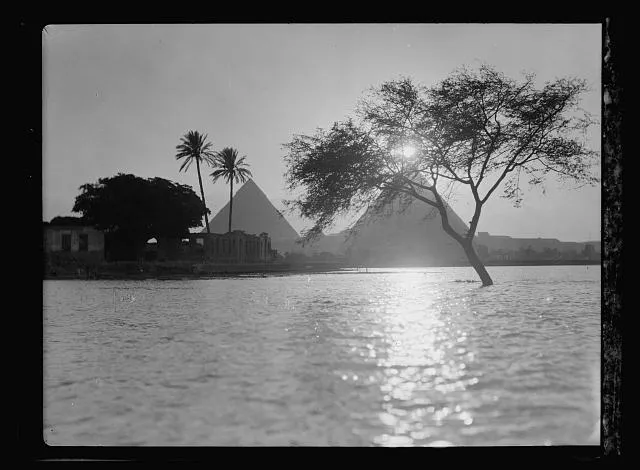
Cairo and district, Egypt. Pyramids at sunset. Shlhouette effect showing the flood time of the Nile. Source: Library of Congress - American Colony (Jerusalem). Photo Department
The Nile River is the lifeblood of Ancient Egypt, shaping its geography, society, and achievements. Stretching over 4,000 miles, the Nile flows northward through desert lands before emptying into the Mediterranean Sea. The predictable annual flooding of the Nile, known as the inundation, created fertile soil along its banks. This natural cycle set the foundation for Egypt’s powerful civilization.
The Nile’s yearly floods were both a blessing and a challenge. Between June and September, melting snow and heavy rains in East Africa caused the river to rise and overflow its banks. When the waters receded, they left behind a rich, black mud called silt. This silt was essential for farming because it replenished the land with nutrients. Archaeological evidence from sites like Hierakonpolis shows that early Egyptians built simple irrigation canals as early as 3500 BCE. These canals channeled floodwater to crops, allowing farmers to grow wheat, barley, and flax. By using basins and dikes, Egyptian farmers controlled the floods, turning a risky event into a source of abundance.
Egyptian society organized itself around the Nile’s rhythms. The river’s flooding determined the agricultural calendar, which had three main seasons: Akhet (flooding), Peret (planting), and Shemu (harvesting). The need to predict and coordinate these seasons led to one of history’s earliest calendars. Ancient inscriptions, such as those found in the tomb of the official Amenemhat, describe how priests observed the star Sirius to forecast when the inundation would begin. This calendar guided farmers and helped the government collect taxes based on harvests. The pharaoh, seen as both king and god, took credit for the Nile’s bounty and organized massive projects like dams and granaries. Egyptian art and texts often show the Nile as a source of life, connecting it to religious beliefs and the afterlife.
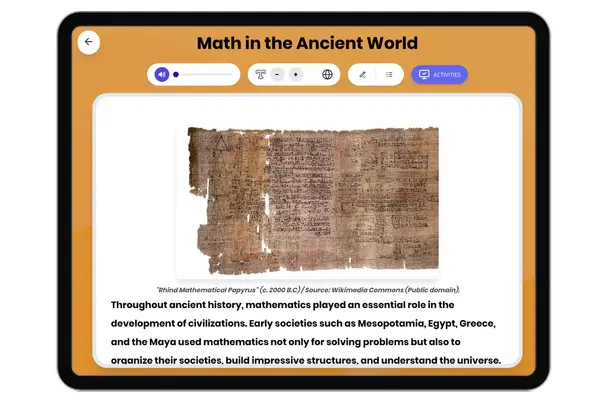
The Nile’s importance went beyond agriculture. It served as a highway for trade, linking Upper and Lower Egypt and making it easier for people, goods, and ideas to travel. The river’s central role supported a strong social hierarchy, with the pharaoh and priests at the top, followed by scribes, artisans, and farmers. Primary sources, like the Rhind Mathematical Papyrus, reveal how Egyptians measured their fields and organized labor. Over centuries, the basic pattern of Nile flooding and farming remained consistent, but technology and social organization grew more complex. Eventually, droughts and changes in the river’s behavior challenged Egyptian society, but the Nile’s legacy continued to shape the region for millennia.
The Nile River demonstrates how geography can influence human history. By adapting to its cycles, Egyptians developed a remarkable civilization, leaving behind monuments, writings, and knowledge that still inspire study today. The story of the Nile connects to larger themes of environment, technology, and the rise of complex societies in history.
Interesting Fact: The Egyptian calendar, based on the Nile’s flood, had 365 days—just like the modern calendar!
What is the annual flooding of the Nile called?
InundationHarvestShemuDrought
What did the Nile leave after flooding?
SandSiltGoldGranite
Who was seen as both king and god?
ScribePharaohPriestMerchant
Why did Egyptians create a calendar?
To count birthdaysTo predict floodingTo trade goodsTo write stories
How did irrigation help farmers?
It brought water to cropsIt stopped the riverIt built roadsIt made gold
What was the main effect of Nile's floods?
Created desertsDestroyed villagesMade farming possibleBrought snow
The Nile River had no impact on society. True or false?
TrueFalse
What does 'hierarchy' mean?
Group of riversSystem of ranking peoplePlanting cropsFlooding event
Perfect For:
👩🏫 Teachers
• Reading comprehension practice
• Auto-graded assessments
• Literacy skill development
👨👩👧👦 Parents
• Reading practice at home
• Comprehension improvement
• Educational reading time
🏠 Homeschoolers
• Reading curriculum support
• Independent reading practice
• Progress monitoring
Reading Features:
📖
Reading Passage
Engaging fiction or nonfiction text
❓
Comprehension Quiz
Auto-graded questions
📊
Instant Feedback
Immediate results and scoring
📄
Printable Version
Download for offline reading
🔊
Read Aloud
Voice-over with word highlighting
Reviews & Ratings
No reviews yet. Be the first to share your experience!
Related Content
Geography of Ancient Egypt
This passage explores the vital role of geography in the rise of Ancient Egypt, focusing on the importance of the Nile R...
The Decline of Ancient Egypt
This detailed passage examines the decline of Ancient Egypt, exploring the complex causes behind the fall of one of hist...
Daily Life in Ancient Egypt
Explore the fascinating world of daily life in Ancient Egypt with this comprehensive history reading passage. Students w...
Temples and Tombs in Ancient Egypt
This passage explores the significance of temples and tombs in Ancient Egypt, focusing on their religious, social, and c...
Egypt Kush Trade
This engaging history reading passage explores the complex trade networks that connected Ancient Egypt, Kush, and region...
6.2.3RH.6-8.1RH.6-8.4RH.6-8.7
New Kingdom Egypt
This engaging history reading passage explores the rise of Ancient Egypt during the New Kingdom, when Egypt became a pow...
CA HSS 6.2RH.6-8.2WHST.6-8.2
Evidence in Ancient History
This engaging history reading passage investigates how archaeologists and historians discover clues about how ancient pe...
Why Egypt Wanted Nubian Gold
This engaging passage explores the relationship between Ancient Egypt and the Kingdom of Kush (Nubia), focusing on why t...
How Pharaohs Governed Egypt
This history reading passage explores how Ancient Egypt was governed, highlighting the roles of the pharaoh, vizier, off...
Art and Architecture in Ancient Egypt
This passage explores the beauty and meaning behind Egyptian art and architecture, from the grand pyramids to detailed t...
King Narmer Unifies Egypt
This engaging history reading passage explores the unification of Ancient Egypt under King Narmer, focusing on the signi...
Ancient Egyptian Afterlife
This engaging history reading passage explores ancient Egyptian beliefs about the afterlife and the construction of the ...
CA HSS 6.2RH.6-8.1RH.6-8.4
Ancient Theocracy
This engaging history reading passage explores the concept of theocracy in ancient civilizations, where priests and reli...
Ancient Mathematics
This passage explores the essential role of mathematics in ancient civilizations, including Mesopotamia, Egypt, Greece, ...
Ancient Monarchy
This reading passage explores the concept of monarchy in ancient civilizations, focusing on the origins, structure, and ...
Women in Ancient Societies
This reading passage explores the complex roles of women in the ancient world, focusing on civilizations such as Mesopot...
Ancient Science and Medicine
This comprehensive reading passage explores the development of science and medicine in ancient civilizations, including ...
Kush Conquers Egypt
This reading passage explores the fascinating period when the Kingdom of Kush, located in Nubia south of Egypt, conquere...
Slavery in Ancient World
This passage explores the complex history of slavery in the ancient world, examining its presence in societies such as M...
Ancient Civilizations and the Environment
This engaging history reading passage explores how ancient civilizations such as Mesopotamia, Egypt, and the Maya adapte...