Premium
The Peculiar Reproduction of the Anglerfish
Interactive passage with audio narration, comprehension questions, and printable PDF.
Just this resource
$1.50
One-time purchase
Best value
Unlock everything
$49.99$29.99/yr
40% off until Aug 1 — 6,000+ resources
Unlock above to use these actions
- Format
- Interactive (Online), Printable (PDF)
- Grades
- 6
- Subjects
- science
- Languages
- English, Spanish
What's included
Reading passage
Reading comprehension
Audio narration
With word word highlighting
Comprehension quiz
Auto-graded
Writing activity
Open-ended response
Glossary & flashcards
Vocabulary practice
Differentiated version
Adapted for varied levels
Spanish translation
Bilingual support
About this reader
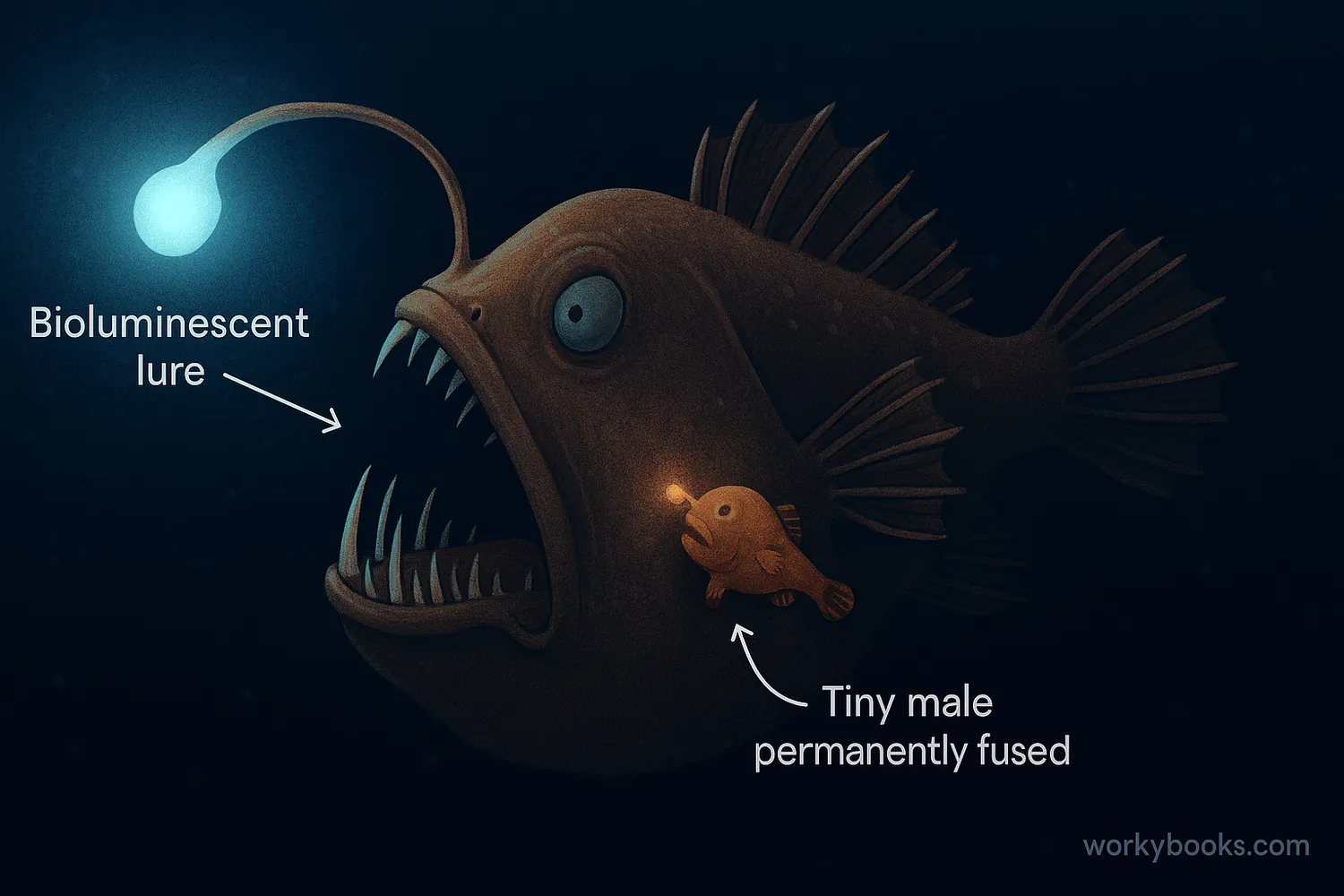
This educational content explores the fascinating and unusual reproductive strategies of the deep-sea anglerfish, a topic aligned with NGSS LS1.B: Growth and Development of Organisms. Students will discover how these deep-sea creatures survive and reproduce in challenging environments, focusing on the unique phenomenon of male anglerfish parasitism. The passage introduces key terms like 'bioluminescence' and 'parasitism,' providing a solid foundation in marine biology and organism life cycles. Designed for a Grade 6 reading level, this resource includes an engaging reading passage, multiple-choice questions, a glossary of important terms, and short answer questions, all audio-integrated to enhance learning about deep-sea reproduction and adaptation.
Written by Workybooks TeamPublished by Workybooks
Preview
Sample passage and quiz content
Who it's for
Perfect for the way you teach
Teachers
- Build comprehension skills
- Auto-graded quiz
- Differentiated reading
Parents
- Read together at home
- Improve fluency
- Quiet reading time
Homeschoolers
- Reading curriculum support
- Independent practice
- Track Lexile growth
Topics
anglerfish reproductiondeep-sea fishmarine biologyparasitic matingbioluminescenceocean lifeNGSS LS1.Borganism life cycles