The Role of Consumers in Food Chains — Reading Comprehension
Rate this
Premium Resource
Present
Present in classroom. No work saved
Assign
Classroom with student accounts, Track progress
Quick Play
No student accounts, assign with a link
Grades
6
PRINT+DIGITAL RESOURCE
This learning resource is available in interactive and printable formats. The interactive worksheet can be played online and assigned to students. The Printable PDF version can be downloaded and printed for completion by hand.
This engaging and audio-integrated reading passage, 'The Role of Consumers in Food Chains,' is designed for 5th-grade students to understand how living things interact within their environment. It explores essential concepts like producers, consumers, and decomposers, explaining their roles in the movement of matter and energy. Aligned with NGSS 5-LS2-1, this passage helps students develop a model to describe the movement of matter among plants, animals, decomposers, and the environment. Through simple language and clear definitions, students will learn about different types of consumers and their importance in maintaining healthy ecosystems. The passage also includes activities to reinforce comprehension.
CONTENT PREVIEW
Expand content preview
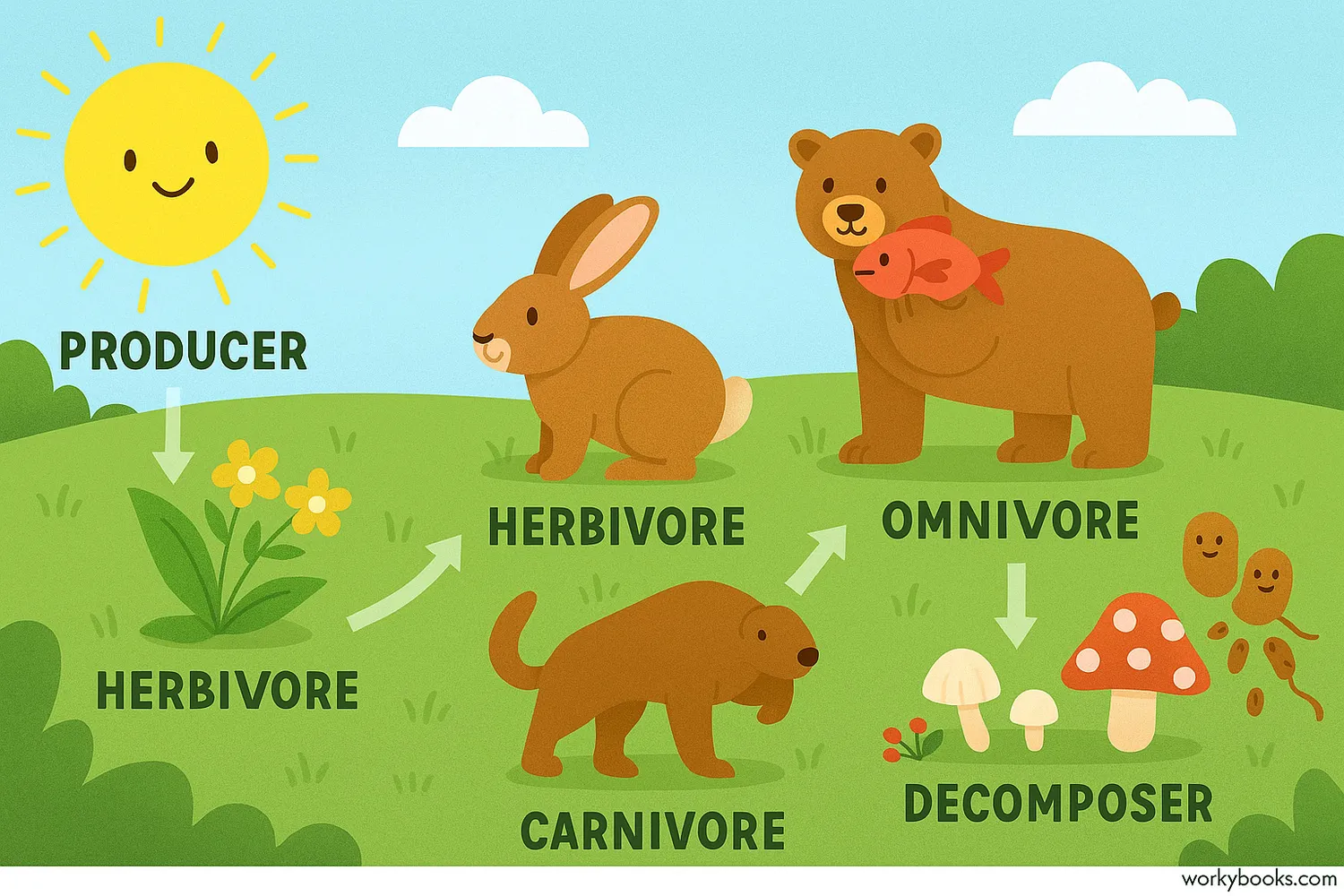
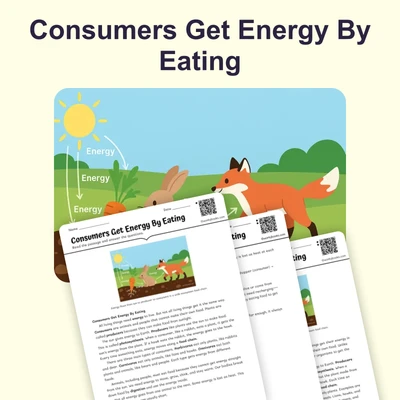
Food chain: sun to producers, consumers, and decomposers in a vibrant ecosystem.
What Are Consumers?
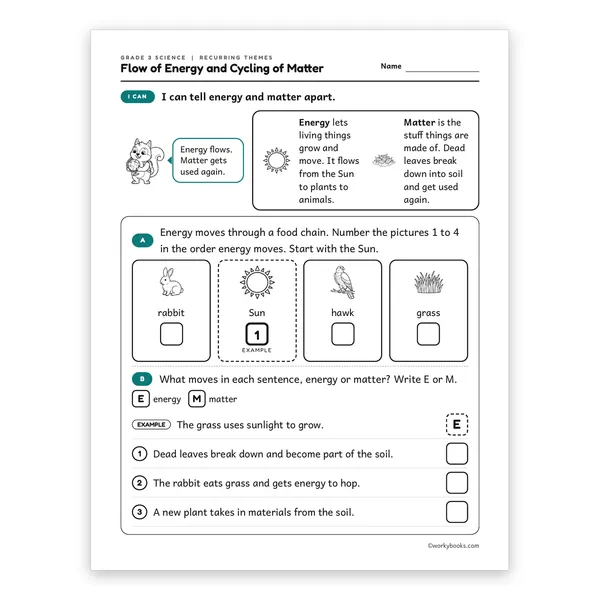
In every ecosystem, living things depend on each other for food and energy. Animals that eat plants or other animals are called consumers. They play a big part in moving energy from plants to animals, helping nature stay balanced.
The Three Levels of Consumers
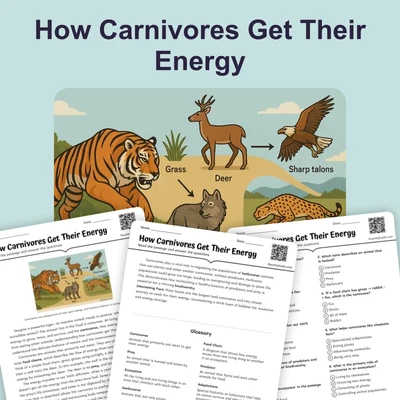
There are three main levels of consumers in a food chain. The first level is primary consumers. These are animals that eat only plants, like rabbits, grasshoppers, and deer. They are also called herbivores. Primary consumers are important because they help keep plant populations under control.
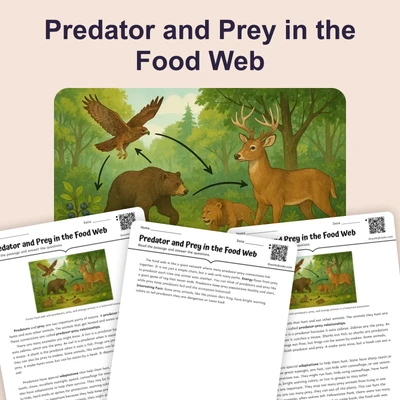
The second level is secondary consumers. These animals eat primary consumers. They are often small predators, such as frogs, small birds, and snakes. Secondary consumers help manage the number of herbivores in an ecosystem.
The third level is tertiary consumers, also called top predators. They eat secondary consumers. Examples include hawks, wolves, and sharks. Tertiary consumers keep everything below them in balance, making sure no group becomes too large.
The Energy Pyramid
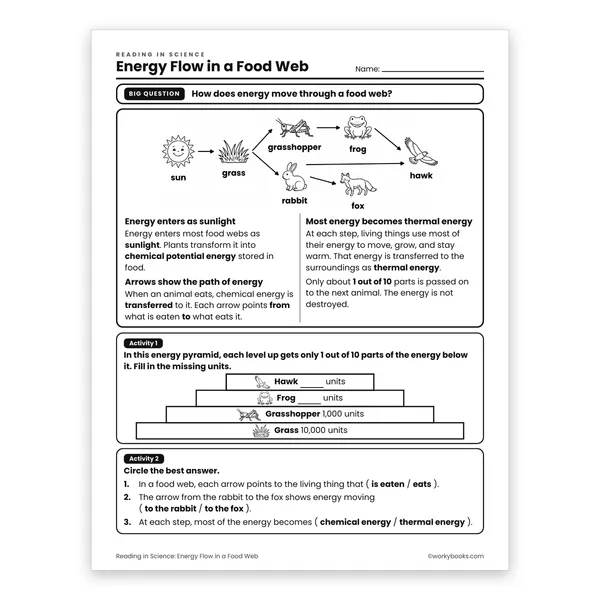
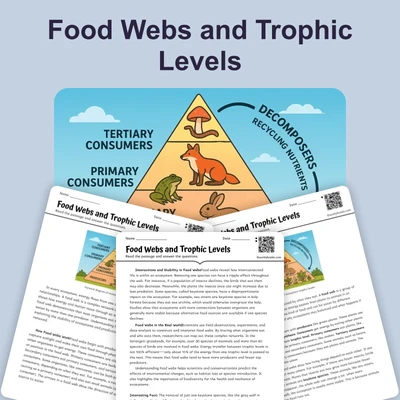
Energy moves through a food chain like a basketball being passed up the court. Plants make energy from sunlight. Primary consumers eat the plants and get some of their energy. Secondary consumers then eat primary consumers, and so on. But only about 10% of the energy moves up to each new level. That’s why there are many more rabbits than wolves; there simply isn’t enough energy to support many top predators. The energy pyramid is wide at the bottom (lots of producers), and narrow at the top (few top predators).
Food Chains, Food Webs, and Decomposers
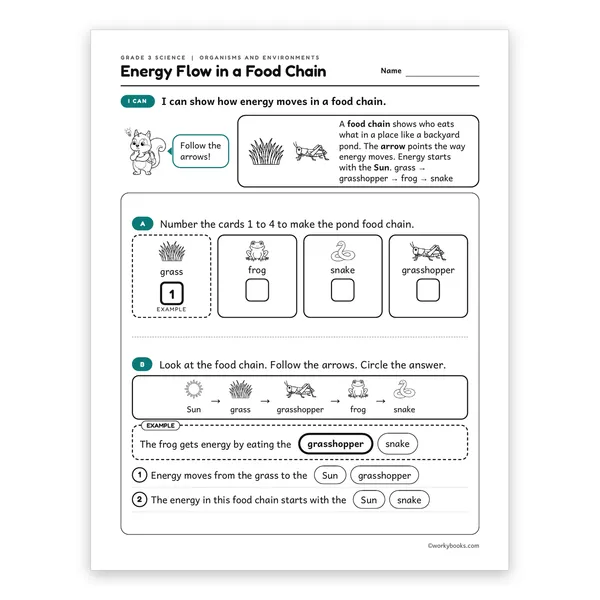
A food chain shows a simple path of energy: grass → rabbit → fox. But in real ecosystems, food webs show many connected chains because animals often eat more than one kind of food. There is also a special kind of consumer called a decomposer. Decomposers, like fungi and bacteria, eat dead plants and animals. They recycle nutrients back to producers, so the cycle can start again.
If there were no consumers, plants would overgrow, dead things would pile up, and the ecosystem would not work. Every part is important for balance!
Interesting Fact: A single hawk may need to eat hundreds of mice each year to survive because so little energy reaches the top of the food chain!
What do consumers eat?
Plants or other animalsOnly sunlightOnly waterOnly rocks
Who are primary consumers?
Animals that eat plantsTop predatorsFungi and bacteriaAnimals that eat only meat
What do decomposers do?
Eat dead things and recycle nutrientsMake energy from sunlightEat only plantsHunt other animals
Why are there fewer wolves than rabbits?
Less energy at higher levelsWolves eat grassRabbits are top predatorsWolves are decomposers
What would happen without consumers?
Plants would overgrowEnergy would increaseEcosystem would work betterMore top predators
How do secondary consumers help ecosystems?
Control primary consumer numbersMake energy from sunlightEat top predatorsGrow more plants
Food webs are more complex than food chains.
TrueFalse
What is an energy pyramid?
Shows energy at each consumer levelA home for animalsA food chain for plants onlyA type of decomposer
Perfect For:
👩🏫 Teachers
• Reading comprehension practice
• Auto-graded assessments
• Literacy skill development
👨👩👧👦 Parents
• Reading practice at home
• Comprehension improvement
• Educational reading time
🏠 Homeschoolers
• Reading curriculum support
• Independent reading practice
• Progress monitoring
Reading Features:
📖
Reading Passage
Engaging fiction or nonfiction text
❓
Comprehension Quiz
Auto-graded questions
📊
Instant Feedback
Immediate results and scoring
📄
Printable Version
Download for offline reading
🔊
Read Aloud
Voice-over with word highlighting
Reviews & Ratings
No reviews yet. Be the first to share your experience!
Related Content
The Nature of Life Science
This passage, aligned with NGSS MS-LS1-1, introduces students in grades 6-8 to the foundational concepts of life science...
MS-LS1-1
Science Vocabulary
This worksheet on domain-specific words will help students learn some science vocabulary. Students will be asked to matc...
L.3.6L.3.4.A
Citizen Science and Ecological Monitoring
This engaging passage for grades 6-8 introduces the concept of citizen science and its critical role in ecological monit...
MS-LS2-1
Ecosystem Services
This engaging middle school science passage introduces students to the concept of ecosystem services, the vital benefits...
MS-LS2-5MS-ESS3-3
Simple Machines Science Report
This science writing task requires students to clearly explain how three simple machines work using precise domain-speci...
W.5.4
Photosynthesis in Ecosystems
This comprehensive passage for grades 6-8 explores the fundamental role of photosynthesis in ecosystems, aligning with N...
MS-LS1-6MS-LS2-3
Desert Ecosystems
This informative writing worksheet on desert ecosystems supports CCSS.ELA-LITERACY.W.5.2.d on using precise language and...
W.5.2.D
Biodiversity and Ecosystem Health
This comprehensive middle school science passage explores the relationship between biodiversity and ecosystem health, al...
MS-LS2-5
Biomes: Aquatic Ecosystems
This middle school science passage, aligned with NGSS standard MS-LS2-1, introduces students to the key features and mec...
MS-LS2-1
Abiotic Factors in Ecosystems
This comprehensive informational reading passage is designed for middle school science students and aligns with NGSS sta...
MS-LS2-1
Biomes: Terrestrial Ecosystems
This NGSS-aligned science reading passage for grades 6-8 provides a comprehensive survey of Earth’s major terrestrial bi...
MS-LS2-1
Water in Ecosystems
This engaging passage for grades 6-8 explores the essential role of water in ecosystems, tracing its movement through va...
MS-LS2-3MS-ESS2-4
Producers: The Foundation of Ecosystems
This comprehensive science passage explains the critical role of producers, or autotrophs, in all ecosystems. Covering b...
MS-LS2-3MS-LS1-6
Arctic Fox Food Web and Ecosystem Role
This engaging audio-integrated passage, "Arctic Fox Food Web and Ecosystem Role," delves into the critical contributions...
The Pumpkin Life Cycle
This informational worksheet explores the pumpkin lifecycle, guiding students through procedural steps in a scientific t...
RI.2.3RI.2.10
What Is the Main Source of Carbon in an Ecosystem?
This NGSS-aligned science reading passage helps middle school students explore the main source of carbon in ecosystems: ...
MS-LS2-3
Ecosystem Interactions Word Sort
This word sort explores different types of relationships between organisms in ecosystems. Students categorize 12 differe...
Meadow Ecosystem
This reading passage, 'Life in the Meadow', is designed for elementary students to understand NGSS LS2.A: Interdependent...
2-LS2-1
What Is Earth Science?
This engaging middle school science passage introduces students to the field of Earth science, aligning with NGSS standa...
MS-ESS1MS-ESS2MS-ESS3SEP
The Desert Rain Frog's Ecosystem and Habitat
This educational passage, audio-integrated, delves into the fascinating world of the desert rain frog, exploring its uni...