Inside the National Hurricane Center
Interactive passage with audio narration, comprehension questions, and printable PDF.
By completing this purchase you agree to our Terms of Use and Privacy Policy. Your subscription renews automatically until you cancel. You can cancel anytime from your account settings. All sales are final and non-refundable. Digital content is available for download in your account immediately upon purchase.
What's included
Inside the National Hurricane Center preview and details
About this printable Inside the National Hurricane Center science reading passage, NGSS-aligned (Grade 6)
Sample passage and quiz from Inside the National Hurricane Center
Reading passage and comprehension quiz preview
Inside the National Hurricane Center
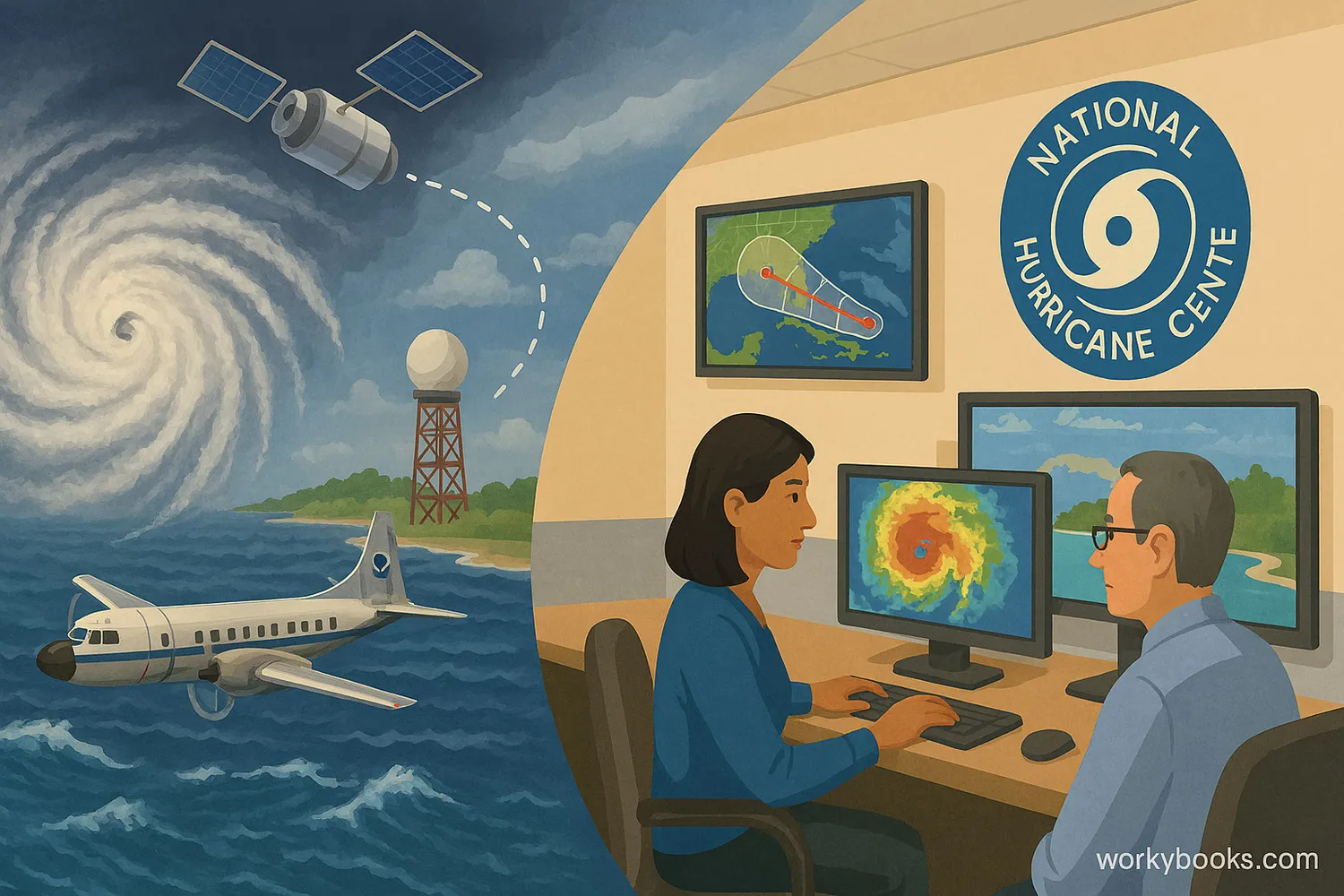
Imagine a massive, swirling weather system forming over warm ocean waters, threatening to bring powerful winds and heavy rain to coastal areas. How do we know when and where these storms will strike? The answer lies with a dedicated group of scientists and forecasters at the National Hurricane Center (NHC). Located in Miami, Florida, the NHC is a vital part of the United States' efforts to protect communities from the dangers of tropical cyclones, which include tropical depressions, tropical storms, and hurricanes.
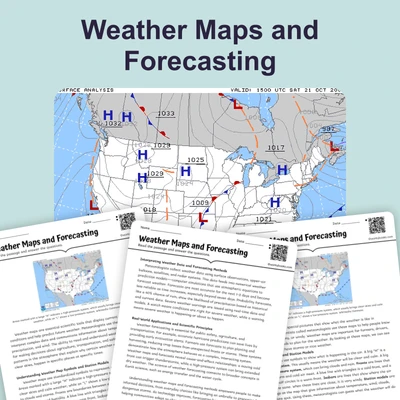
The NHC's main job is to monitor and forecast tropical weather systems in the Atlantic Ocean, Caribbean Sea, Gulf of Mexico, and the Eastern Pacific Ocean. They use a variety of tools and technologies to do this. Weather satellites orbiting Earth constantly send back images and data, showing the size, shape, and movement of clouds and storm systems. Radar systems on the ground detect precipitation and wind speeds within a storm. Even special aircraft, called hurricane hunter planes, fly directly into storms to collect crucial information like temperature, humidity, and pressure.
All this data is fed into powerful computer models. These models use complex mathematical equations to predict a storm's future path and intensity. Forecasters at the NHC then analyze these model outputs, along with their own expert knowledge, to create official forecasts and issue warnings and advisories. A hurricane watch means hurricane conditions are possible within 48 hours, while a hurricane warning means they are expected within 36 hours. These forecasts are incredibly important for helping people prepare, evacuate if necessary, and ultimately save lives.
The NHC's work doesn't just involve predicting the future; it also involves understanding the past. By analyzing data from historical storms, scientists learn more about how these natural hazards behave. This knowledge helps improve future forecasts and informs the development of technologies and strategies to mitigate (reduce the severity of) their effects. Thanks to the NHC, coastal residents have critical information to make informed decisions when severe weather threatens, helping to minimize damage and ensure safety.
Interesting Fact: The NHC also names tropical storms! When a tropical cyclone reaches a sustained wind speed of 39 mph, it gets a name from a pre-determined list that rotates every six years.
Comprehension quiz (10 questions)
1. Where is the National Hurricane Center located?
2. What is the primary role of the NHC?
3. Which tool collects data directly inside storms?
4. Why are NHC forecasts important?
5. How do computer models predict storm paths?
6. What is the difference between a hurricane watch and a hurricane warning?
7. How does studying past storms help the NHC?
8. If a hurricane watch is issued, what should people in the area understand?
9. The NHC is only concerned with hurricanes, not tropical storms.
10. What does 'mitigate' mean in the passage?
Perfect for the way you teach
- Build comprehension skills
- Auto-graded quiz
- Differentiated reading
- Read together at home
- Improve fluency
- Quiet reading time
- Reading curriculum support
- Independent practice
- Track Lexile growth