Saffir-Simpson Scale
Interactive passage with audio narration, comprehension questions, and printable PDF.
By completing this purchase you agree to our Terms of Use and Privacy Policy. Your subscription renews automatically until you cancel. You can cancel anytime from your account settings. All sales are final and non-refundable. Digital content is available for download in your account immediately upon purchase.
What's included
Saffir-Simpson Scale preview and details
About this printable Saffir-Simpson Scale science reading passage, NGSS-aligned (Grade 6)
Sample passage and quiz from Saffir-Simpson Scale
Reading passage and comprehension quiz preview
The Saffir-Simpson Scale
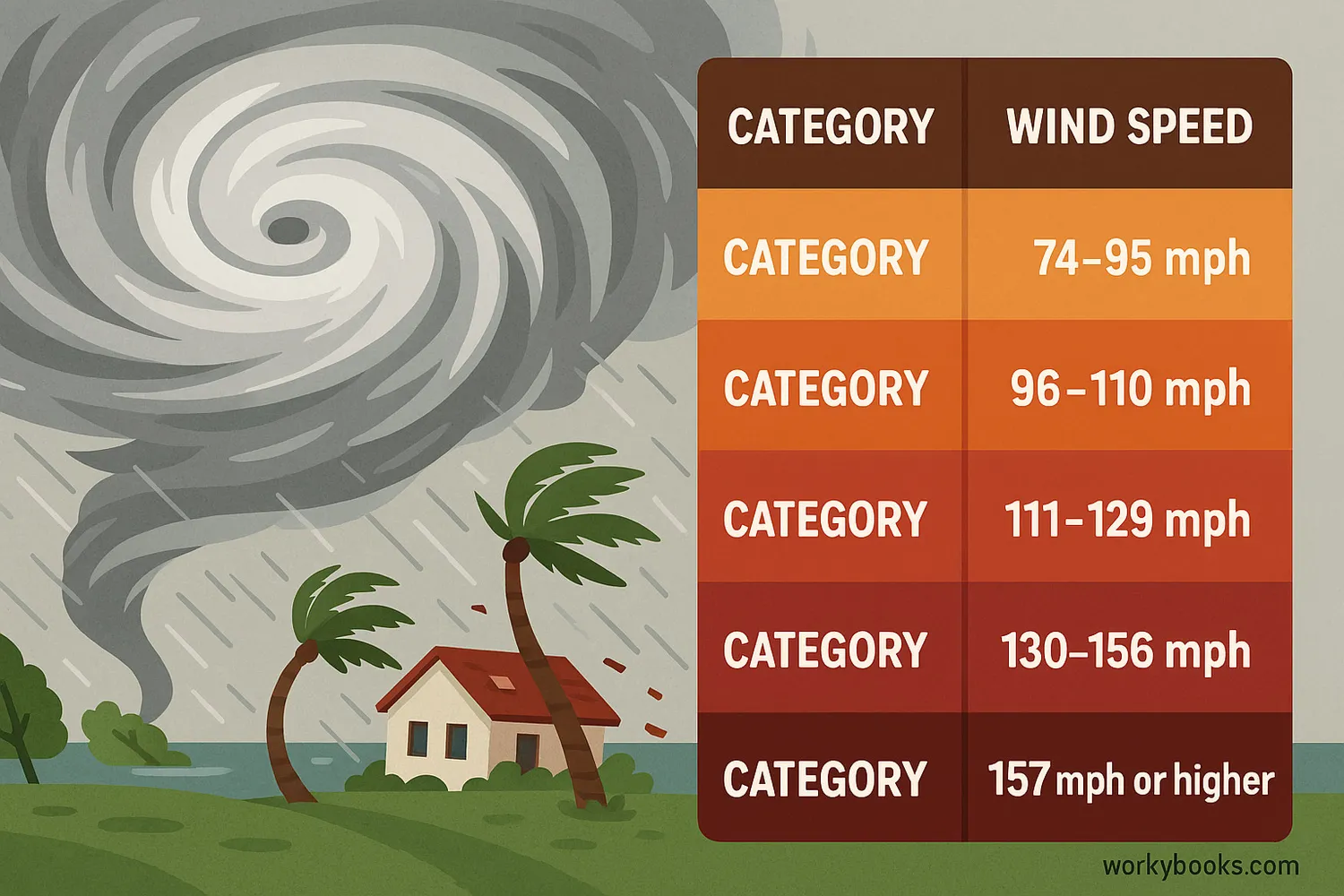
Imagine a swirling giant, miles wide, bringing powerful winds and heavy rain. How do we measure the strength of such a massive force of nature? For hurricanes, scientists use a special tool called the Saffir-Simpson Hurricane Wind Scale. This scale helps us understand how strong a hurricane is and what kind of damage it might cause, which is crucial for natural hazard preparedness and weather forecasting.
The Saffir-Simpson Scale categorizes hurricanes into five different levels, or categories, based on their sustained wind speed. "Sustained" means the wind speed that lasts for a minute or more. This is important because it's not just about a quick gust of wind, but about continuous powerful winds. The categories range from Category 1, which is the least intense, to Category 5, which is the most dangerous. Understanding these categories is key to predicting catastrophic events and informing safety measures.
A Category 1 hurricane has sustained winds between 74 and 95 miles per hour (mph). While this might not sound like much, it can still cause significant damage, like knocking down power lines and tearing off roof tiles. As the wind speed increases, so does the potential for destruction. A Category 3 hurricane, for instance, has winds from 111 to 129 mph and is considered a "major hurricane." These storms can cause extensive structural damage to homes and buildings.
The most powerful hurricanes are Category 5, with winds of 157 mph or higher. These storms are incredibly destructive, capable of causing widespread devastation, including the complete collapse of many homes and buildings. Besides wind, hurricanes also bring dangerous storm surge, which is an abnormal rise of water generated by the storm, moving above the predicted astronomical tide. The scale primarily focuses on wind speed, but emergency planners also consider storm surge, rainfall, and coastal impacts when making safety decisions. Knowing the hurricane category helps communities plan evacuations and deploy resources to mitigate the effects of natural disasters.
Interesting Fact: The Saffir-Simpson Scale was originally developed in 1971 by Herbert Saffir and Robert Simpson to estimate the potential for property damage.
Comprehension quiz (10 questions)
1. What is the Saffir-Simpson Scale used for?
2. How many categories are on the Saffir-Simpson Scale?
3. Which category of hurricane is considered the most dangerous?
4. What is a 'sustained' wind speed in a hurricane?
5. Why is understanding hurricane categories important?
6. Besides wind speed, what other dangers do hurricanes bring?
7. A Category 1 hurricane causes more damage than a Category 5 hurricane. (True/False)
8. How does the Saffir-Simpson Scale help communities?
9. Why would someone in a coastal area need to know about the Saffir-Simpson Scale?
10. What is the best definition for 'storm surge'?
Perfect for the way you teach
- Build comprehension skills
- Auto-graded quiz
- Differentiated reading
- Read together at home
- Improve fluency
- Quiet reading time
- Reading curriculum support
- Independent practice
- Track Lexile growth