Trading with Asia: California’s Pacific Connection
Interactive passage with audio narration, comprehension questions, and printable PDF.
By completing this purchase you agree to our Terms of Use and Privacy Policy. Your subscription renews automatically until you cancel. You can cancel anytime from your account settings. All sales are final and non-refundable. Digital content is available for download in your account immediately upon purchase.
What's included
Part of this bundle

Trading with Asia: California’s Pacific Connection preview and details
About this printable Trading with Asia: California’s Pacific Connection reading passage (Grades 3-5)
Sample passage and quiz from Trading with Asia: California’s Pacific Connection
Reading passage and comprehension quiz preview
California Pacific Trade
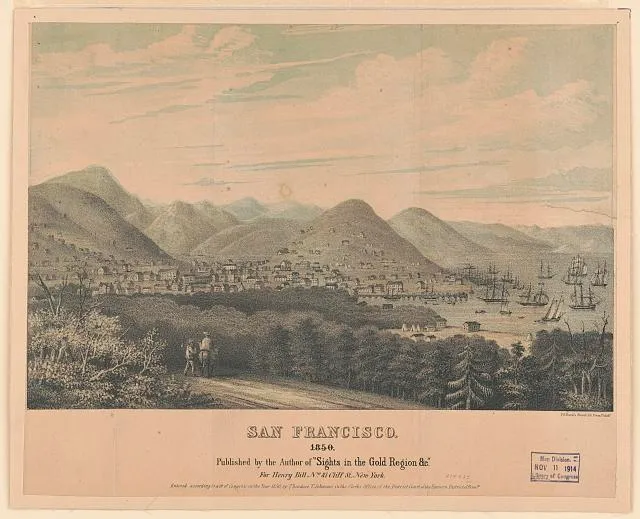
Source: Library of Congress - P.S. Duval & Co.
California is home to three of the busiest ports in the United States: Los Angeles, Long Beach, and Oakland. These ports are special places where huge ships bring goods from other countries and send products out to the world.
Much of California’s trade happens across the Pacific Ocean, which connects the state to Asia. Many important goods, such as electronics, clothes, toys, and cars, travel on ships between California and countries like China, Japan, and South Korea. This type of business is called international trade, because it involves buying and selling goods between different countries.
The locations of these ports are important. Los Angeles and Long Beach are near each other in Southern California. Oakland is in Northern California, near San Francisco. Their positions along the Pacific Ocean make it easy for ships to travel back and forth to Asia. As a result, California is known as “America’s gateway to Asia.”
When a ship arrives at a port, cranes unload containers full of goods. Workers sort the containers and move them onto trains and trucks. These goods are then sent to stores and factories across the United States. At the same time, American products are loaded onto ships and sent to other countries. This exchange helps people get things they need and supports jobs for thousands of workers.
California’s ports have grown over time. In the early 1900s, the ports were much smaller. Few ships came from Asia. But after World War II, trade with the Pacific Rim grew quickly. New technology, such as bigger ships and better cranes, made it easier to move more goods. Today, these ports handle billions of dollars in products every year.
International trade is important for California and the whole country. It helps bring in goods we use every day, like computers and shoes. It also allows American farmers and companies to sell their products to people in other countries. This makes the economy stronger and creates jobs.
The ports of Los Angeles, Long Beach, and Oakland are busy places full of activity. Every day, people work together to keep trade moving smoothly. Their hard work helps connect America to the Pacific world.
Interesting Fact: The Port of Los Angeles is the largest container port in the United States and handles more than 9 million containers each year!
Comprehension quiz (8 questions)
1. Which is NOT a major California port?
2. What connects California to Asia?
3. What do cranes do at the ports?
4. Why are California's ports called 'America's gateway to Asia'?
5. How did ports change after World War II?
6. What is one effect of international trade?
7. The Port of Los Angeles handles 9 million containers. True or false?
8. What does 'international trade' mean?
Common Core standards for Trading with Asia: California’s Pacific Connection
Explain events, procedures, ideas, or concepts in a historical, scientific, or technical text, including what happened and why, based on specific information in the text.
Determine the meaning of general academic and domain-specific words or phrases in a text relevant to a grade 4 topic or subject area.
Write informative/explanatory texts to examine a topic and convey ideas and information clearly.
Perfect for the way you teach
- Build comprehension skills
- Auto-graded quiz
- Differentiated reading
- Read together at home
- Improve fluency
- Quiet reading time
- Reading curriculum support
- Independent practice
- Track Lexile growth