This learning resource is available in interactive and printable formats. The interactive worksheet can be played online and assigned to students. The Printable PDF version can be downloaded and printed for completion by hand.
This engaging, audio-integrated reading passage, 'Types of Benthic Life,' delves into the fascinating world of organisms that live on or in the ocean floor. Students will learn about various marine organisms, including infauna, epifauna, and nekton, and how environmental factors like temperature, salinity, and pressure, known as abiotic conditions, influence where these creatures live. This passage directly aligns with NGSS LS2.C: Ecosystem Dynamics, providing a foundational understanding of how a diversity of life forms in the benthic zone is determined by the abiotic conditions of this habitat. Key terms are defined, making complex concepts accessible for Grade 6 learners. The passage also includes comprehension activities.
CONTENT PREVIEW
Expand content preview
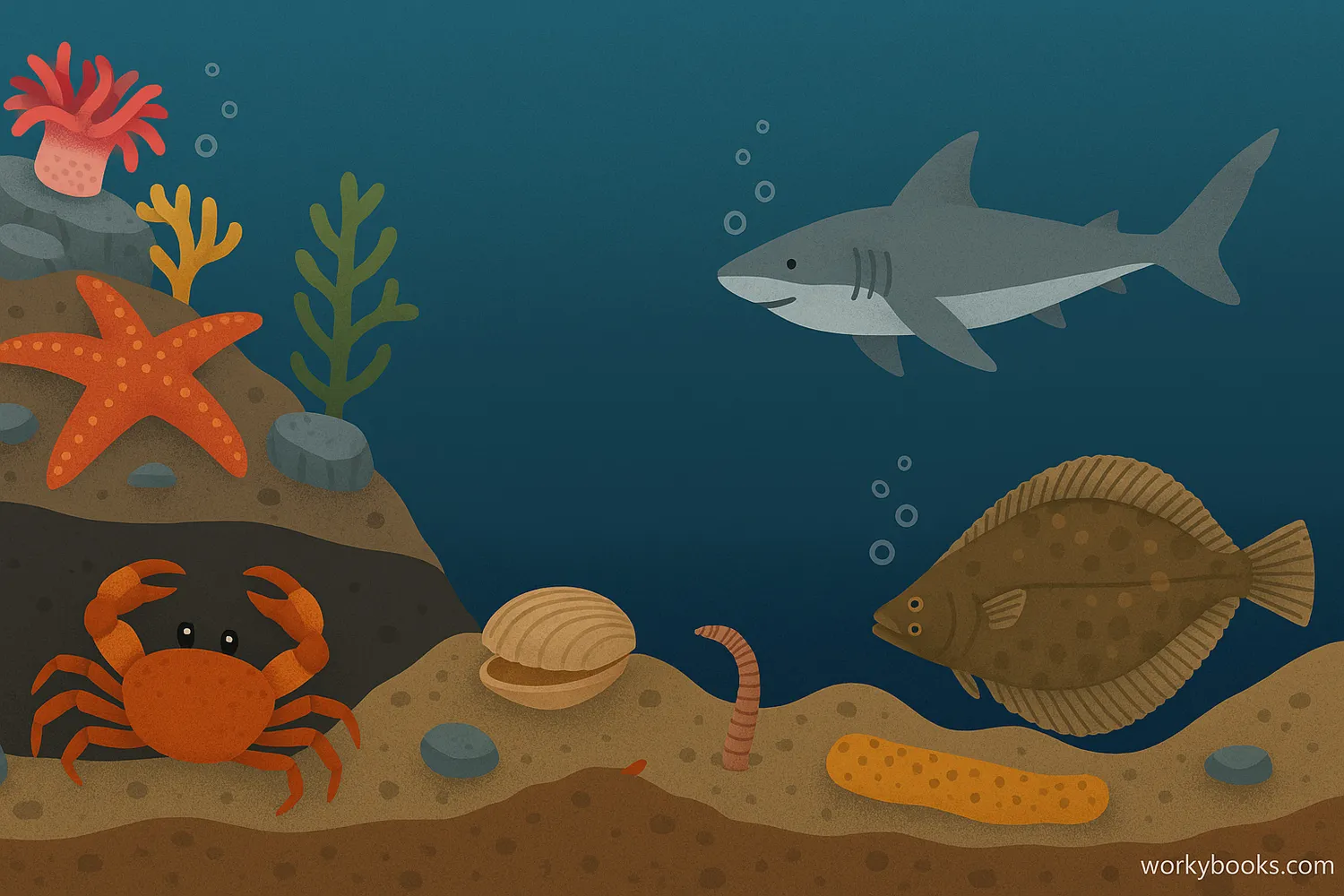
Life in the benthic zone: surface dwellers, burrowers, swimmers, and abiotic conditions.
Imagine a world hidden beneath the ocean's surface, where strange and wonderful creatures thrive in complete darkness or dim light. This is the benthic zone, the bottom layer of any body of water, from shallow coastal areas to the deepest parts of the ocean. Life here is incredibly diverse, with organisms adapted to unique challenges.
The animals living in the benthic zone are called benthos. They are categorized based on where they live in relation to the seafloor. Some creatures live directly on the surface of the seafloor; these are known as epifauna. Think of crabs scuttling across rocks, starfish clinging to the seabed, or sea anemones attached to a hard surface. They move around or stay fixed, but they are always on top.
Other benthic organisms prefer to live *inside* the seafloor. These are called infauna. Many types of worms, clams, and certain types of sea cucumbers burrow into the sand or mud. They find shelter from predators and food particles buried within the sediment. Their bodies are often long and thin, perfect for tunneling.
Beyond epifauna and infauna, some animals are often associated with the benthic zone but can swim freely. These are the nekton, like bottom-dwelling fish such as flounders or certain types of sharks that cruise just above the seabed. While not strictly benthos because they can swim, they rely heavily on the benthic zone for food and shelter.
The distribution of these amazing creatures is heavily influenced by abiotic conditions – the non-living parts of their habitat. Factors like water temperature, depth (which affects pressure), salinity (how salty the water is), and the type of seafloor (rocky, sandy, muddy) all play a huge role. For example, some animals need soft mud to burrow, while others need hard surfaces to attach themselves. Deep-sea benthos must withstand immense pressure and freezing temperatures, developing special adaptations to survive. These abiotic factors create distinct habitats, leading to the incredible variety of life found in the benthic zone.
Interesting Fact: Some deep-sea benthic organisms can live for hundreds of years due to their slow metabolism in cold, deep waters.
What is the benthic zone?
Top layer of waterBottom layer of waterMiddle layer of waterSurface of the ocean
Which animals live inside the seafloor?
EpifaunaNektonInfaunaBenthos
True or False: Abiotic conditions are the living parts of a habitat.
TrueFalse
What does the term 'benthos' refer to?
Swimming organismsAnimals living on seafloorPlants on ocean surfaceFish in open water
Why do infauna burrow into sediment?
To get sunlightFor shelter and foodTo lay eggs onlyTo swim faster
Which is an abiotic condition mentioned?
CrabsStarfishWater temperatureSea anemones
How do deep-sea benthos adapt?
Live in warm waterResist high pressureEat only plantsSwim to surface
What best describes 'epifauna'?
Burrow in sandSwim freely aboveLive on seafloor surfaceAttached to plants
If an area has a muddy seafloor, what type of benthic life would you expect to find more of?
EpifaunaInfaunaNektonFloating organisms
A scientist finds a new species that can only survive in very cold water with high pressure. In what kind of benthic zone would this species most likely live?
Shallow coastalWarm surfaceDeep oceanRiver delta
Perfect For:
👩🏫 Teachers
• Reading comprehension practice
• Auto-graded assessments
• Literacy skill development
👨👩👧👦 Parents
• Reading practice at home
• Comprehension improvement
• Educational reading time
🏠 Homeschoolers
• Reading curriculum support
• Independent reading practice
• Progress monitoring
Reading Features:
📖
Reading Passage
Engaging fiction or nonfiction text
❓
Comprehension Quiz
Auto-graded questions
📊
Instant Feedback
Immediate results and scoring
📄
Printable Version
Download for offline reading
🔊
Read Aloud
Voice-over with word highlighting
Reviews & Ratings
No reviews yet. Be the first to share your experience!
Related Content
The Nature of Life Science
This passage, aligned with NGSS MS-LS1-1, introduces students in grades 6-8 to the foundational concepts of life science...
MS-LS1-1
Science Vocabulary
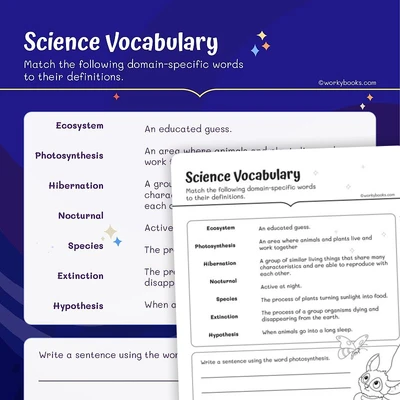
This worksheet on domain-specific words will help students learn some science vocabulary. Students will be asked to matc...
L.3.6L.3.4.A
Citizen Science and Ecological Monitoring
This engaging passage for grades 6-8 introduces the concept of citizen science and its critical role in ecological monit...
MS-LS2-1
Ecosystem Services
This engaging middle school science passage introduces students to the concept of ecosystem services, the vital benefits...
MS-LS2-5MS-ESS3-3
Simple Machines Science Report
This science writing task requires students to clearly explain how three simple machines work using precise domain-speci...
W.5.4
Photosynthesis in Ecosystems
This comprehensive passage for grades 6-8 explores the fundamental role of photosynthesis in ecosystems, aligning with N...
MS-LS1-6MS-LS2-3
Biodiversity and Ecosystem Health
This comprehensive middle school science passage explores the relationship between biodiversity and ecosystem health, al...
MS-LS2-5
Desert Ecosystems
This informative writing worksheet on desert ecosystems supports CCSS.ELA-LITERACY.W.5.2.d on using precise language and...
W.5.2.D
Biomes: Aquatic Ecosystems
This middle school science passage, aligned with NGSS standard MS-LS2-1, introduces students to the key features and mec...
MS-LS2-1
Abiotic Factors in Ecosystems
This comprehensive informational reading passage is designed for middle school science students and aligns with NGSS sta...
MS-LS2-1
Biomes: Terrestrial Ecosystems
This NGSS-aligned science reading passage for grades 6-8 provides a comprehensive survey of Earth’s major terrestrial bi...
MS-LS2-1
Water in Ecosystems
This engaging passage for grades 6-8 explores the essential role of water in ecosystems, tracing its movement through va...
MS-LS2-3MS-ESS2-4
Producers: The Foundation of Ecosystems
This comprehensive science passage explains the critical role of producers, or autotrophs, in all ecosystems. Covering b...
MS-LS2-3MS-LS1-6
Arctic Fox Food Web and Ecosystem Role
This engaging audio-integrated passage, "Arctic Fox Food Web and Ecosystem Role," delves into the critical contributions...
What Is the Main Source of Carbon in an Ecosystem?
This NGSS-aligned science reading passage helps middle school students explore the main source of carbon in ecosystems: ...
MS-LS2-3
The Pumpkin Life Cycle
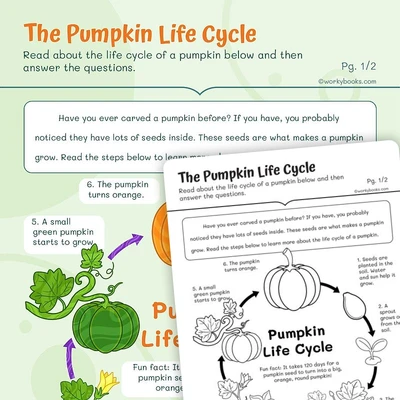
This informational worksheet explores the pumpkin lifecycle, guiding students through procedural steps in a scientific t...
RI.2.3RI.2.10
Ecosystem Interactions Word Sort
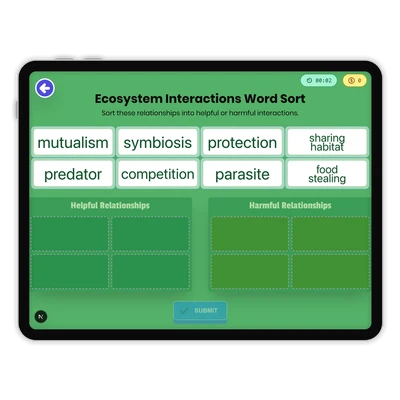
This word sort explores different types of relationships between organisms in ecosystems. Students categorize 12 differe...
What Is Earth Science?
This engaging middle school science passage introduces students to the field of Earth science, aligning with NGSS standa...
MS-ESS1MS-ESS2MS-ESS3SEP
Meadow Ecosystem
This reading passage, 'Life in the Meadow', is designed for elementary students to understand NGSS LS2.A: Interdependent...
2-LS2-1
Tools and Technology in Earth Science
This middle school science reading passage explores the wide range of tools and technologies used in Earth science, from...