Washington's Farewell: Warning Against Parties
Interactive passage with audio narration, comprehension questions, and printable PDF.
By completing this purchase you agree to our Terms of Use and Privacy Policy. Your subscription renews automatically until you cancel. You can cancel anytime from your account settings. All sales are final and non-refundable. Digital content is available for download in your account immediately upon purchase.
What's included
Washington's Farewell: Warning Against Parties preview and details
About this printable Washington's Farewell: Warning Against Parties reading passage (Grades 6-8)
Sample passage and quiz from Washington's Farewell: Warning Against Parties
Reading passage and comprehension quiz preview
Washington's Farewell Address
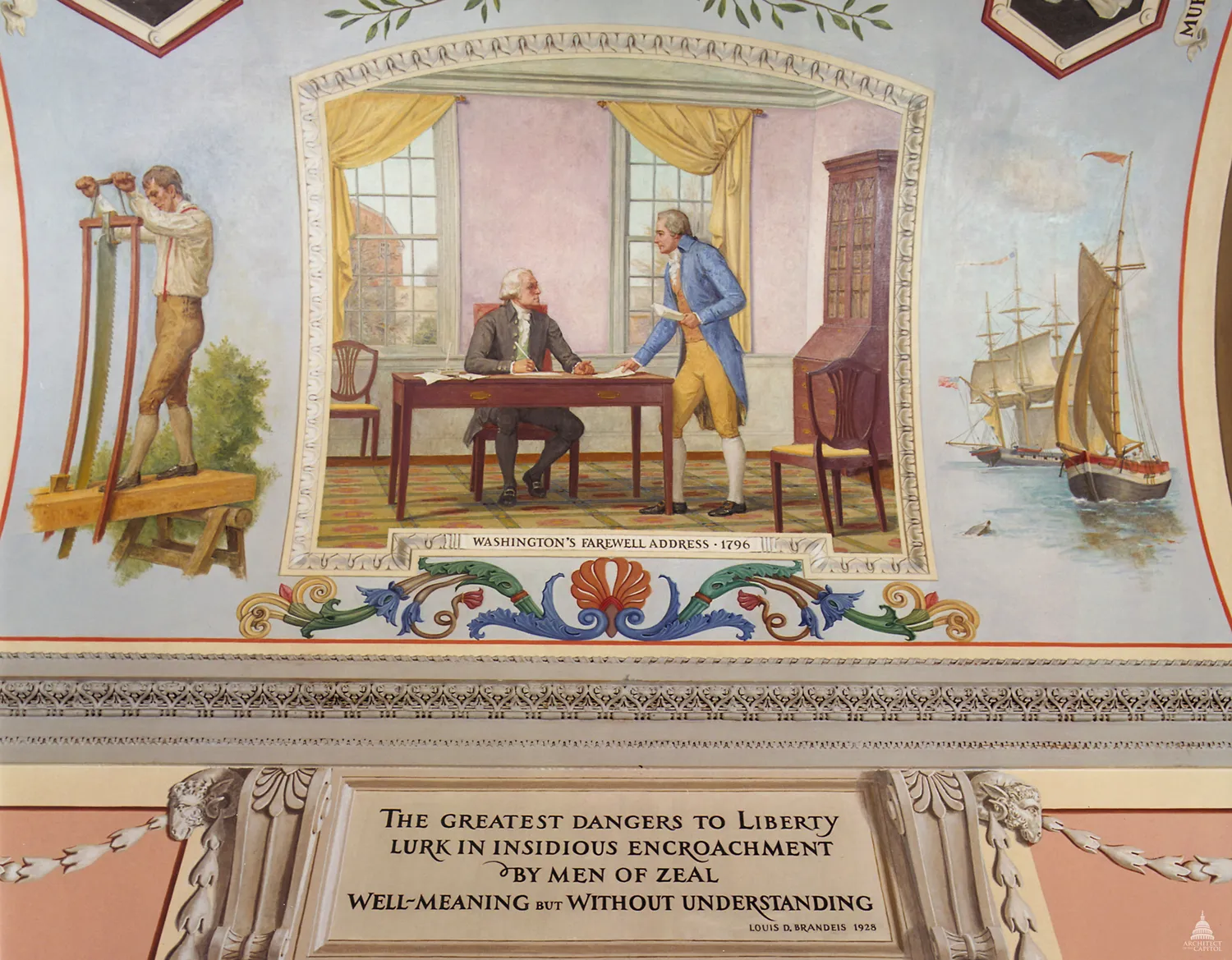
"Flickr - USCapitol - Washington's Farewell Address, 1796" by USCapitol/ Wikimedia Commons (Public domain).
In September 1796, President George Washington made a significant decision not to seek a third term. Instead, he wrote a detailed farewell address to the American people. Washington wanted to guide the new nation and prevent serious problems after his presidency. The address was published in newspapers across the country and quickly became an important document in U.S. history.
One of the main concerns in Washington’s address was the danger of dividing into political parties. He warned that parties could create conflict and weaken national unity. Washington believed that if Americans allowed strong party loyalty to take over, it would be easier for outside forces to influence the nation or even disrupt its government. He argued that the success of the United States depended on citizens putting their country’s interests above those of any party or group.
Washington also addressed America’s role in the world. He cautioned against forming permanent alliances with foreign nations. At the time, European countries were often at war, and alliances could pull the United States into conflicts that did not serve its interests. Instead, Washington encouraged a policy of neutrality, meaning the nation should not take sides in foreign wars. He believed that trade and friendly relations were possible without binding political commitments.
Washington’s advice did not come from simple fear. During his presidency, he saw how arguments between leaders like Thomas Jefferson and Alexander Hamilton led to the rise of the first political parties: the Federalists and the Democratic-Republicans. These divisions sometimes made it difficult to govern effectively. Washington worried that if this trend continued, it would threaten the stability of the new government and the freedoms Americans had fought for during the Revolution.
Despite Washington’s warnings, political parties quickly became a major part of American politics. However, his ideas about unity and neutrality influenced U.S. foreign policy for many years. For example, the United States tried to avoid joining European wars throughout the 1800s, following Washington’s advice. His farewell address is still studied today for its powerful message about the responsibilities of citizens and leaders in a democracy.
Washington’s farewell address set a standard for future presidents. Many leaders referred to his advice when facing difficult choices about war, peace, and the dangers of extreme partisanship. The address remains a reminder that the strength of a nation depends on cooperation, respect for the Constitution, and a careful approach to international issues.
Interesting Fact: Every year, the United States Senate reads Washington’s farewell address aloud to honor his legacy and remind lawmakers of his warnings about division and alliances.
Comprehension quiz (8 questions)
1. Who wrote the Farewell Address?
2. What year did Washington deliver his Farewell Address?
3. What did Washington warn against?
4. Why did Washington oppose alliances?
5. How did Washington want Americans to act?
6. What resulted after Washington's warning about parties?
7. Washington wanted permanent alliances. True or false?
8. What does 'neutrality' mean in the passage?
Common Core standards for Washington's Farewell: Warning Against Parties
Explain events, procedures, ideas, or concepts in a historical, scientific, or technical text, including what happened and why, based on specific information in the text.
Determine the meaning of general academic and domain-specific words or phrases in a text relevant to a grade 4 topic or subject area.
Write informative/explanatory texts to examine a topic and convey ideas and information clearly.
Perfect for the way you teach
- Build comprehension skills
- Auto-graded quiz
- Differentiated reading
- Read together at home
- Improve fluency
- Quiet reading time
- Reading curriculum support
- Independent practice
- Track Lexile growth