What Is Weathering
Interactive passage with audio narration, comprehension questions, and printable PDF.
By completing this purchase you agree to our Terms of Use and Privacy Policy. Your subscription renews automatically until you cancel. You can cancel anytime from your account settings. All sales are final and non-refundable. Digital content is available for download in your account immediately upon purchase.
What's included
What Is Weathering preview and details
About this printable What Is Weathering science reading passage, NGSS-aligned (Grades 3-6)
Sample passage and quiz from What Is Weathering
Reading passage and comprehension quiz preview
What Is Weathering
Source: Wikimedia Commons (CC0).
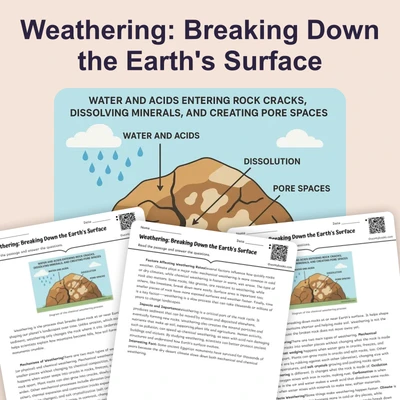
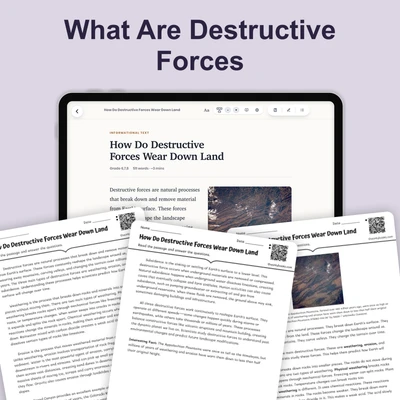
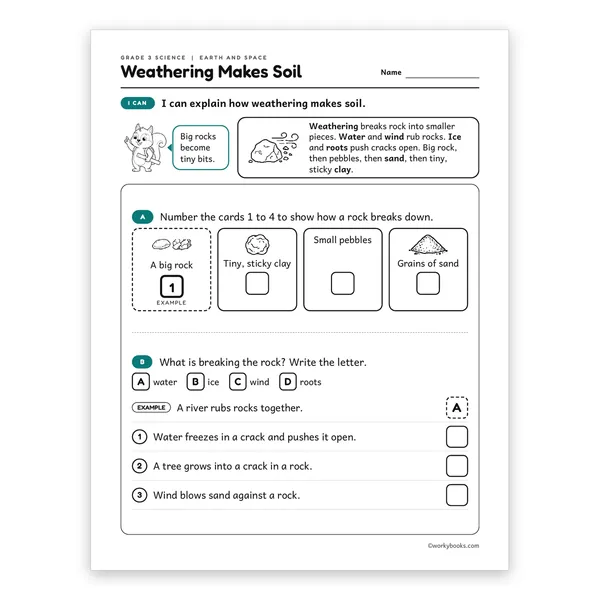
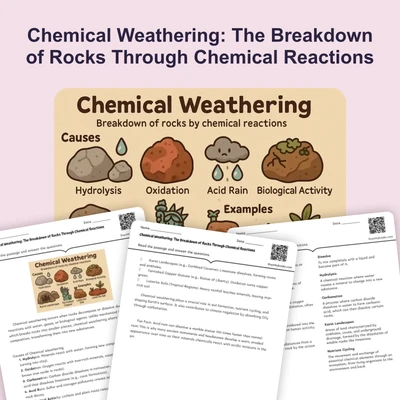
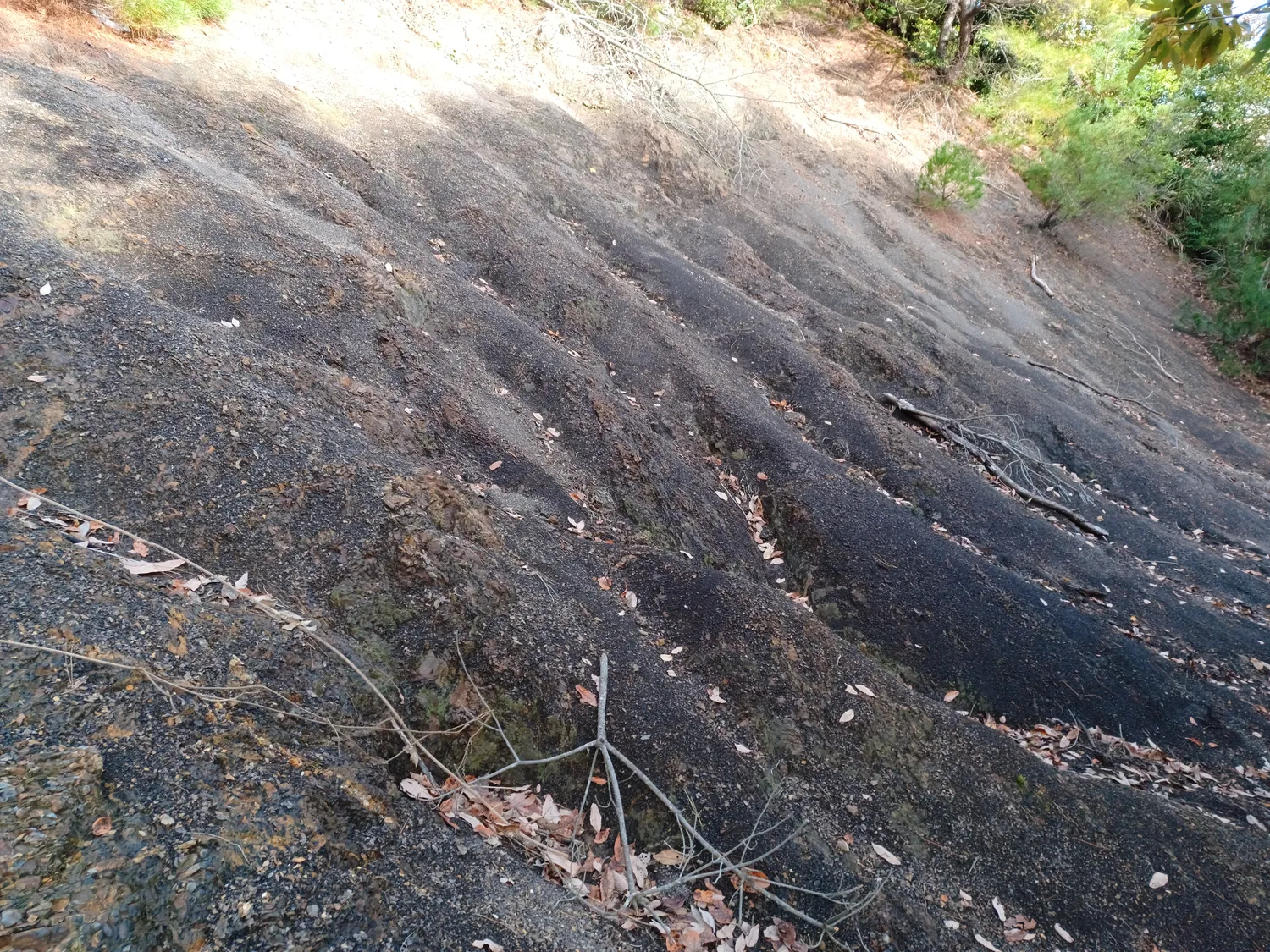
Weathering is the process of breaking rocks into smaller pieces over time. This process happens slowly, often taking hundreds or even thousands of years. Weathering is important because it is one of the main forces that shapes Earth's surface by slowly breaking down mountains, cliffs, and boulders.
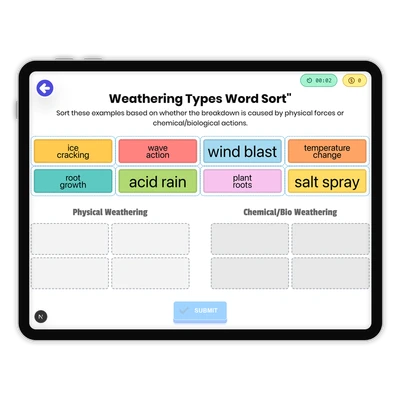
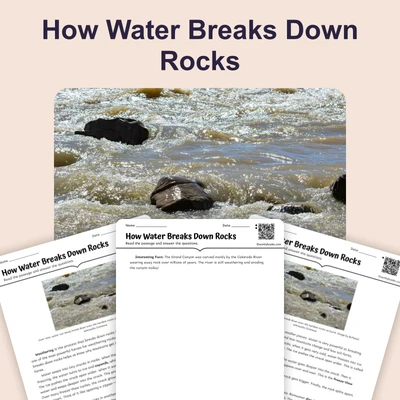
Weathering happens everywhere on Earth's surface where rock is exposed, which means the rock is out in the open where it touches air, water, and living things. Water is one of the most powerful causes of weathering. When water gets into cracks in rocks and freezes, it expands like ice cubes in a tray. This expansion pushes the rock apart from the inside. Rain can also slowly dissolve certain types of rocks, similar to how sugar dissolves in water.
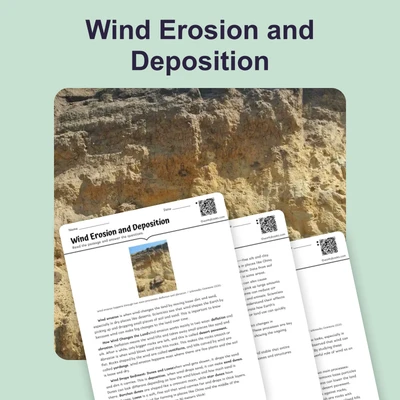
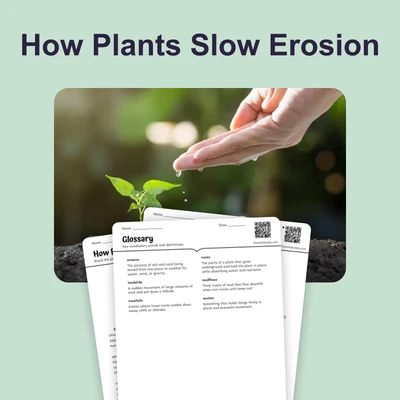
Air and wind also cause weathering by blowing sand and dirt against rocks. Think of it like sandpaper rubbing against wood—over time, the surface wears away. Even living things cause weathering. Plant roots can grow into small cracks in rocks and push them apart as the roots get bigger.
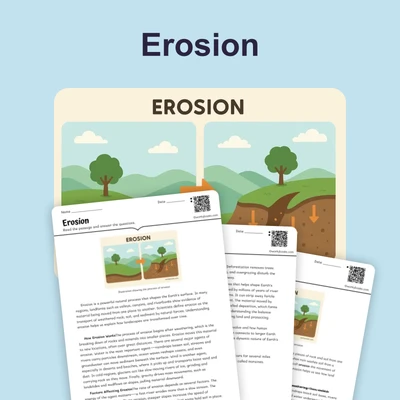
One important thing to remember is that weathering does not move the broken pieces of rock. The pieces stay in place where the rock broke apart. Moving rock pieces is called erosion, which is a different process that students will learn about next.
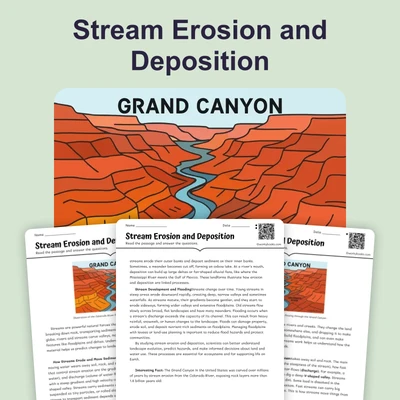
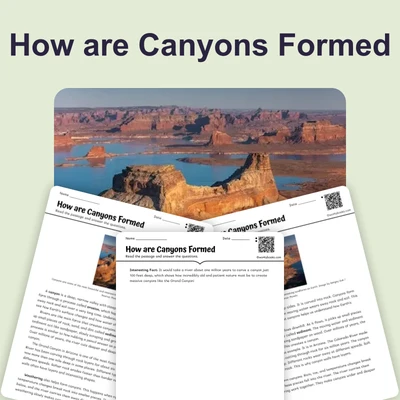
Interesting Fact: Some rocks in the Grand Canyon have been weathering for over 2 billion years! The canyon itself was formed by both weathering breaking down the rocks and erosion carrying the pieces away.
Comprehension quiz (8 questions)
1. What is weathering?
2. How long does weathering usually take?
3. What happens when water freezes in cracks?
4. Why does wind cause weathering?
5. How do plant roots cause weathering?
6. What is the difference between weathering and erosion?
7. Weathering moves broken rock pieces to new places.
8. What does 'exposed' mean in the passage?
Perfect for the way you teach
- Build comprehension skills
- Auto-graded quiz
- Differentiated reading
- Read together at home
- Improve fluency
- Quiet reading time
- Reading curriculum support
- Independent practice
- Track Lexile growth