This learning resource is available in interactive and printable formats. The interactive worksheet can be played online and assigned to students. The Printable PDF version can be downloaded and printed for completion by hand.
This Grade 4-5 science passage explores the fascinating process of canyon formation, focusing on erosion, weathering, and the role of rivers over millions of years. Students will learn important vocabulary such as erosion, weathering, sediment, and landform, all highlighted in the passage. The text uses real-world examples like the Grand Canyon and explains scientific processes in clear, age-appropriate language. This resource aligns with NGSS science standards and includes an integrated glossary, Spanish translation, a multiple-choice quiz, and thoughtful writing prompts. It is designed to help students develop reading comprehension skills, understand cause and effect in nature, and connect science to their everyday lives. Audio integration is available to support diverse learners and improve accessibility. Perfect for classrooms or home study, this passage provides a comprehensive look at how slow processes shape our planet.
CONTENT PREVIEW
Expand content preview
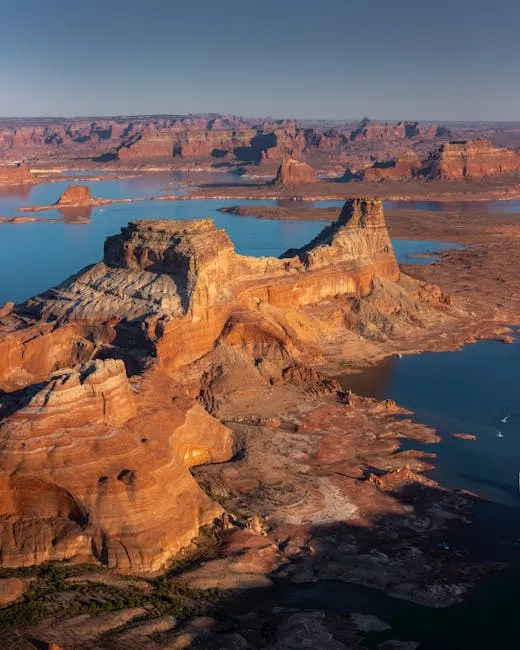
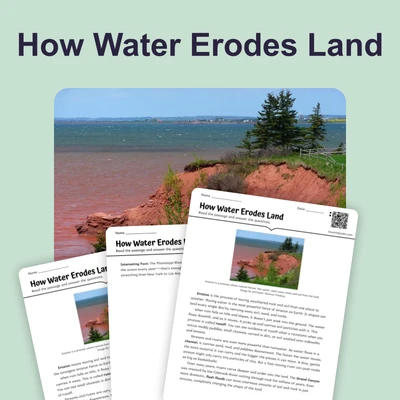
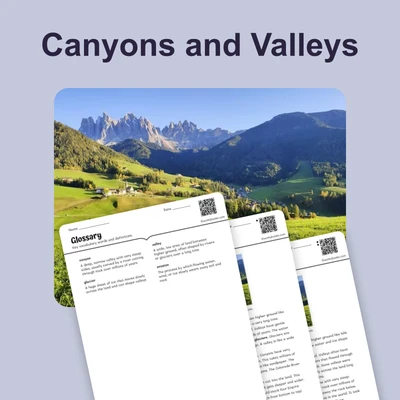
Canyons are some of the most beautiful and interesting landforms on Earth. Image by Sergey Guk / Source: Pexels.
A canyon is a deep, narrow valley with steep sides carved into rock. Canyons form through a process called erosion, which happens when moving water wears away rock and soil over a very long time. Understanding how canyons form helps us see how Earth's surface changes and how water shapes the land around us.
Rivers are the main force that creates canyons. As a river flows downhill, it picks up small pieces of rock, sand, and dirt called sediment. The moving water and sediment act like sandpaper, slowly scraping and grinding away the riverbed. This process is similar to how rubbing a pencil eraser on paper wears away the surface. Over millions of years, the river cuts deeper and deeper into the rock, creating a canyon.
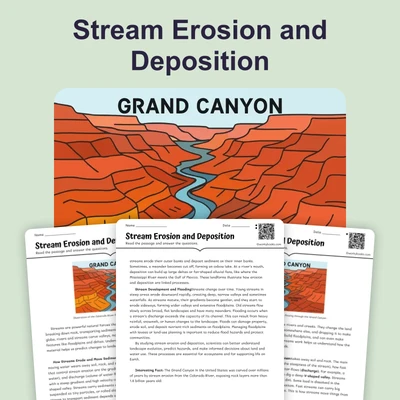
The Grand Canyon in Arizona is one of the most famous examples. The Colorado River has been carving through rock layers for about six million years. The canyon is now more than one mile deep in some places. Different types of rock wear away at different speeds. Softer rock erodes faster than harder rock, which is why canyon walls often have layers and interesting shapes.
Weathering also helps form canyons. This happens when rain, ice, and temperature changes break rock into smaller pieces. These pieces fall into the river below, and the river carries them away downstream. This combination of erosion and weathering slowly makes canyons wider and deeper over time.
Interesting Fact: It would take a river about one million years to carve a canyon just 100 feet deep, which shows how incredibly old and patient nature must be to create massive canyons like the Grand Canyon!
What is a canyon?
A flat piece of landA deep valley with steep sidesA type of mountainA shallow stream
What process creates canyons over time?
FreezingMeltingErosionEvaporation
How long has the Colorado River carved?
One hundred yearsOne thousand yearsSix million yearsTen million years
Why do canyon walls have layers?
Rivers paint them different colorsDifferent rocks erode at different speedsPeople carve them that wayAnimals dig into the walls
How does sediment help create canyons?
It fills in the canyonIt stops the water flowIt acts like sandpaper wearing rockIt makes the water cleaner
What happens during weathering?
Rocks get bigger and strongerRain and ice break rocks apartRivers stop flowingCanyons fill with water
Canyons form quickly in just a few years.
TrueFalse
What does erosion mean in this passage?
Building up new landWearing away rock and soilPlanting trees and grassMaking water flow faster
Perfect For:
👩🏫 Teachers
• Reading comprehension practice
• Auto-graded assessments
• Literacy skill development
👨👩👧👦 Parents
• Reading practice at home
• Comprehension improvement
• Educational reading time
🏠 Homeschoolers
• Reading curriculum support
• Independent reading practice
• Progress monitoring
Reading Features:
📖
Reading Passage
Engaging fiction or nonfiction text
❓
Comprehension Quiz
Auto-graded questions
📊
Instant Feedback
Immediate results and scoring
📄
Printable Version
Download for offline reading
🔊
Read Aloud
Voice-over with word highlighting
Reviews & Ratings
No reviews yet. Be the first to share your experience!
Related Content
Tools and Technology in Earth Science
This middle school science reading passage explores the wide range of tools and technologies used in Earth science, from...
MS-ESS2-2MS-ESS3-2MS-ETS1-1MS-PS4-3
Scientific Inquiry in Earth Science
This passage explores scientific inquiry in Earth science for grades 6-8, aligned with NGSS standards MS-ESS1-4, MS-ESS2...
MS-ESS1-4MS-ESS2-1MS-ESS3-5SEP
What Is Earth Science?
This engaging middle school science passage introduces students to the field of Earth science, aligning with NGSS standa...
MS-ESS1MS-ESS2MS-ESS3SEP
Earth: Our Home in Space
This engaging Grade 4-5 science passage, aligned to NGSS, introduces students to Earth's special place in the solar syst...
Earth's Spheres
This middle school science passage introduces students to Earth's four major spheres: the geosphere, hydrosphere, atmosp...
MS-ESS2-4MS-ESS2-6
What Is Space Weather and How Does It Affect the Earth?
This NGSS-aligned science passage for middle school explains what space weather is and how it affects Earth. Students le...
MS-ESS2-2
Earth's Energy Balance
This engaging, NGSS-aligned science passage for grades 6–8 explores Earth's energy balance, a key process that keeps our...
MS-ESS2-6
Earth's Rotation
This middle school science passage, aligned with NGSS standard MS-ESS1-1, focuses on Earth's rotation—how Earth spins on...
MS-ESS1-1
Earth's Land and Water
This 250-word reading passage introduces fourth-grade students to the fundamental concept of how land and water are dist...
NGSS 4-ESS2-2ESS2.B
Earth's Interior
This comprehensive passage for grades 6-8 explores Earth's layered interior, including the crust, mantle, outer core, an...
MS-ESS2-1MS-ESS2-2
Facts About Earth
This engaging science reading passage introduces Grade 4 and 5 students to Earth, our home planet. Aligned with NGSS sta...
Meteorite Impacts on Earth
This engaging science reading passage for Grades 4-5 explores meteorite impacts on Earth, aligning with NGSS standards. ...
Venus: Earth's Twin?
This comprehensive science passage for grades 6-8 examines Venus—often called Earth's twin—by exploring its similarities...
MS-ESS1-2MS-ESS1-3
Earth Changes Over Millions of Years
This engaging, audio-integrated science passage for Grade 4-5 students explores how Earth has changed over millions of y...
Volcano Patterns on Earth
This Grade 4 science reading passage introduces students to volcano patterns on Earth, aligned with NGSS standard 4-ESS2...
NGSS 4-ESS2-2
Earth's Moon Facts
This engaging science passage, 'The Moon: Earth's Companion,' is designed for Grade 4-5 students and aligns with NGSS ge...
Earth's Quick and Slow Changes
In 'Earth's Quick and Slow Changes,' students categorize 12 Earth events by their speed of occurrence, enhancing underst...
Earth: Our Home Planet
This comprehensive science passage for grades 6-8 explores Earth’s unique characteristics and the interconnected systems...
MS-ESS1-2
Earth's Revolution
This middle school science passage explores the science behind Earth's revolution around the Sun, closely aligned with N...
MS-ESS1-1
Earthquake Patterns on Earth
This engaging 250-word reading passage introduces fourth-grade students to earthquake patterns on Earth, aligned with NG...