How Do Beaches Get Sand
Interactive passage with audio narration, comprehension questions, and printable PDF.
By completing this purchase you agree to our Terms of Use and Privacy Policy. Your subscription renews automatically until you cancel. You can cancel anytime from your account settings. All sales are final and non-refundable. Digital content is available for download in your account immediately upon purchase.
What's included
How Do Beaches Get Sand preview and details
About this printable How Do Beaches Get Sand science reading passage, NGSS-aligned (Grades 5-8)
Sample passage and quiz from How Do Beaches Get Sand
Reading passage and comprehension quiz preview
How Do Beaches Get Sand
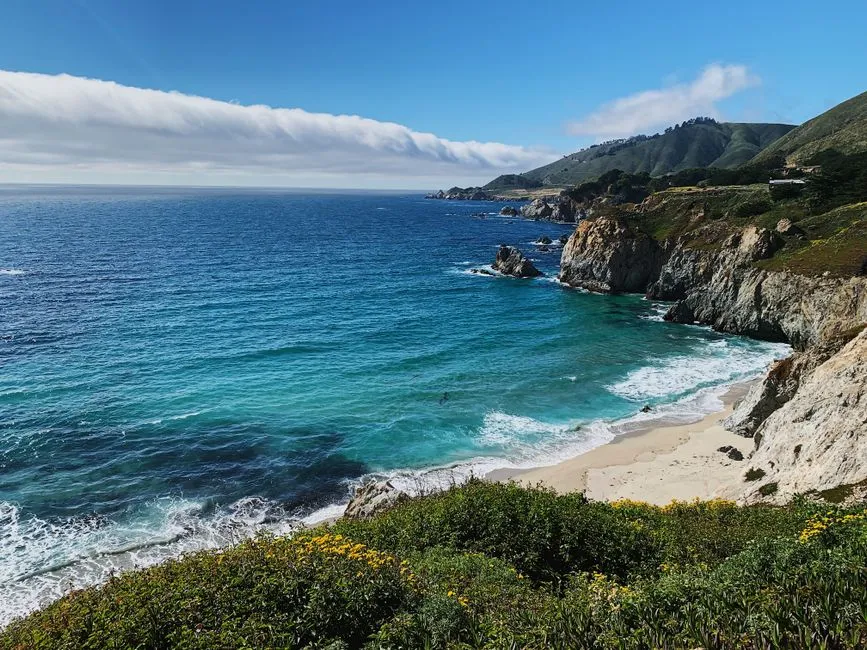
Breathtaking view of cliffs and ocean at Big Sur, California's coastline. by Solvej Nielsen / Pexels.
Beaches get their sand from the erosion of rocky coastlines by ocean waves. Over thousands of years, waves break down coastal rocks into smaller and smaller pieces. These tiny fragments eventually become the sand grains we see on beaches. This process shows how Earth's surface constantly changes through natural forces.
Ocean waves act as powerful erosive agents along coastlines. When waves crash against rocky shores, they use two main methods to break down rock. First, the sheer force of water hitting the rock can crack and weaken it. Second, waves use abrasion—they hurl sand, pebbles, and rocks against the shore like natural sandpaper. Evidence shows that waves erode most powerfully at the base of coastal rocks, where water strikes repeatedly. Scientists observe that this concentrated attack slowly carves a notch into the rock. As the notch deepens, it undercuts the rock above, creating an overhang. Eventually, the unsupported rock can no longer hold its own weight and collapses into the sea.
When the overhang falls, it leaves behind a steep wall of rock called a sea cliff. The fallen debris washes away as waves continue their relentless work. This cycle repeats over and over, causing the cliff to gradually retreat inland. At the base of many sea cliffs, a flat ledge called a wave-cut platform remains. This platform becomes visible during low tide. The process works like a sculptor chipping away at stone, except the ocean uses water and sediment as its tools. As rocks break apart, they become smaller fragments that waves carry away through deposition. These fragments tumble in the ocean, grinding against each other and becoming smoother and smaller.
The Pacific Coast of California provides a clear example of this process. Scientists have measured sea cliffs there retreating several inches to several feet per year. The constant pounding of waves continues to carve new sand from ancient rock. This sand then travels along the coast through longshore drift, eventually settling on beaches. Understanding coastal erosion matters because it helps communities plan for changing shorelines. It also shows how Earth's systems work together—waves, rocks, and time combine to reshape our planet's surface continuously.
Interesting Fact: A single grain of beach sand may have started as part of a mountain millions of years ago, traveled down rivers, and spent thousands of years being tumbled by ocean waves before landing on a beach.
Comprehension quiz (10 questions)
1. Where does beach sand originally come from?
2. What is abrasion in the context of coastal erosion?
3. Where do waves erode rock most powerfully along a coastline?
4. What is a wave-cut platform?
5. According to the passage, what is sediment?
6. What happens after an overhang of rock collapses into the sea?
7. How fast do some sea cliffs along California's Pacific Coast retreat each year?
8. What is longshore drift?
9. True or False: Waves use only one method to break down coastal rocks.
10. True or False: A single grain of beach sand may have taken thousands of years to form.
Perfect for the way you teach
- Build comprehension skills
- Auto-graded quiz
- Differentiated reading
- Read together at home
- Improve fluency
- Quiet reading time
- Reading curriculum support
- Independent practice
- Track Lexile growth