How Does Wind Form Sand Dunes
Interactive passage with audio narration, comprehension questions, and printable PDF.
By completing this purchase you agree to our Terms of Use and Privacy Policy. Your subscription renews automatically until you cancel. You can cancel anytime from your account settings. All sales are final and non-refundable. Digital content is available for download in your account immediately upon purchase.
What's included
How Does Wind Form Sand Dunes preview and details
About this printable How Does Wind Form Sand Dunes science reading passage, NGSS-aligned (Grades 5-8)
Sample passage and quiz from How Does Wind Form Sand Dunes
Reading passage and comprehension quiz preview
How Does Wind Form Sand Dunes
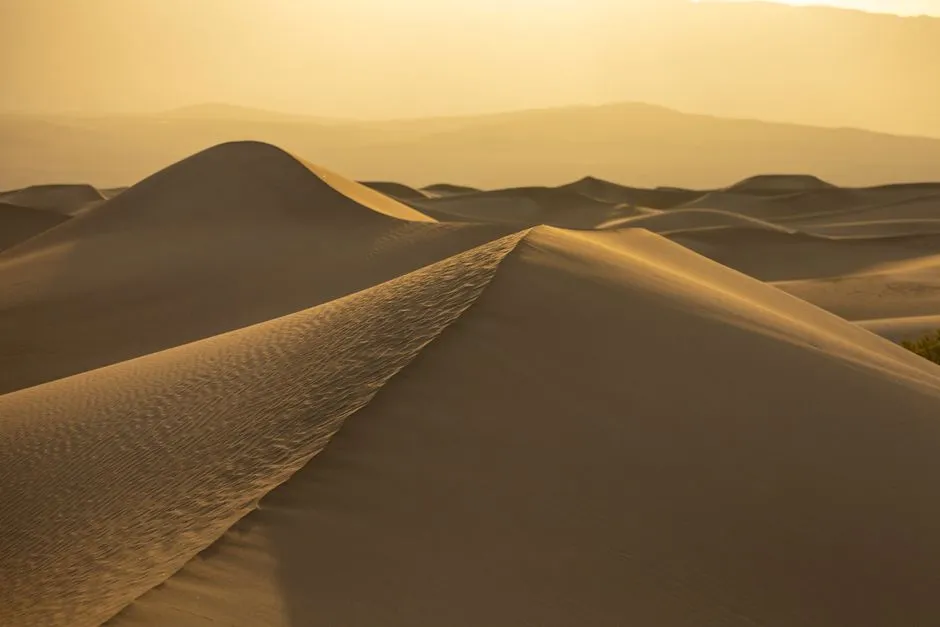
Sand dunes form when wind slows down and drops the sand particles it was carrying. This process happens through deposition, where materials settle out of moving air or water. Wind picks up loose sand grains from beaches, deserts, or dry riverbeds through erosion. When the moving air encounters an obstacle like a rock, plant, or small hill, it loses energy. The wind can no longer carry all its sand, so particles begin to pile up. Over time, these piles grow into dunes.
A sand dune has two distinct sides that reveal how wind shapes it. The windward side faces the wind and has a gentle slope. Wind pushes sand grains up this slope through a process called saltation, where particles bounce and hop along the surface. When sand reaches the top of the dune, it tumbles down the steep back side called the leeward slope. This sheltered side stays steeper because wind cannot blow directly on it. Scientists observe that this constant movement causes the entire dune to migrate slowly in the direction the wind blows. Evidence shows some dunes move several meters each year.
Dune migration can reshape landscapes and affect human activities. In the Outer Banks of North Carolina, moving dunes have buried sections of roadways and threatened buildings. Scientists explain that different wind patterns create different dune shapes. Steady winds from one direction form long ridges called linear dunes. Winds that shift direction create crescent-shaped barchan dunes with points that aim downwind. Star dunes form where winds blow from multiple directions, creating peaks with several arms.
Understanding how wind forms dunes helps us predict landscape changes in desert and coastal regions. Wind acts as both a destroyer through erosion and a builder through deposition. These processes continuously reshape Earth's surface. Managing dune systems matters for protecting beaches, wildlife habitats, and coastal communities from storms. Scientists study dune formation to understand how Earth's surface responds to the flow of energy through wind.
Interesting Fact: The tallest sand dunes on Earth are found in the Badain Jaran Desert in China, where some dunes tower over 400 meters high—taller than the Empire State Building!
Comprehension quiz (10 questions)
1. What causes wind to drop the sand it is carrying and begin forming a dune?
2. Which side of a sand dune has a gentle slope where wind pushes sand upward?
3. What is saltation?
4. Based on the passage, what can you infer about why the leeward slope is steeper than the windward slope?
5. According to the passage, what type of dune forms when winds blow from multiple directions?
6. If a coastal town wanted to prevent sand dunes from burying their roads, which strategy would be most effective based on the passage?
7. How does wind act as both a destroyer and a builder in shaping landscapes?
8. What real-world example does the passage provide to show the effects of dune migration?
9. True or False: Sand dunes remain in one place once they are formed and do not move over time.
10. True or False: Different wind patterns can create different shapes of sand dunes.
Perfect for the way you teach
- Build comprehension skills
- Auto-graded quiz
- Differentiated reading
- Read together at home
- Improve fluency
- Quiet reading time
- Reading curriculum support
- Independent practice
- Track Lexile growth