How Water Breaks Down Rocks — Reading Comprehension
Rate this
Premium Resource
Present
Present in classroom. No work saved
Assign
Classroom with student accounts, Track progress
Quick Play
No student accounts, assign with a link
Grades
3
4
5
6
PRINT+DIGITAL RESOURCE
This learning resource is available in interactive and printable formats. The interactive worksheet can be played online and assigned to students. The Printable PDF version can be downloaded and printed for completion by hand.
This engaging passage, aligned to NGSS science standards, explains how water breaks down rocks through processes like weathering and erosion. Students will learn about key concepts such as mechanical and chemical weathering, and how these processes shape landscapes and form soil. The passage includes bolded vocabulary terms with definitions in a glossary, real-world examples, and an interesting science fact. Activities include a multiple-choice quiz and writing prompts to help students understand and apply the concepts. The content is designed for grade 4-5 students with appropriate reading level and language, plus a full Spanish translation for bilingual classrooms. Audio integration supports diverse learners. This resource helps teachers meet science standards while making earth science exciting and accessible for all students.
CONTENT PREVIEW
Expand content preview
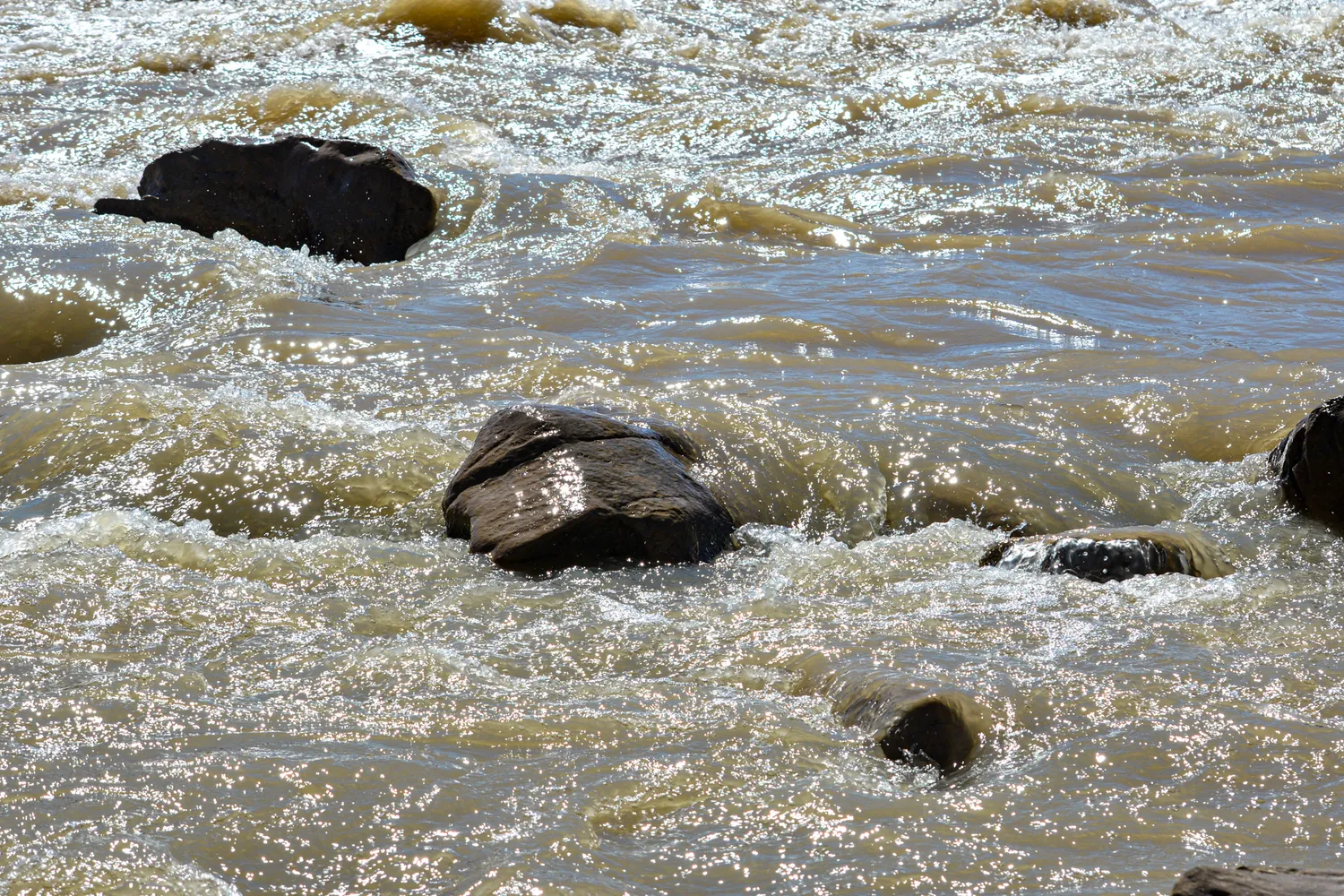
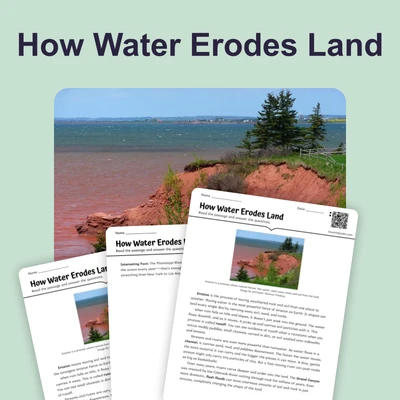
Over time, water can slowly break down even the hardest rocks on Earth. Image by BLMUtah Wikimedia Commons
Weathering is the process that breaks down rocks into smaller pieces. Water is one of the most powerful forces for weathering rocks. Understanding how water breaks down rocks helps us know why mountains get smaller over time and how soil forms.
Water seeps into tiny cracks in rocks. When the temperature drops below freezing, the water turns to ice and expands, which means it takes up more space. The ice pushes the crack open wider. When it warms up, the ice melts back into water and seeps deeper into the crack. This process is called the freeze-thaw cycle. Over many freeze-thaw cycles, the crack grows larger and larger until the rock splits apart. Think of it like opening a zipper—each cycle pulls the rock apart a little more.
Water also breaks down rocks in another way. Rainwater slowly dissolves certain minerals in rock, which means it breaks them down and carries them away bit by bit. Minerals are the natural materials that make up rocks. Rivers and ocean waves also weather rocks by constantly flowing over them and wearing them away.
Both freezing and dissolving take a very long time—sometimes thousands of years—but they are always working to change Earth's surface.
Interesting Fact: The Grand Canyon was carved mainly by the Colorado River wearing away rock over millions of years. The river is still weathering and eroding the canyon today!
What is weathering?
The process of rocks breaking downThe process of water freezingThe process of ice meltingThe process of mountains forming
What happens to water when it freezes?
It shrinks and gets smallerIt expands and takes more spaceIt stays the same sizeIt disappears completely
How long does weathering usually take?
A few minutes or hoursA few days or weeksThousands of years or moreExactly one year
Why does ice push cracks open wider?
Because ice is heavier than waterBecause ice takes up more spaceBecause ice is colder than waterBecause ice flows like water
What does rainwater do to minerals?
Makes them harder and strongerChanges their color onlyDissolves them and carries them awayFreezes them into ice
How do rivers weather rocks?
By freezing the rocks solidBy constantly flowing and wearing awayBy making the rocks expandBy heating the rocks up
Water always weathers rocks very quickly.
TrueFalse
What are minerals?
Tiny pieces of ice crystalsNatural materials that make up rocksSmall drops of waterCracks found in rocks
Perfect For:
👩🏫 Teachers
• Reading comprehension practice
• Auto-graded assessments
• Literacy skill development
👨👩👧👦 Parents
• Reading practice at home
• Comprehension improvement
• Educational reading time
🏠 Homeschoolers
• Reading curriculum support
• Independent reading practice
• Progress monitoring
Reading Features:
📖
Reading Passage
Engaging fiction or nonfiction text
❓
Comprehension Quiz
Auto-graded questions
📊
Instant Feedback
Immediate results and scoring
📄
Printable Version
Download for offline reading
🔊
Read Aloud
Voice-over with word highlighting
Reviews & Ratings
No reviews yet. Be the first to share your experience!
Related Content
Tools and Technology in Earth Science
This middle school science reading passage explores the wide range of tools and technologies used in Earth science, from...
MS-ESS2-2MS-ESS3-2MS-ETS1-1MS-PS4-3
Scientific Inquiry in Earth Science
This passage explores scientific inquiry in Earth science for grades 6-8, aligned with NGSS standards MS-ESS1-4, MS-ESS2...
MS-ESS1-4MS-ESS2-1MS-ESS3-5SEP
What Is Earth Science?
This engaging middle school science passage introduces students to the field of Earth science, aligning with NGSS standa...
MS-ESS1MS-ESS2MS-ESS3SEP
Earth: Our Home in Space
This engaging Grade 4-5 science passage, aligned to NGSS, introduces students to Earth's special place in the solar syst...
Earth's Spheres
This middle school science passage introduces students to Earth's four major spheres: the geosphere, hydrosphere, atmosp...
MS-ESS2-4MS-ESS2-6
What Is Space Weather and How Does It Affect the Earth?
This NGSS-aligned science passage for middle school explains what space weather is and how it affects Earth. Students le...
MS-ESS2-2
Earth's Energy Balance
This engaging, NGSS-aligned science passage for grades 6–8 explores Earth's energy balance, a key process that keeps our...
MS-ESS2-6
Earth's Rotation
This middle school science passage, aligned with NGSS standard MS-ESS1-1, focuses on Earth's rotation—how Earth spins on...
MS-ESS1-1
Earth's Land and Water
This 250-word reading passage introduces fourth-grade students to the fundamental concept of how land and water are dist...
NGSS 4-ESS2-2ESS2.B
Earth's Interior
This comprehensive passage for grades 6-8 explores Earth's layered interior, including the crust, mantle, outer core, an...
MS-ESS2-1MS-ESS2-2
Facts About Earth
This engaging science reading passage introduces Grade 4 and 5 students to Earth, our home planet. Aligned with NGSS sta...
Meteorite Impacts on Earth
This engaging science reading passage for Grades 4-5 explores meteorite impacts on Earth, aligning with NGSS standards. ...
Earth Changes Over Millions of Years
This engaging, audio-integrated science passage for Grade 4-5 students explores how Earth has changed over millions of y...
Venus: Earth's Twin?
This comprehensive science passage for grades 6-8 examines Venus—often called Earth's twin—by exploring its similarities...
MS-ESS1-2MS-ESS1-3
Volcano Patterns on Earth
This Grade 4 science reading passage introduces students to volcano patterns on Earth, aligned with NGSS standard 4-ESS2...
NGSS 4-ESS2-2
Earth's Quick and Slow Changes
In 'Earth's Quick and Slow Changes,' students categorize 12 Earth events by their speed of occurrence, enhancing underst...
Earth: Our Home Planet
This comprehensive science passage for grades 6-8 explores Earth’s unique characteristics and the interconnected systems...
MS-ESS1-2
Earth's Moon Facts
This engaging science passage, 'The Moon: Earth's Companion,' is designed for Grade 4-5 students and aligns with NGSS ge...
Earth's Revolution
This middle school science passage explores the science behind Earth's revolution around the Sun, closely aligned with N...
MS-ESS1-1
Earthquake Patterns on Earth
This engaging 250-word reading passage introduces fourth-grade students to earthquake patterns on Earth, aligned with NG...