Wetlands and Carbon Storage
Interactive passage with audio narration, comprehension questions, and printable PDF.
By completing this purchase you agree to our Terms of Use and Privacy Policy. Your subscription renews automatically until you cancel. You can cancel anytime from your account settings. All sales are final and non-refundable. Digital content is available for download in your account immediately upon purchase.
What's included
Wetlands and Carbon Storage preview and details
About this printable Wetlands and Carbon Storage science reading passage, NGSS-aligned (Grades 5-8)
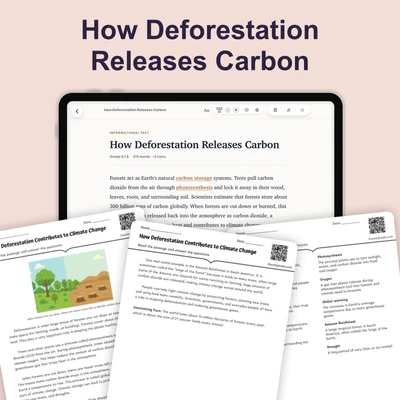
Sample passage and quiz from Wetlands and Carbon Storage
Reading passage and comprehension quiz preview
Wetlands and Carbon Storage
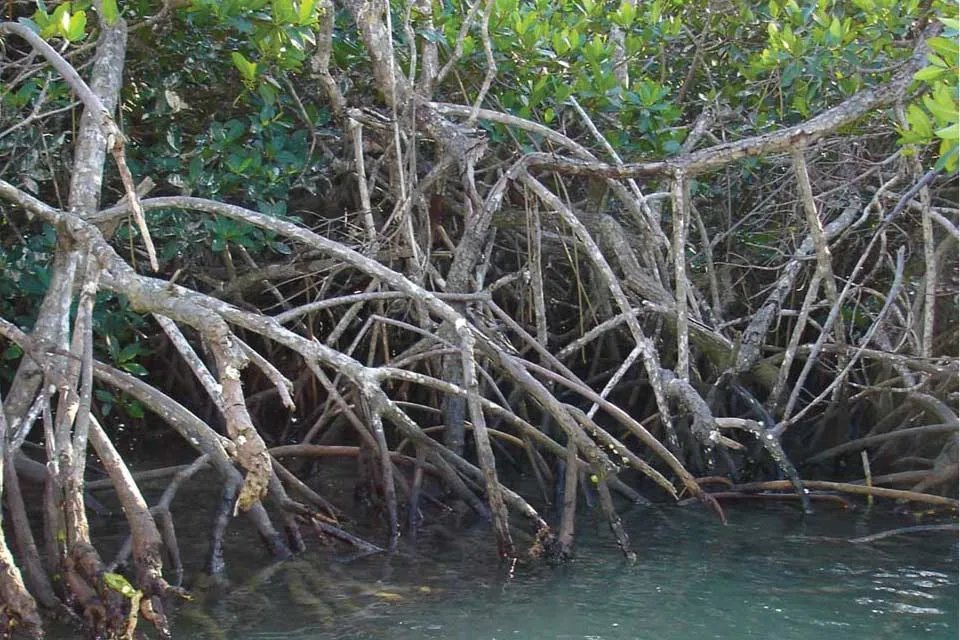
Coastal wetlands like mangroves and salt marshes store what scientists call blue carbon. Mangrove forest in Loxahatchee, Florida by NOAA / Wikimedia Commons
Wetlands might seem like muddy, unimportant places, but they are powerful carbon heroes. These soggy ecosystems—including marshes, mangroves, peatlands, and seagrass meadows—store carbon remarkably well. Scientists explain that wetlands trap carbon because their waterlogged soils contain very little oxygen. Without oxygen, dead plants decay extremely slowly. This means carbon from plant material piles up over centuries instead of escaping into the atmosphere as carbon dioxide.
The process works because decomposition requires oxygen. When plants die in dry environments, tiny organisms called decomposers break them down quickly, releasing carbon dioxide. In wetlands, however, water fills the spaces between soil particles. This creates anaerobic conditions where decomposers cannot work efficiently. Dead plant material accumulates layer upon layer, forming thick deposits of carbon-rich soil. Over time, this stored carbon can remain locked away for hundreds or even thousands of years.
Coastal wetlands like mangroves and salt marshes store what scientists call blue carbon. Evidence shows these ecosystems pack away more carbon per acre than many forests. Mangrove forests, found in tropical and subtropical coastlines, have dense root systems that trap sediment and organic matter. Salt marshes along temperate coasts build up layers of carbon-rich mud. Seagrass meadows on shallow ocean floors also capture and store significant amounts of carbon. These coastal wetlands cover less than two percent of ocean area but may account for half of all carbon buried in ocean sediments.
The danger comes when humans drain or destroy wetlands for agriculture, development, or other purposes. Draining a wetland introduces oxygen into previously waterlogged soils. This reverses the carbon storage process rapidly. Decomposers become active again and break down centuries of accumulated plant material. The stored carbon escapes as carbon dioxide, contributing to climate change. A single drained peatland can release as much carbon in decades as it stored over thousands of years.
Protecting existing wetlands and rewetting drained ones keeps carbon locked underground. Scientists observe that wetland restoration projects can help reduce atmospheric carbon dioxide levels. When water returns to drained wetlands, anaerobic conditions form again and carbon storage resumes. Conservation efforts focus on preventing further wetland loss and restoring damaged ecosystems. Understanding wetlands as carbon storage systems shows why these ecosystems matter for Earth's climate stability.
Interesting Fact: Peatlands cover only three percent of Earth's land surface but store twice as much carbon as all the world's forests combined!
Comprehension quiz (10 questions)
1. Why do wetlands store carbon so effectively?
2. What are decomposers?
3. What is blue carbon?
4. According to the passage, coastal wetlands cover less than two percent of ocean area but may account for what portion of carbon buried in ocean sediments?
5. What happens when wetlands are drained?
6. Based on the passage, why do mangrove forests store large amounts of carbon?
7. What can scientists infer about the relationship between oxygen and carbon storage in wetlands?
8. If a city drains a wetland to build houses, which outcome is most likely based on the passage?
9. True or False: Peatlands cover three percent of Earth's land surface but store twice as much carbon as all the world's forests combined.
10. True or False: When water returns to drained wetlands, carbon storage cannot resume because the soil has been permanently damaged.
Perfect for the way you teach
- Build comprehension skills
- Auto-graded quiz
- Differentiated reading
- Read together at home
- Improve fluency
- Quiet reading time
- Reading curriculum support
- Independent practice
- Track Lexile growth