What Caused The Ice Age
Interactive passage with audio narration, comprehension questions, and printable PDF.
By completing this purchase you agree to our Terms of Use and Privacy Policy. Your subscription renews automatically until you cancel. You can cancel anytime from your account settings. All sales are final and non-refundable. Digital content is available for download in your account immediately upon purchase.
What's included
What Caused The Ice Age preview and details
About this printable What Caused The Ice Age science reading passage, NGSS-aligned (Grade 6)
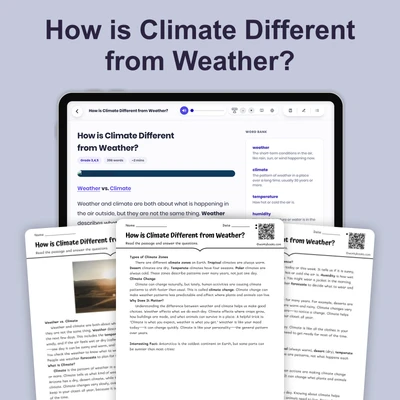
Sample passage and quiz from What Caused The Ice Age
Reading passage and comprehension quiz preview
What Caused The Ice Age
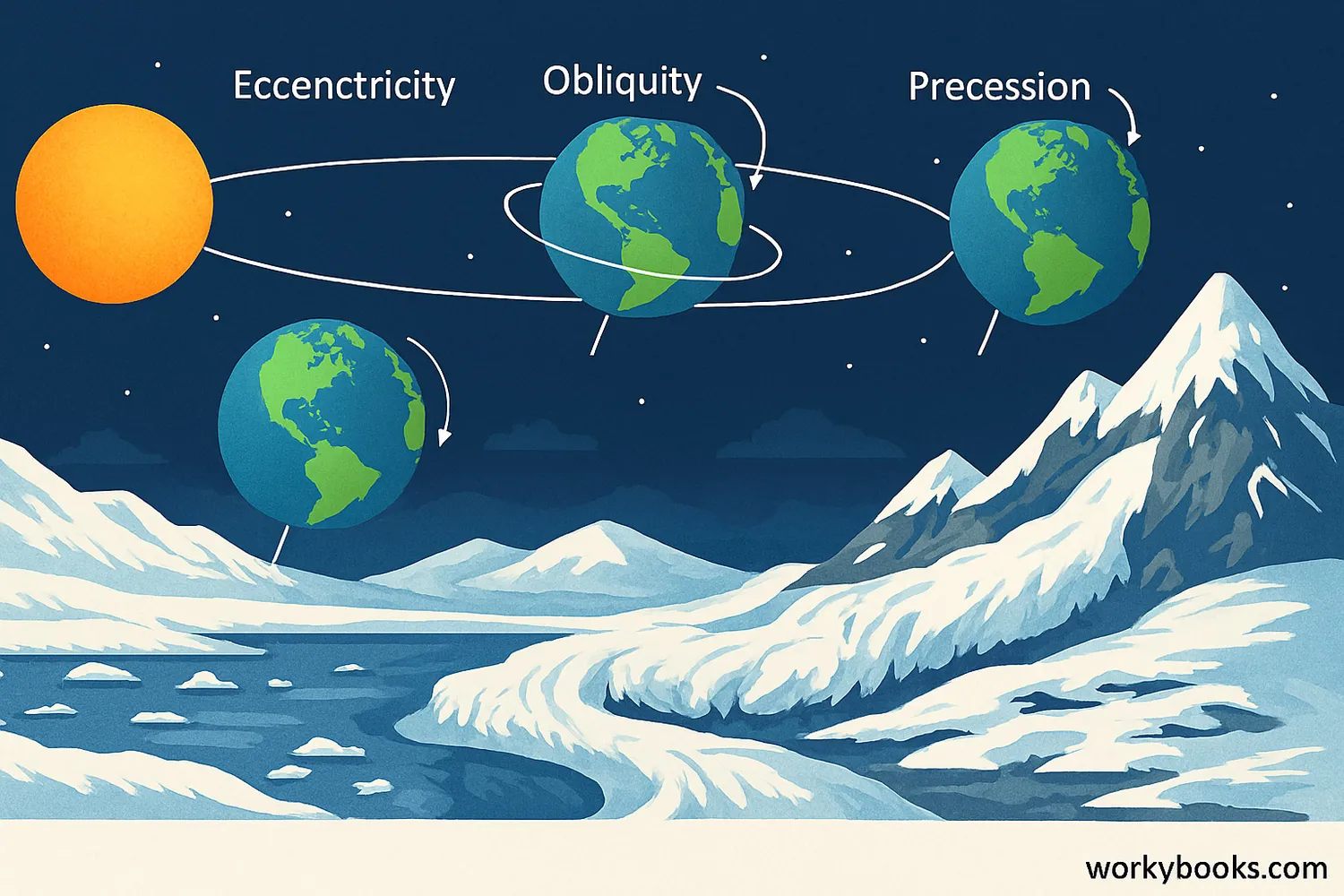
Imagine a time when huge sheets of ice, like giant frozen blankets, covered much of Earth. This wasn't just a chilly winter; it was an Ice Age. An Ice Age is a long period of time when Earth's global temperature is much colder than usual, leading to the growth of enormous glaciers. These glaciers are massive rivers of ice that slowly move, shaping mountains, carving valleys, and changing the entire landscape. We are actually still in an Ice Age, but currently experiencing a warmer part of it! So, what incredible forces caused these dramatic changes to our planet's surface?
The main reason for the Ice Ages lies in subtle, long-term shifts in Earth's orbit and its tilt, known as Milankovitch Cycles. These cycles, named after Serbian scientist Milutin Milanković, aren't about Earth getting closer or farther from the Sun in a simple way. Instead, they describe three main changes. First, Earth's orbit around the Sun changes shape, sometimes becoming more oval and sometimes more circular. This is called eccentricity. Second, the tilt of Earth's axis, which gives us our seasons, changes slightly. Sometimes it tilts more, sometimes less. This is called obliquity. Third, Earth's axis wobbles, like a spinning top that's slowing down. This wobble, or precession, changes which part of the year different hemispheres are tilted towards or away from the Sun.
These three cycles combine to affect how much sunlight, or insolation, different parts of Earth receive at different times of the year. When less sunlight reaches the Northern Hemisphere during summer, it means less snow and ice melt from the previous winter. Over thousands of years, if more snow accumulates than melts, these layers compact and turn into glaciers, marking the start of a glacial period. When the cycles align to bring more insolation to the Northern Hemisphere's summers, glaciers retreat, and we enter an interglacial period, which is the warmer time we are experiencing now.
Other factors can also influence Earth's climate, like volcanic eruptions sending ash into the atmosphere, which can block sunlight and cause cooling, or changes in greenhouse gases. However, for the major, long-term swings between glacial and interglacial periods that define an Ice Age, the Milankovitch Cycles are considered the primary drivers. These natural geoscience processes demonstrate how Earth’s climate and surface are constantly changing over vast time scales, reminding us of the dynamic nature of our planet.
Interesting Fact: The last major glacial period ended about 11,700 years ago, and during its peak, much of North America was covered by ice sheets over a mile thick!
Comprehension quiz (10 questions)
1. What are massive rivers of ice?
2. What are the cycles that describe changes in Earth's orbit and tilt?
3. What causes an Ice Age?
4. When does a glacial period begin?
5. What term describes the wobble of Earth's axis?
6. How do Milankovitch Cycles affect glaciers?
7. What happens during an interglacial period?
8. The Earth is currently in an interglacial period.
9. If Earth's tilt decreased, how might that affect seasons?
10. Which term means the amount of sunlight Earth receives?
Perfect for the way you teach
- Build comprehension skills
- Auto-graded quiz
- Differentiated reading
- Read together at home
- Improve fluency
- Quiet reading time
- Reading curriculum support
- Independent practice
- Track Lexile growth