What Does a California Condor Eat
Interactive passage with audio narration, comprehension questions, and printable PDF.
By completing this purchase you agree to our Terms of Use and Privacy Policy. Your subscription renews automatically until you cancel. You can cancel anytime from your account settings. All sales are final and non-refundable. Digital content is available for download in your account immediately upon purchase.
What's included
What Does a California Condor Eat preview and details
About this printable What Does a California Condor Eat science reading passage, NGSS-aligned (Grade 6)
Sample passage and quiz from What Does a California Condor Eat
Reading passage and comprehension quiz preview
The California Condor's Role as a Scavenger
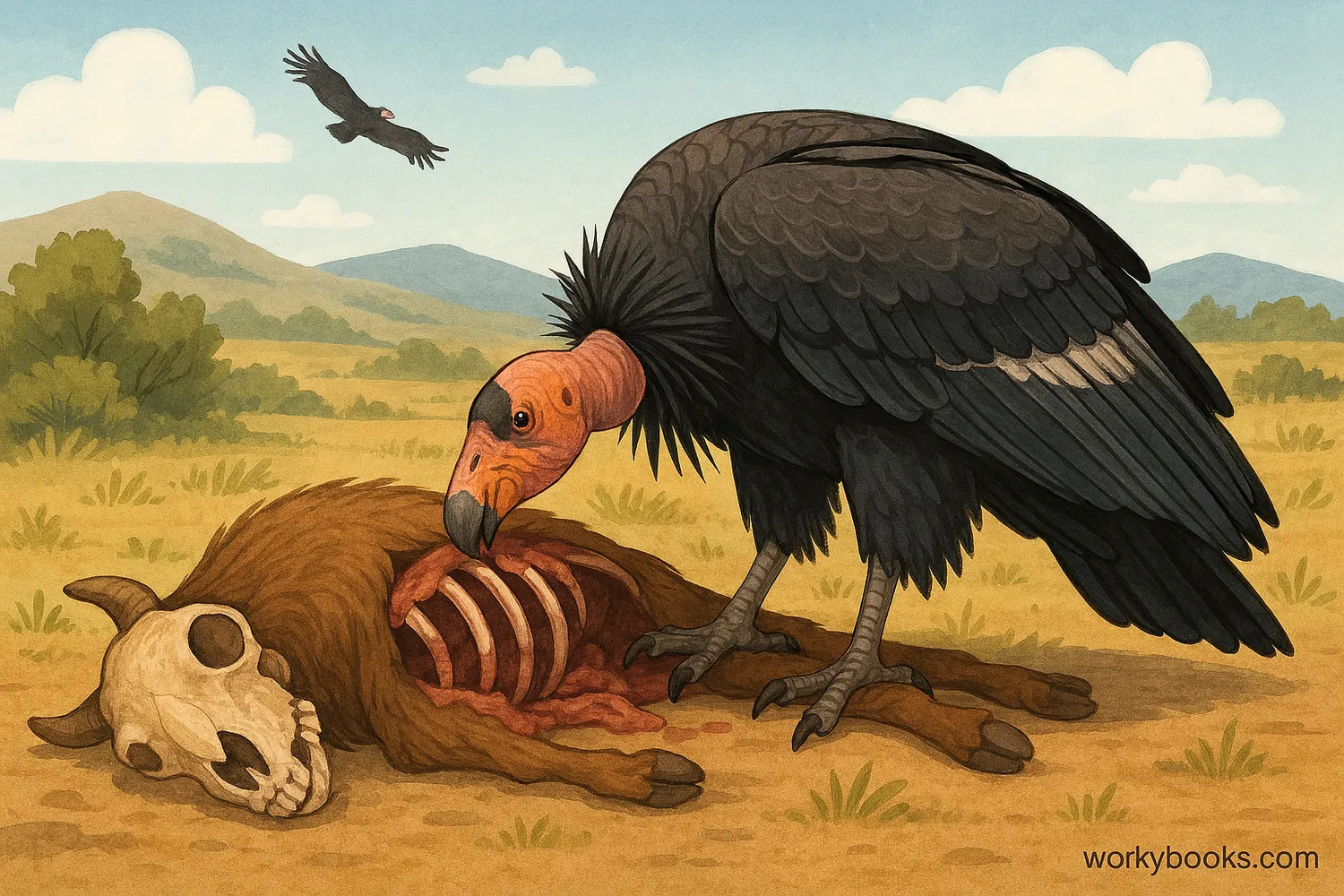
When an animal dies in the wild, the ecosystem relies on a special group of creatures to restore balance. Luckily, nature has its own clean-up crew, and one of the most impressive members is the California Condor. These magnificent birds are not just large; they play a crucial role in the ecosystem, helping to keep our environment healthy and balanced. Understanding the California Condor's role is key to appreciating the complex cycles of nature.
The California Condor is a scavenger. This means it primarily eats carrion, which is the remains of dead animals. Unlike predators that hunt and kill their own food, condors search for animals that have already died, whether from natural causes, accidents, or other predators. Their keen eyesight allows them to spot carrion from high above, soaring effortlessly on air currents. By consuming these carcasses, condors prevent the buildup of dead organic material, which could otherwise spread diseases and pollute the environment. This makes them essential for nutrient recycling.
Think of it like this: when an animal dies, its body contains many valuable nutrients. If these nutrients just stayed in the dead animal, they wouldn't be available for other living things. When a California Condor eats carrion, it processes these nutrients. Later, when the condor's waste products return to the soil, or when the condor itself eventually dies, those nutrients are released back into the ecosystem. This process is a vital part of the food web, ensuring that matter and energy are continuously transferred and reused, rather than being locked away.
California Condors are often called "nature's recyclers" because of this important job. Without them, and other scavengers like vultures and some insects, the natural process of decomposition would be much slower and less efficient. Their contribution to the cycles of matter and energy transfer is a perfect example of how every creature, no matter how unusual its eating habits might seem, has a significant part to play in maintaining a healthy planet. Conserving these incredible birds is not just about protecting a species; it's about protecting the natural processes that keep our world thriving.
Interesting Fact: California Condors are one of the longest-living birds in the world, capable of living for up to 60 years or more.
Comprehension quiz (10 questions)
1. What do California Condors primarily eat?
2. What is carrion?
3. How do condors help prevent disease spread?
4. What is the main benefit of nutrient recycling?
5. Why are condors called "nature's recyclers"?
6. What would happen without scavengers?
7. Which characteristic helps condors find food?
8. Conserving condors is important for healthy processes. True or False?
9. What concept refers to continuous transfer of matter and energy?
10. If a new species of scavenger was introduced, what would happen?
Perfect for the way you teach
- Build comprehension skills
- Auto-graded quiz
- Differentiated reading
- Read together at home
- Improve fluency
- Quiet reading time
- Reading curriculum support
- Independent practice
- Track Lexile growth