What Instrument Is Normally Used To Measure Atmospheric Pressure?
Interactive passage with audio narration, comprehension questions, and printable PDF.
By completing this purchase you agree to our Terms of Use and Privacy Policy. Your subscription renews automatically until you cancel. You can cancel anytime from your account settings. All sales are final and non-refundable. Digital content is available for download in your account immediately upon purchase.
What's included
What Instrument Is Normally Used To Measure Atmospheric Pressure? preview and details
About this printable What Instrument Is Normally Used To Measure Atmospheric Pressure? science reading passage, NGSS-aligned (Grade 6)
Sample passage and quiz from What Instrument Is Normally Used To Measure Atmospheric Pressure?
Reading passage and comprehension quiz preview
What Instrument Is Normally Used To Measure Atmospheric Pressure?
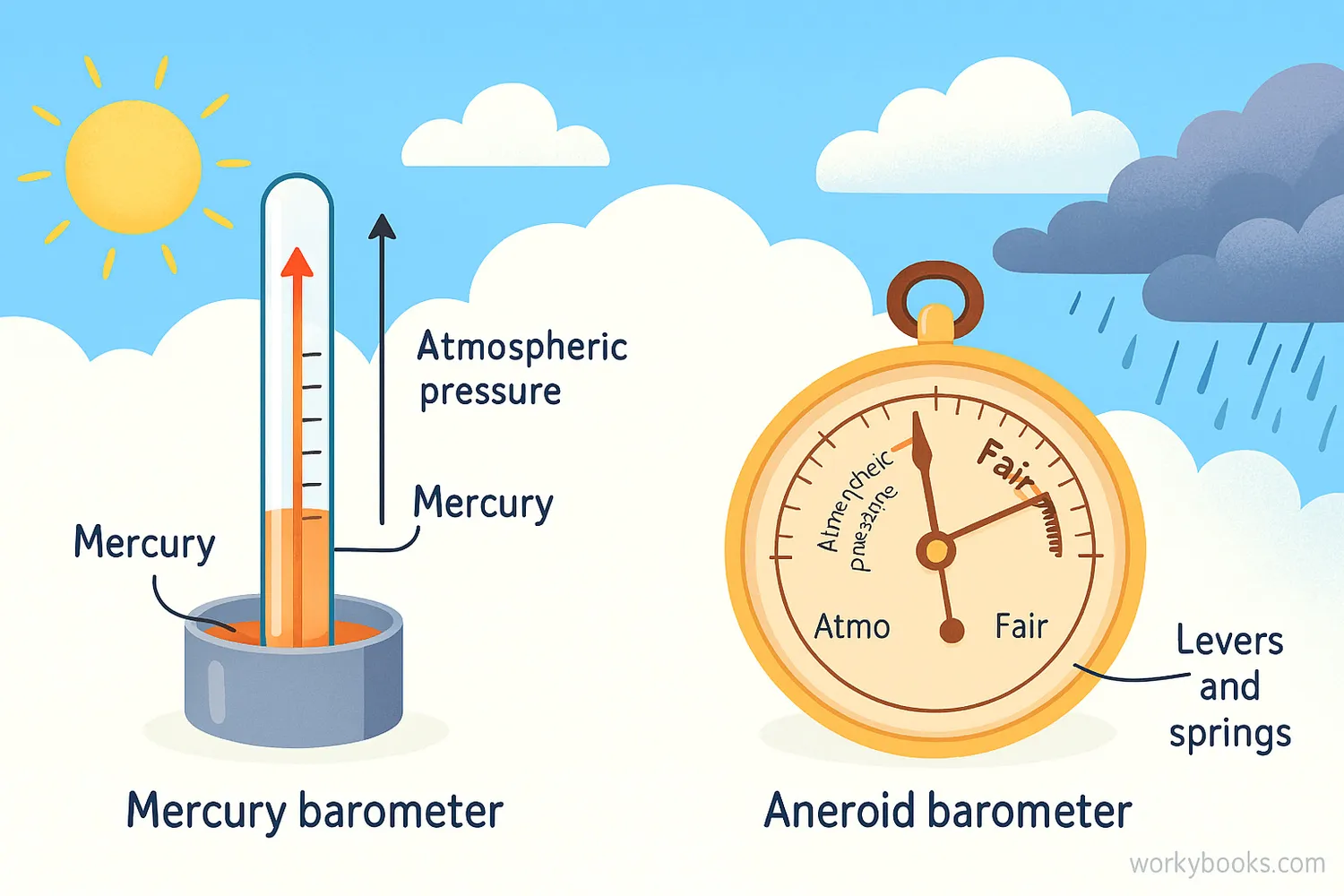
Have you ever wondered why meteorologists can predict if it's going to rain or be sunny? One important tool they use to understand weather changes is an instrument that measures atmospheric pressure. Atmospheric pressure is the weight of the air pushing down on the Earth's surface. Think of it like a giant blanket of air all around us, and that blanket has weight!
The primary instrument used to measure atmospheric pressure is called a barometer. The word "barometer" comes from Greek words meaning "weight" and "measure." Barometers are crucial for weather forecasting because changes in air pressure often signal changes in weather. For example, falling pressure usually means stormy weather is on its way, while rising pressure often indicates fair, clear weather.
There are two main types of barometers. The first is the mercury barometer. This type uses a column of mercury in a glass tube. As the atmospheric pressure increases, it pushes down on a pool of mercury, forcing the mercury up the tube. When the pressure decreases, the mercury column falls. These barometers are very accurate but can be delicate and contain mercury, which is a hazardous substance.
The second, and more common, type today is the aneroid barometer. "Aneroid" means "without liquid." Instead of mercury, this barometer uses a small, sealed metal box that is very sensitive to pressure changes. As the atmospheric pressure changes, the sides of the box expand or contract. These tiny movements are then amplified by a system of levers and springs, which moves a pointer on a dial. Aneroid barometers are smaller, more portable, and safer to use than mercury barometers.
Both types of barometers help scientists and meteorologists understand complex interactions of air masses. By collecting data on air pressure, they can better predict how air movements will result in changes in weather conditions. So, next time you hear a weather report, remember the humble but powerful barometer at work!
Interesting Fact: The highest atmospheric pressure ever recorded was in Agata, Siberia, in 1968, during a bitterly cold winter when the air was extremely dense and heavy.
Comprehension quiz (10 questions)
1. What is the primary instrument used to measure atmospheric pressure?
2. What does 'aneroid' mean in an aneroid barometer?
3. Which weather condition is usually indicated by falling atmospheric pressure?
4. How does a mercury barometer work to show increased pressure?
5. Why are barometers important for weather forecasting?
6. Which type of barometer is generally safer and more portable?
7. If a barometer's reading is rising, what kind of weather might you expect?
8. The weight of the air pushing down on Earth's surface is called atmospheric pressure.
9. Why is mercury considered a hazardous substance?
10. What is a 'meteorologist'?
Perfect for the way you teach
- Build comprehension skills
- Auto-graded quiz
- Differentiated reading
- Read together at home
- Improve fluency
- Quiet reading time
- Reading curriculum support
- Independent practice
- Track Lexile growth