This learning resource is available in interactive and printable formats. The interactive worksheet can be played online and assigned to students. The Printable PDF version can be downloaded and printed for completion by hand.
This middle school science passage introduces students in grades 6-8 to the concept of light as an electromagnetic wave, aligning with NGSS standard MS-PS4-2. Students will learn how light travels at the fastest speed in the universe and does not require a medium, unlike sound or water waves. The passage explores the dual nature of light, behaving as both a wave and a particle, and uses real-world examples such as vision, shadow formation, and the reason for the sky's blue color. Academic vocabulary is embedded with clear definitions, and students are prompted to think about cause-and-effect relationships and scientific evidence. Activities include comprehension questions, a writing task, and graphic organizers—all designed to deepen understanding of the mechanisms behind light's unique properties. Audio integration is available to support diverse learners. This resource is perfect for teachers seeking NGSS-aligned, engaging, and accessible science content.
CONTENT PREVIEW
Expand content preview
Light’s ability to travel without a medium and its role in energy transfer make it fundamental to life on Earth.
Light is a form of energy that plays a crucial role in our daily lives. It allows us to see objects around us, and its properties influence everything from the color of the sky to how shadows are formed. Scientists have discovered that light is a type of electromagnetic wave, which means it carries energy through space without needing a material to travel through. Understanding how light works helps us explain many natural phenomena and has led to important technological advancements.
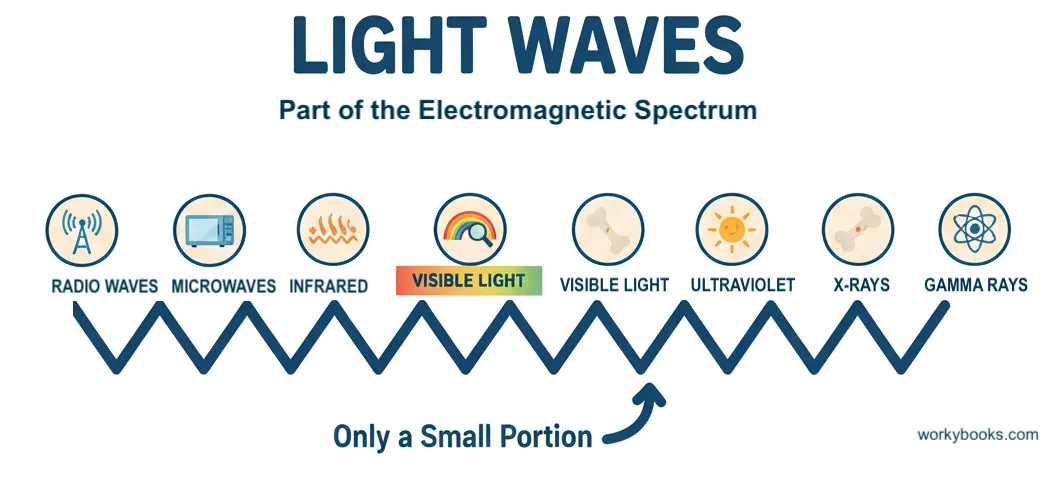
The Nature of Light Light is unique among waves because it travels fastest in a vacuum—about 299,792 kilometers per second (the speed of light). Unlike sound, which needs air or another medium to move, light can travel through empty space. This is why we can see the sun and stars from Earth, even though space is a vacuum. Light is part of the electromagnetic spectrum, a range that includes radio waves, microwaves, and X-rays. What we see as visible light is only a small portion of this spectrum. Sometimes, light behaves like a wave—bending, spreading, and making patterns. Other times, it acts like a particle, carrying energy in tiny packets called photons. This dual nature is called wave-particle duality and has been demonstrated through scientific experiments.
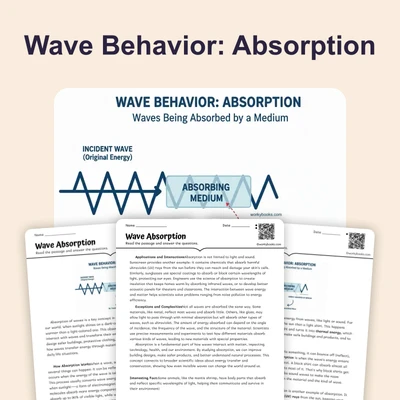
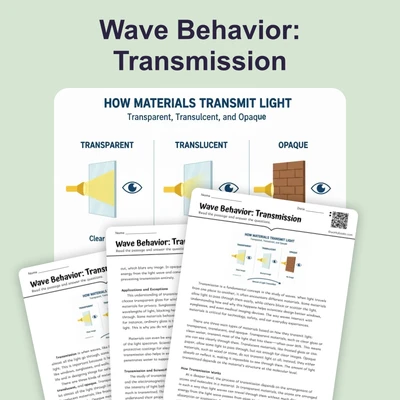
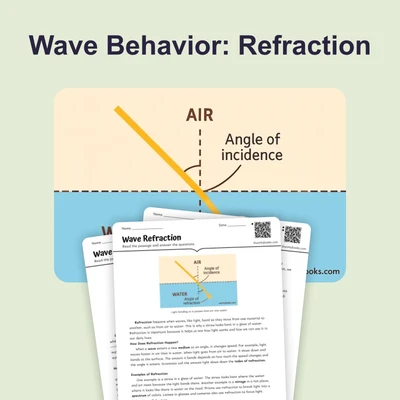
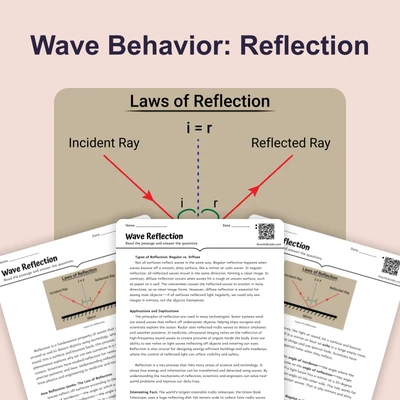
How Light Interacts with Matter Light interacts with objects in several important ways. When it hits a surface, it can be reflected (bounced off), absorbed (taken in), or refracted (bent as it passes through). For example, we see objects because light reflects off them and enters our eyes. Shadows form when objects block light from reaching a surface. Another example is the sky's blue color. As sunlight passes through Earth's atmosphere, shorter blue wavelengths are scattered in all directions by air molecules, making the sky appear blue during the day. This process is called scattering.
Real-World Applications and Broader Implications Understanding light has led to many technological advances. From microscopes and telescopes to fiber-optic communication, controlling light waves allows us to see distant galaxies or transmit information around the world at incredible speeds. Medical imaging, such as X-rays and lasers, also relies on our knowledge of electromagnetic waves. The study of light connects to broader scientific principles, including energy transfer, the behavior of waves, and the structure of matter. By investigating how light works, scientists continue to develop new tools and solve problems that impact society, health, and the environment.
Light’s ability to travel without a medium and its role in energy transfer make it fundamental to life on Earth and to our scientific understanding of the universe.
Interesting Fact: The energy from the sun that reaches Earth as light takes just over 8 minutes to travel the 150 million kilometers through space!
What is the main reason we are able to see objects around us?
Light reflects off objects and enters our eyes.Objects create their own light.Our eyes produce light that shines on objects.Objects absorb all light and glow.
Which property makes light different from sound waves?
Light needs a medium to travel.Light can travel through a vacuum.Light travels slower than sound.Light cannot be seen.
What is the speed of light in a vacuum?
150,000 kilometers per second299,792 kilometers per second1,000 kilometers per second3,000 kilometers per second
What happens when light passes through Earth's atmosphere, making the sky appear blue?
ReflectionRefractionScatteringAbsorption
What is a photon?
A tiny packet of energy that makes up light.A type of sound wave.A large wave in the ocean.A color of the spectrum.
What does 'wave-particle duality' mean when talking about light?
Light can only be a wave.Light behaves as both a wave and a particle.Light is always a particle.Light does not carry energy.
How is fiber-optic communication related to light waves?
It uses light waves to transmit information quickly.It uses sound waves in cables.It uses water waves.It blocks light to send messages.
True or False: Light needs air to travel from the sun to Earth.
TrueFalse
True or False: Shadows are created when objects block light.
TrueFalse
Which of the following is NOT part of the electromagnetic spectrum?
Sound wavesVisible lightX-raysRadio waves
Perfect For:
👩🏫 Teachers
• Reading comprehension practice
• Auto-graded assessments
• Literacy skill development
👨👩👧👦 Parents
• Reading practice at home
• Comprehension improvement
• Educational reading time
🏠 Homeschoolers
• Reading curriculum support
• Independent reading practice
• Progress monitoring
Reading Features:
📖
Reading Passage
Engaging fiction or nonfiction text
❓
Comprehension Quiz
Auto-graded questions
📊
Instant Feedback
Immediate results and scoring
📄
Printable Version
Download for offline reading
🔊
Read Aloud
Voice-over with word highlighting
Reviews & Ratings
No reviews yet. Be the first to share your experience!
Related Content
Remote Sensing
This middle school science passage introduces students to the concept of remote sensing—the collection of information ab...
MS-ESS3-3MS-PS4-2MS-ETS1-1MS-ETS1-3
The Electromagnetic Spectrum
This comprehensive science reading passage introduces middle school students (grades 6-8) to the electromagnetic spectru...
MS-PS4-1MS-PS4-2
Visible Light and Color
This comprehensive science passage for grades 6-8 explores visible light as the part of the electromagnetic spectrum tha...
MS-PS4-2
Wave Absorption
This engaging science passage for grades 6-8 explores the mechanism of wave absorption, where waves transfer energy to m...
MS-PS4-2
Wave Behavior: Transmission
This informational science reading passage for grades 6-8 explores the concept of wave behavior, focusing on transmissio...
MS-PS4-2
Wave Refraction
This comprehensive science passage introduces middle school students to the concept of refraction, a key phenomenon in w...
MS-PS4-2
Wave Reflection
This middle school science passage explores the behavior of waves during reflection, focusing on how and why waves bounc...
MS-PS4-2
Reflection and Mirrors
This engaging passage explores the science behind reflection and mirrors, designed for students in grades 6-8. Aligned w...
MS-PS4-2
Lasers
This passage explores the science of lasers for middle school students, aligning with NGSS standard MS-PS4-2. Students l...
MS-PS4-2
How We See
This informational science passage for grades 6-8 explores the mechanisms behind human vision, focusing on how light ent...
MS-PS4-2
Optical Instruments
This passage introduces middle school students to the fascinating world of optical instruments. Aligned to NGSS standard...
MS-PS4-2
What Is Sound?
This passage explores the science of sound for middle school students, aligned with NGSS standards MS-PS4-1 and MS-PS4-2...
MS-PS4-1MS-PS4-2
Speed of Sound
This comprehensive passage for grades 6-8 explores the science behind the speed of sound and how it varies depending on ...
MS-PS4-1MS-PS4-2
Absorption of Sound
This comprehensive passage, aligned to NGSS MS-PS4-2, explores the science behind the absorption of sound. Students in g...
MS-PS4-2
Sound Through Different Materials
This comprehensive middle school science passage, aligned to NGSS standard MS-PS4-2, explores the fascinating topic of h...
MS-PS4-2
Reflection of Sound: Echoes
This comprehensive middle school science passage explores the phenomenon of echoes, focusing on the reflection of sound ...
MS-PS4-2
How We Hear
This engaging middle school science passage explores the fascinating process of how we hear, tracing sound’s journey fro...
MS-PS4-2
Sonar and Echolocation
This engaging middle school science passage explores the science behind sonar and echolocation, aligned to NGSS standard...
MS-PS4-2
Noise Pollution
This comprehensive, NGSS-aligned middle school science passage explores the concept of noise pollution as harmful or unw...