What Is The Difference Between Glacier And Ice Sheet?
Interactive passage with audio narration, comprehension questions, and printable PDF.
By completing this purchase you agree to our Terms of Use and Privacy Policy. Your subscription renews automatically until you cancel. You can cancel anytime from your account settings. All sales are final and non-refundable. Digital content is available for download in your account immediately upon purchase.
What's included
What Is The Difference Between Glacier And Ice Sheet? preview and details
About this printable What Is The Difference Between Glacier And Ice Sheet? science reading passage, NGSS-aligned (Grade 6)
Sample passage and quiz from What Is The Difference Between Glacier And Ice Sheet?
Reading passage and comprehension quiz preview
What Is The Difference Between Glacier And Ice Sheet?
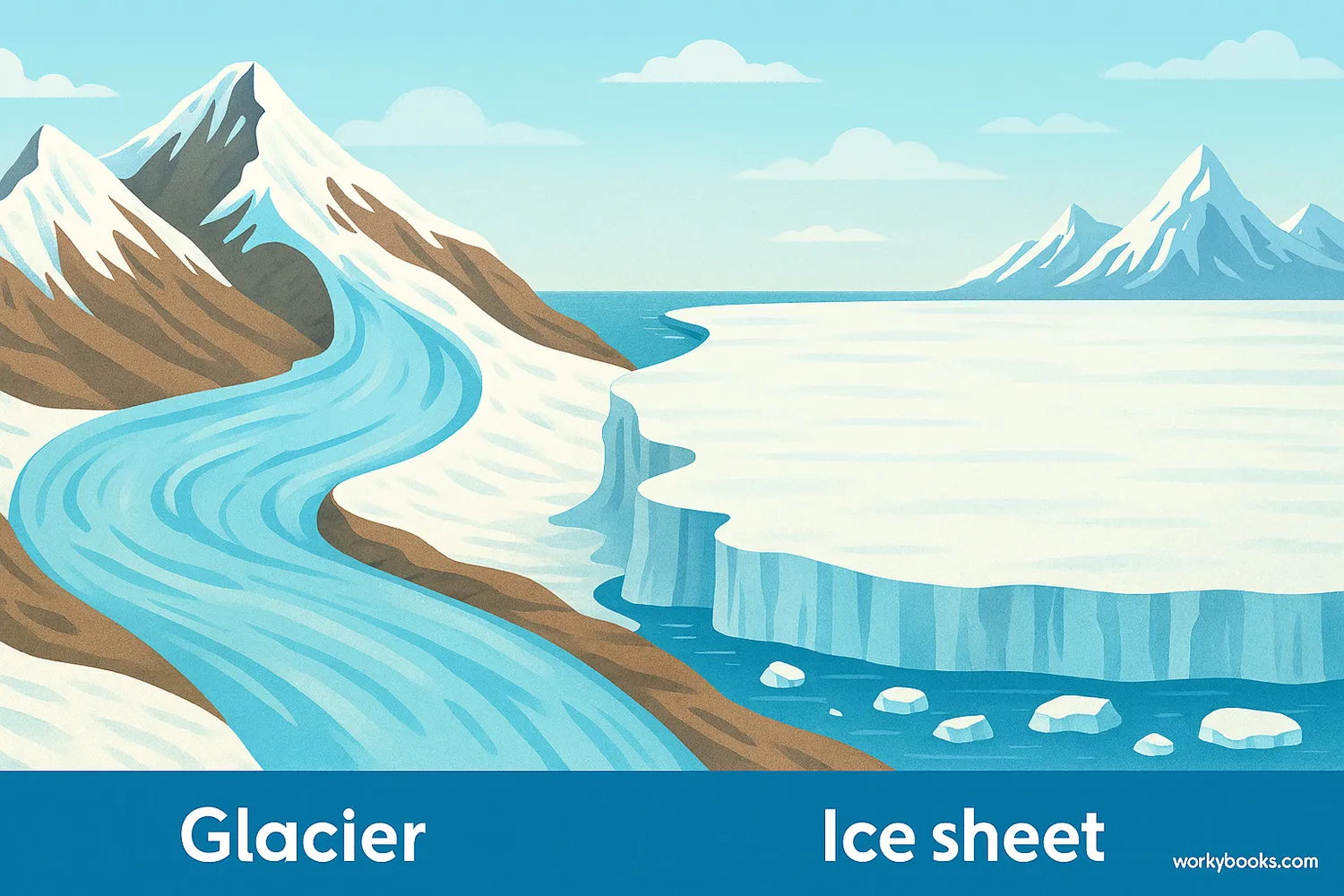
Have you ever wondered about the massive amounts of ice on Earth? We often hear terms like "glacier" and "ice sheet," but what's the difference? Both are enormous bodies of ice, but they differ in size, shape, and where they are found. Understanding these differences is key to learning about Earth's changing climate and polar ice.
Let's start with a glacier. Imagine a slow-moving river of ice. That's essentially what a glacier is! Glaciers form in areas where more snow falls in winter than melts in summer. Over many years, layers of snow pile up, compress, and turn into ice. Gravity then pulls this massive ice down slopes, often in mountain valleys or even on flatter land in polar regions. As a glacier moves, it slowly grinds away at the land, shaping mountains and valleys. Glaciers can be found on every continent except Australia, and their size can vary from small valley glaciers to large ice caps.
An ice sheet, on the other hand, is much, much larger. Think of it as a continental-sized blanket of ice. An ice sheet is a vast body of glacial ice that covers more than 50,000 square kilometers (about 19,000 square miles) of land. These enormous ice masses are so heavy that they can flatten the land beneath them. Today, there are only two major ice sheets on Earth: the Greenland Ice Sheet and the Antarctic Ice Sheet. These ice sheets contain most of the freshwater on our planet. They flow outwards from their centers, moving under their own immense weight.
So, the main difference is scale. A glacier is like a small, flowing stream of ice, while an ice sheet is a massive ocean of ice covering a whole continent or a large portion of it. Ice caps are smaller versions of ice sheets, covering less than 50,000 square kilometers, often found on mountain tops or plateaus. Both glaciers and ice sheets are important parts of Earth's system. They affect global sea levels and reflect sunlight, influencing Earth's temperature. Scientists study them to understand past and present climate change and the effects of weathering and erosion by ice.
Interesting Fact: If the entire Antarctic Ice Sheet were to melt, global sea levels would rise by about 60 meters (200 feet)!
Comprehension quiz (10 questions)
1. Which continent does not have glaciers?
2. What force pulls glaciers down slopes?
3. An ice sheet is larger than an ice cap.
4. Which best describes a glacier?
5. What defines an ice sheet's size?
6. How do glaciers affect landforms?
7. What is 'polar ice' in this passage?
8. Why are ice sheets important to scientists?
9. If a large mountain had a small ice covering on its top that was less than 50,000 square kilometers, what would it most likely be called?
10. Why might melting ice sheets cause sea levels to rise significantly?
Perfect for the way you teach
- Build comprehension skills
- Auto-graded quiz
- Differentiated reading
- Read together at home
- Improve fluency
- Quiet reading time
- Reading curriculum support
- Independent practice
- Track Lexile growth