What Is the Geologic Time Scale
Interactive passage with audio narration, comprehension questions, and printable PDF.
By completing this purchase you agree to our Terms of Use and Privacy Policy. Your subscription renews automatically until you cancel. You can cancel anytime from your account settings. All sales are final and non-refundable. Digital content is available for download in your account immediately upon purchase.
What's included
What Is the Geologic Time Scale preview and details
About this printable What Is the Geologic Time Scale science reading passage, NGSS-aligned (Grades 6-8)
Sample passage and quiz from What Is the Geologic Time Scale
Reading passage and comprehension quiz preview
What Is the Geologic Time Scale
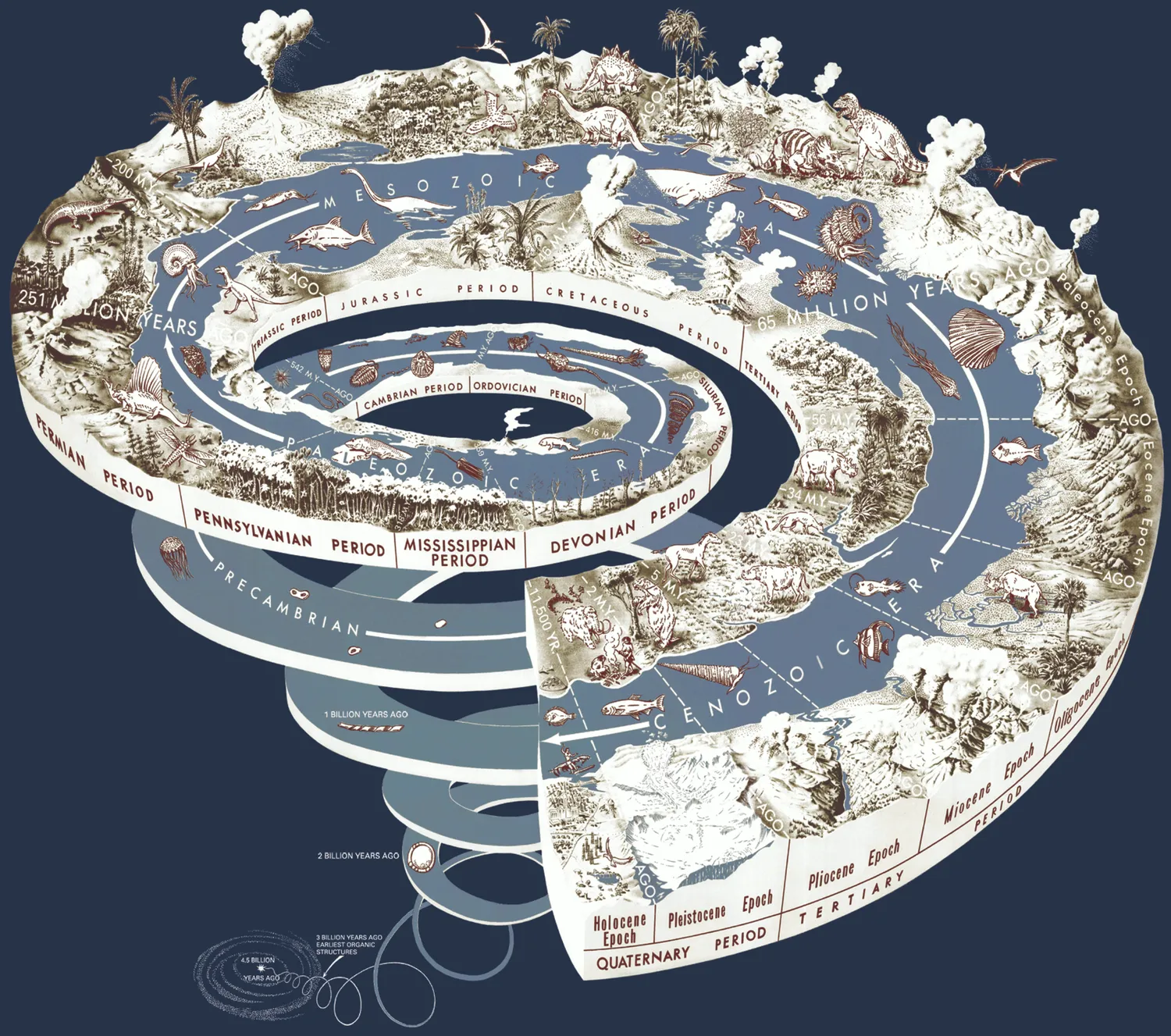
"Geological time spiral" by United States Geological Survey / Wikimedia Commons
The geologic time scale is a standardized system that scientists use to organize Earth's 4.6-billion-year history. This timeline divides Earth's past into named intervals based on major geological and biological events. Scientists from around the world contributed to building this scale, making it a truly global scientific achievement. The geologic time scale helps scientists communicate about when events happened in Earth's history, from the formation of the first rocks to the appearance of modern humans.
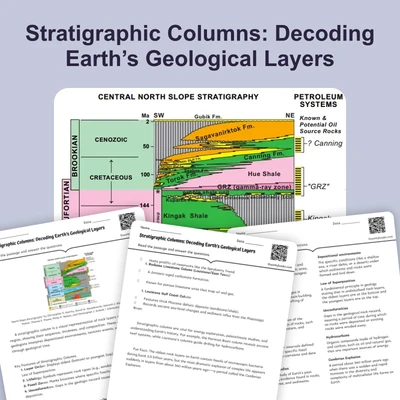
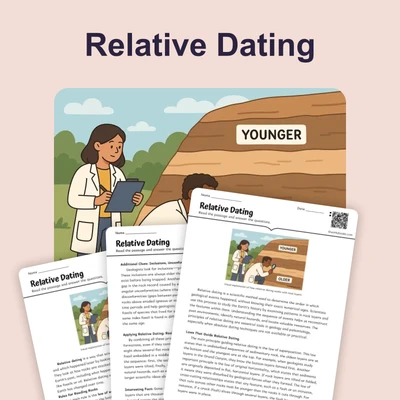
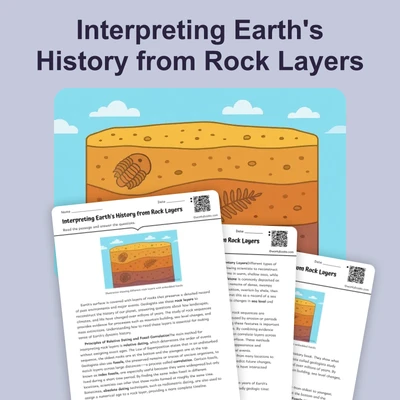
Before modern technology existed, scientists constructed the geologic time scale using careful observations of rock layers and fossils. They practiced stratigraphy, the study of rock layers and their sequence. Scientists noticed that rock layers are stacked like pages in a book, with older layers generally at the bottom and younger layers on top. By examining these layers in different locations around the world, they identified patterns. They also used fossils—preserved remains of ancient organisms—to match rock layers from different places. This method is called relative dating because it determines whether rocks are older or younger than each other without providing exact ages.
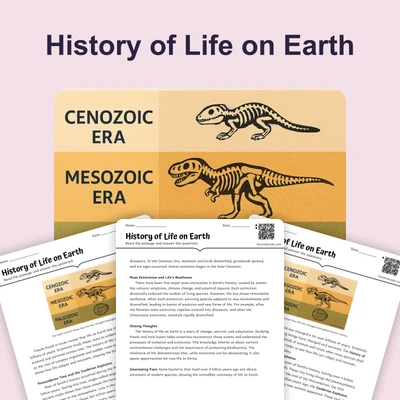
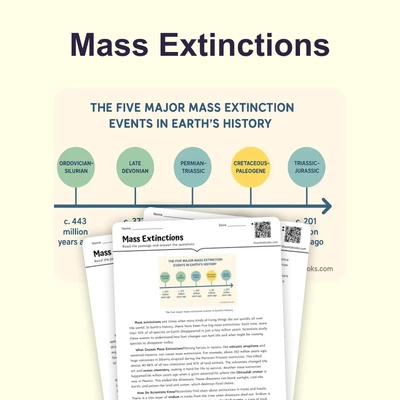
Scientists divided the geologic time scale into major intervals based on significant changes they observed in the rock and fossil record. The largest divisions are called eons, which are subdivided into eras, then periods, and finally epochs. For example, scientists noticed that certain fossils suddenly disappeared from rock layers while new types appeared. These changes marked boundaries between time intervals. The boundary between the Cretaceous and Paleogene periods, for instance, shows the disappearance of dinosaur fossils, marking a major extinction event 66 million years ago.
The original geologic time scale lacked precise numerical ages. Scientists knew the order of events but not exactly when they occurred. This changed with the discovery of radiometric dating in the early 1900s. This technique measures the decay of radioactive elements in rocks to calculate their age. Scientists could now assign absolute ages—specific dates in years—to rock layers and the events they recorded. This process of adding numerical ages to the time scale is called calibration.
Building and refining the geologic time scale required international cooperation. Scientists shared data from every continent, comparing rock sequences and fossil discoveries. They held conferences to agree on boundaries between time intervals and standardize names. This collaboration continues today as new discoveries lead to adjustments. The geologic time scale represents one of science's greatest collaborative achievements, allowing researchers worldwide to discuss Earth's history using a common language.
The geologic time scale serves as an essential tool for understanding Earth's past. It helps scientists study how life evolved, when mountain ranges formed, and how Earth's climate changed over billions of years. Without this organized framework, Earth's vast history would be impossible to comprehend or communicate effectively.
Interesting Fact: The Precambrian eon, which spans from Earth's formation to 541 million years ago, represents about 88% of Earth's entire history, yet it contains far fewer fossils than more recent time periods.
Comprehension quiz (10 questions)
1. What is the geologic time scale?
2. How did scientists originally construct the geologic time scale before modern technology?
3. What does the term 'relative dating' mean?
4. What are eons in the geologic time scale?
5. What discovery in the early 1900s allowed scientists to assign specific dates to rock layers?
6. Why did scientists from around the world need to cooperate in building the geologic time scale?
7. What marks the boundary between the Cretaceous and Paleogene periods?
8. How are rock layers typically arranged in stratigraphy?
9. The geologic time scale was fully complete and has never needed adjustments since it was first created.
10. Scientists use fossils to match rock layers from different locations around the world.
Perfect for the way you teach
- Build comprehension skills
- Auto-graded quiz
- Differentiated reading
- Read together at home
- Improve fluency
- Quiet reading time
- Reading curriculum support
- Independent practice
- Track Lexile growth