What Makes an Animal an Arthropod
Interactive passage with audio narration, comprehension questions, and printable PDF.
What's included
What Makes an Animal an Arthropod preview and details
About this printable What Makes an Animal an Arthropod science reading passage, NGSS-aligned (Grade 6)
Sample passage and quiz from What Makes an Animal an Arthropod
Reading passage and comprehension quiz preview
What Makes an Animal an Arthropod?
Imagine a creature that can live almost anywhere on Earth, from the deepest oceans to the highest mountains, and even in your own backyard! These incredible animals are known as arthropods, and they make up the largest group of animals on our planet. But what exactly makes an animal an arthropod? Let's uncover the secrets of these diverse and successful creatures.
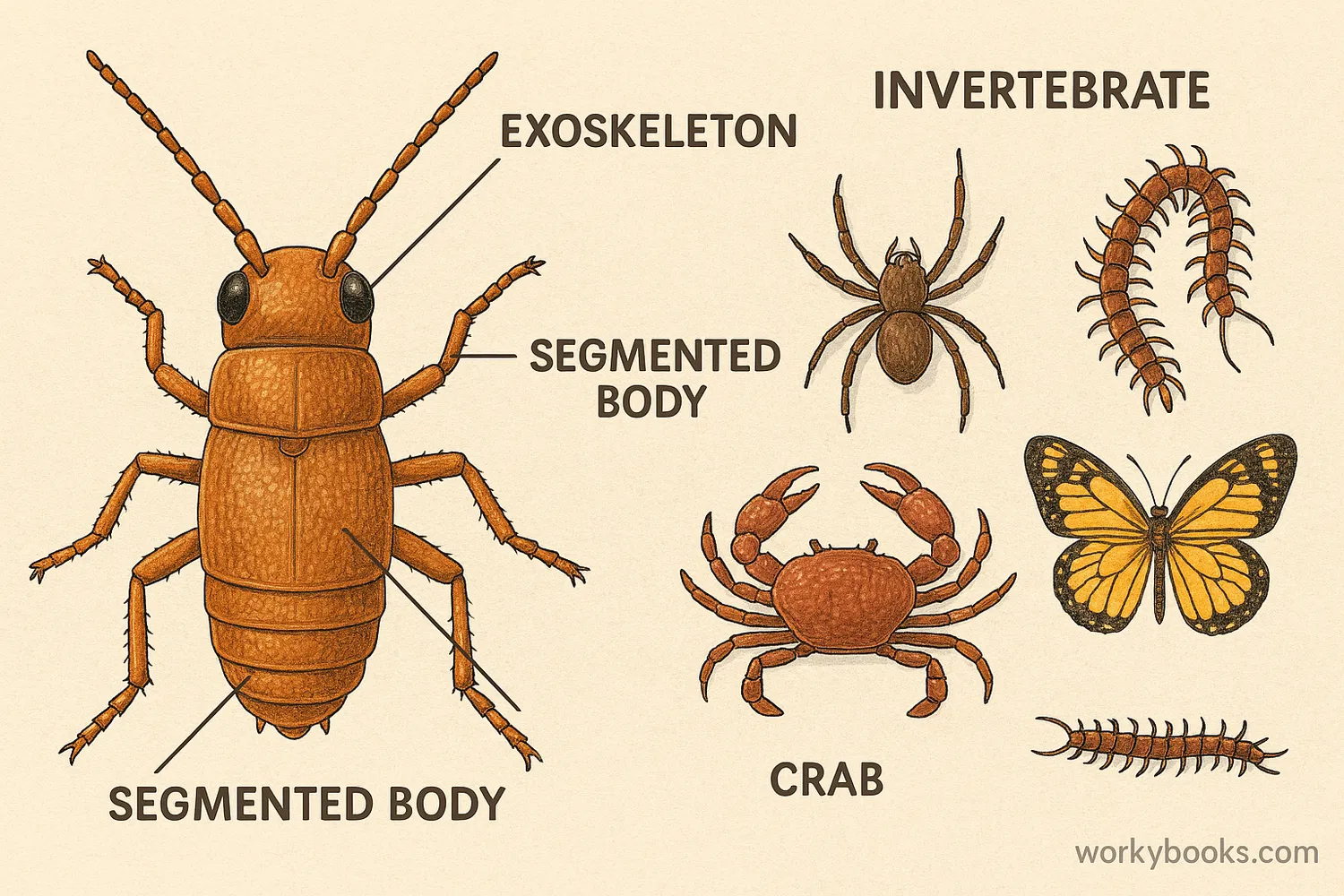
The most important characteristic of an arthropod is its exoskeleton. Think of it like a suit of armor on the outside of its body. This hard, tough outer covering is made of a material called chitin and provides protection and support. Unlike our own internal skeletons, an arthropod's skeleton is on the outside. Because this exoskeleton can't grow bigger, arthropods must shed it as they grow. This process is called molting. After molting, the arthropod's new exoskeleton is soft, making it vulnerable until it hardens.
Another key feature is a segmented body. This means their bodies are divided into different sections, often like rings. For example, many insects have three main segments: a head, a thorax, and an abdomen. Each segment can have specialized functions, like carrying legs or antennae. Along with segmented bodies, arthropods also have jointed appendages. 'Appendages' are parts that extend from the body, like legs, antennae, or mouthparts. 'Jointed' means they have joints, just like your knees or elbows, which allow for flexible movement. This is where the name 'arthropod' comes from, meaning 'jointed foot'!
Arthropods are also invertebrates, meaning they do not have a backbone. This sets them apart from vertebrates like fish, birds, and mammals. There are many different types of arthropods, including insects (like beetles and butterflies), arachnids (like spiders and scorpions), crustaceans (like crabs and lobsters), and myriapods (like centipedes and millipedes). Each group has unique adaptations, but they all share the core characteristics of an exoskeleton, segmented body, and jointed appendages. These features have allowed arthropods to evolve into an astonishing array of forms, dominating nearly every ecosystem on Earth.
Interesting Fact: Some ancient arthropods, like the extinct Eurypterids (sea scorpions), could grow to be over 2.5 meters (8 feet) long!
Comprehension quiz (10 questions)
1. Which of the following is NOT a characteristic of arthropods?
2. What is the name for the process when arthropods shed their exoskeleton?
3. Why do arthropods need to molt?
4. If an animal has an internal skeleton, is it an arthropod?
5. How do jointed appendages benefit an arthropod?
6. Which characteristic best helps an arthropod protect itself?
7. Based on the passage, what does 'invertebrate' mean?
8. Why are arthropods considered successful animals?
9. A newly discovered animal has a hard outer shell, many body sections, and legs that bend at points. Is it likely an arthropod?
10. Imagine an animal that is soft-bodied and grows continuously without shedding. Could it be an arthropod?
Perfect for the way you teach
- Build comprehension skills
- Auto-graded quiz
- Differentiated reading
- Read together at home
- Improve fluency
- Quiet reading time
- Reading curriculum support
- Independent practice
- Track Lexile growth