When Was The Last Ice Age
Interactive passage with audio narration, comprehension questions, and printable PDF.
By completing this purchase you agree to our Terms of Use and Privacy Policy. Your subscription renews automatically until you cancel. You can cancel anytime from your account settings. All sales are final and non-refundable. Digital content is available for download in your account immediately upon purchase.
What's included
When Was The Last Ice Age preview and details
About this printable When Was The Last Ice Age science reading passage, NGSS-aligned (Grade 6)
Sample passage and quiz from When Was The Last Ice Age
Reading passage and comprehension quiz preview
When Was The Last Ice Age
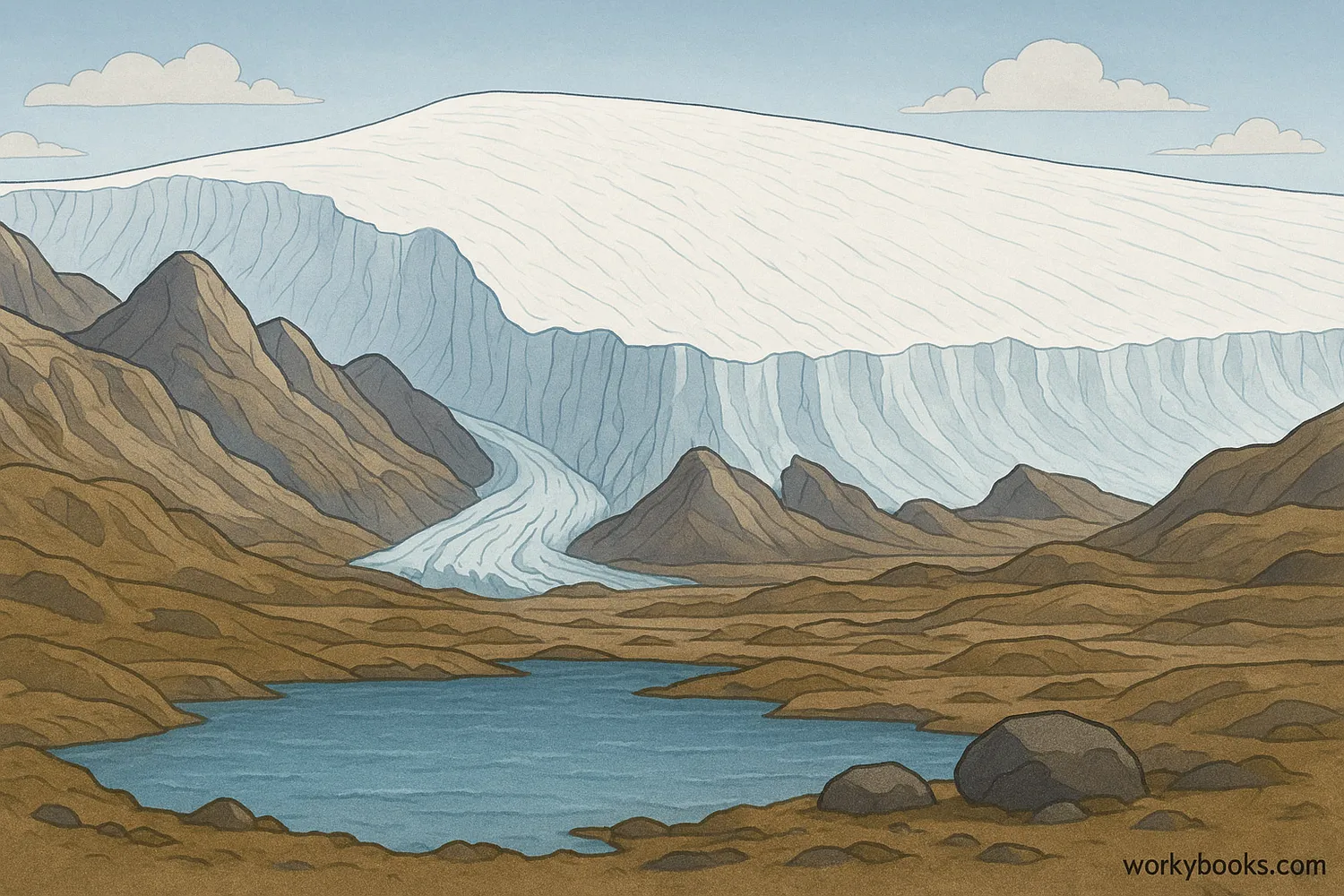
Imagine a world where much of North America and Europe was covered by towering sheets of ice, thousands of feet thick. This wasn't just a fantasy; it was Earth's reality during what we call the Last Ice Age. This incredible period of Earth's history might seem like ancient news, but it ended much more recently than you might think.
The Last Ice Age, also known as the Last Glacial Period, didn't happen in a single, sudden event. Instead, it was a long phase within a larger glacial cycle. This cycle involves Earth's climate repeatedly swinging between cold glacial periods, when ice sheets grow, and warmer interglacial periods, like the one we are in now, when ice retreats. The most recent major glacial period began about 110,000 years ago and reached its peak, known as the Last Glacial Maximum (LGM), around 20,000 to 26,000 years ago.
During the LGM, huge glaciers spread across vast areas. For example, in North America, the Laurentide Ice Sheet covered most of Canada and extended into parts of the northern United States, including places like New York and the Great Lakes region. These massive ice sheets were powerful geoscience processes, reshaping landscapes by carving out valleys, grinding down mountains, and leaving behind deposits of rock and sediment as they moved and melted. This is how many of the lakes and hills we see today were formed.
The last Ice Age began to end about 19,000 years ago, with significant warming and ice retreat starting around 14,000 years ago. By about 11,700 years ago, the Earth had largely transitioned into its current interglacial period, the Holocene. This transition wasn't smooth; there were times when temperatures would drop again for a few centuries before continuing to rise. Understanding these past climate changes helps scientists study how Earth's surface has been shaped over long periods and how it might change in the future due to current global warming.
Scientists use many types of evidence to piece together the story of the Ice Ages, including ice cores from Greenland and Antarctica, sediment from the ocean floor, and the geological features left behind by glaciers. These clues tell us about past temperatures, atmospheric composition, and the extent of ancient ice sheets, providing a detailed record of Earth's dynamic climate history.
Interesting Fact: During the Last Ice Age, the global sea level was much lower, by as much as 120 meters (about 400 feet), because so much water was locked up in the massive ice sheets.
Comprehension quiz (10 questions)
1. When did the Last Glacial Period begin?
2. What is the name of our current interglacial period?
3. The Last Ice Age ended quickly and smoothly.
4. Which term describes a period when ice sheets grow?
5. How did glaciers during the Last Ice Age affect Earth's surface?
6. What does 'geoscience processes' refer to in the passage?
7. What evidence helps scientists study past Ice Ages?
8. If Earth entered another glacial period, what would likely happen to sea levels?
9. Which of these is NOT a characteristic of a glacial period?
10. How does understanding past climate changes help scientists today?
Perfect for the way you teach
- Build comprehension skills
- Auto-graded quiz
- Differentiated reading
- Read together at home
- Improve fluency
- Quiet reading time
- Reading curriculum support
- Independent practice
- Track Lexile growth