Who Invented the Anemometer — Reading Comprehension
Rate this
Premium Resource
Present
Present in classroom. No work saved
Assign
Classroom with student accounts, Track progress
Quick Play
No student accounts, assign with a link
Grades
3
4
5
6
7
8
PRINT+DIGITAL RESOURCE
This learning resource is available in interactive and printable formats. The interactive worksheet can be played online and assigned to students. The Printable PDF version can be downloaded and printed for completion by hand.
"This educational science passage is designed for middle school students and aligns with NGSS standards related to Earth's systems and weather phenomena. The reading material provides a clear and concise explanation of what an anemometer is and how it functions. It delves into the mechanics of both the common cup anemometer and the more advanced hot-wire anemometer, highlighting their respective applications and differences. The passage connects these scientific instruments to real-world contexts, such as aviation, wind farms, and construction, to demonstrate the practical importance of wind speed measurement. The content is structured to build comprehension and vocabulary, making it a valuable resource for classroom instruction and independent study on weather and climate. It is particularly relevant for students learning about Earth's atmospheric processes and the tools used to study them."
CONTENT PREVIEW
Expand content preview
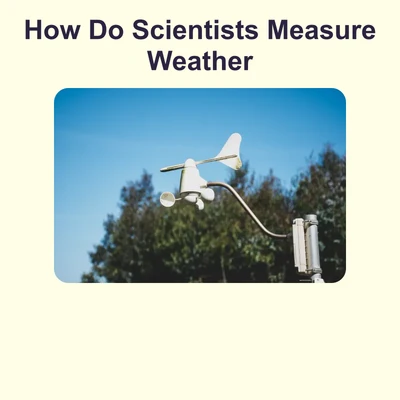
A classic cup anemometer (left) and a modern hot-wire anemometer (right) are instruments used to measure wind speed.
The anemometer is a scientific instrument essential for understanding and measuring atmospheric conditions. In simple terms, it is a device used to measure wind speed. The name comes from the Greek word anemos, which means "wind," and metron, meaning "measure." Anemometers are a critical tool in meteorology, the study of weather, providing data that helps scientists and forecasters predict weather patterns, from a gentle breeze to a powerful hurricane.
One of the most common types is the cup anemometer. This device typically has three or four hemispherical cups mounted on horizontal arms that radiate from a central vertical shaft. As the wind blows, it pushes against the open sides of the cups, causing them to rotate. The faster the wind blows, the faster the cups spin. An attached electronic sensor counts the rotations, and this data is then converted into a measurement of wind speed, usually in miles per hour (mph) or kilometers per hour (kph). This design is known for its durability and reliability in measuring average wind speeds.
Another type is the hot-wire anemometer. This instrument operates on a different principle, using a thin, electrically heated wire. As wind passes over the wire, it cools it down. An electronic circuit measures the amount of power needed to keep the wire at a constant temperature. The stronger the wind, the more power is required to maintain the wire's temperature. This power measurement is then correlated with the wind speed. Hot-wire anemometers are extremely sensitive and are often used for measuring very low air speeds in controlled environments, such as inside ventilation ducts.
Anemometers are crucial for many real-world applications beyond weather forecasting. Pilots and air traffic controllers use them at airports to ensure safe takeoffs and landings. Mariners rely on them to navigate the seas and anticipate changing wave conditions. Even engineers designing wind turbines use anemometers to assess the viability of a location for generating wind power. The data collected by these instruments is vital for safety, efficiency, and a deeper understanding of our planet's atmosphere.
Fun Fact: While the cup anemometer is a modern invention, the first recorded description of a device to measure wind speed dates back to 1450, designed by Italian artist and architect Leon Battista Alberti.
What is the primary function of an anemometer?
Measuring air temperatureMeasuring wind speedMeasuring air pressureMeasuring humidity
From which two Greek words is the term "anemometer" derived?
Anemos and graphosThermos and metronAnemos and metronHydro and metron
In a cup anemometer, what causes the cups to rotate?
The rotation of the central shaftThe force of air pressureThe push of the wind against the cupsThe electronic sensor
How does a hot-wire anemometer measure wind speed?
By counting the rotations of a propellerBy using sound waves to measure air flowBy measuring the power needed to heat a wireBy detecting changes in atmospheric pressure
Which of the following is a real-world application of an anemometer mentioned in the passage?
Controlling home thermostatsPredicting volcanic eruptionsAssisting with safe air travelMeasuring the depth of water
Why are anemometers considered a critical tool in meteorology?
They are the only tool used in weather forecasting.They are used to measure rainfall.They provide data to predict weather patterns.They are used to create storm clouds.
If a cup anemometer's cups are spinning very quickly, what can you infer about the wind?
The wind is blowing very slowly.The wind is changing direction frequently.The wind is blowing with great force.The air temperature is very high.
Which type of anemometer would be most suitable for a scientist trying to measure a very slight airflow in a ventilation system?
A cup anemometerA hot-wire anemometerA propeller anemometerA pressure-tube anemometer.
Perfect For:
👩🏫 Teachers
• Reading comprehension practice
• Auto-graded assessments
• Literacy skill development
👨👩👧👦 Parents
• Reading practice at home
• Comprehension improvement
• Educational reading time
🏠 Homeschoolers
• Reading curriculum support
• Independent reading practice
• Progress monitoring
Reading Features:
📖
Reading Passage
Engaging fiction or nonfiction text
❓
Comprehension Quiz
Auto-graded questions
📊
Instant Feedback
Immediate results and scoring
📄
Printable Version
Download for offline reading
🔊
Read Aloud
Voice-over with word highlighting
Reviews & Ratings
No reviews yet. Be the first to share your experience!
Related Content
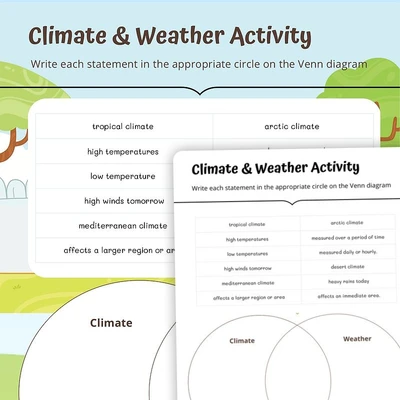
Climate and weather activity
This worksheet is perfect for understanding the differences between climate and weather. Students will read the phrases ...
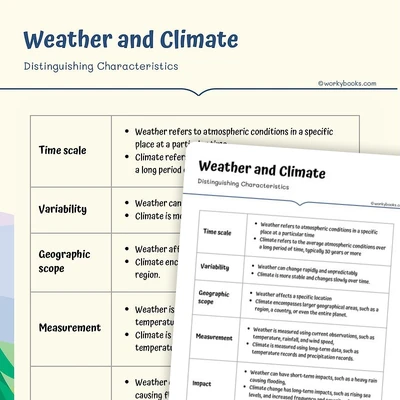
Climate and Weather — Distinguishing Characterstics
This worksheet highlights the differences between climate and weather. The chart format makes comparing and contrasting ...
Comparing Weather and Climate Texts
This reading comprehension worksheet has 5th graders read two informational texts about Weather and Climate. Students th...
RI.5.9
Tools and Technology in Earth Science
This middle school science reading passage explores the wide range of tools and technologies used in Earth science, from...
MS-ESS2-2MS-ESS3-2MS-ETS1-1MS-PS4-3
What Is Earth Science?
This engaging middle school science passage introduces students to the field of Earth science, aligning with NGSS standa...
MS-ESS1MS-ESS2MS-ESS3SEP
What Is Space Weather and How Does It Affect the Earth?
This NGSS-aligned science passage for middle school explains what space weather is and how it affects Earth. Students le...
MS-ESS2-2
Extreme Weather and Climate Change
This Grade 6-8 science passage, aligned to NGSS standards, explores the impact of climate change on extreme weather even...
What Is The Difference Between Climate Model And Weather Model?
This reading passage delves into the fundamental differences between weather models and climate models, explaining their...
Scientific Inquiry in Earth Science
This passage explores scientific inquiry in Earth science for grades 6-8, aligned with NGSS standards MS-ESS1-4, MS-ESS2...
MS-ESS1-4MS-ESS2-1MS-ESS3-5SEP
Earth's Major Climate Zones Explained
This engaging science passage for grades 6-8 explains Earth's major climate zones, including tropical, temperate, and po...
Climate Through Earth's History
This engaging passage for grades 6-8 explores how Earth's climate has naturally changed over millions of years, highligh...
MS-ESS1-4MS-ESS2-6
Earth: Our Home in Space
This engaging Grade 4-5 science passage, aligned to NGSS, introduces students to Earth's special place in the solar syst...
Weather vs. Climate
This comprehensive passage for grades 6-8 explores the difference between weather and climate, aligning with NGSS standa...
MS-ESS2-6
Air Masses and Weather
This audio-integrated passage, "Air Masses and Weather," is designed for 6th-grade students to understand how the moveme...
How is Climate Different from Weather?
This passage distinguishes climate from weather for young readers. It defines climate as the usual weather patterns over...
RI.3.1RI.4.14.ESS2.D
Antarctica Climate
This engaging science passage for grades 6-8 explores Antarctica, the coldest climate zone on Earth. Students will learn...
How Climate Change Affects Weather
This middle school science passage explores how and why weather patterns are changing globally. Students will learn abou...
MS-ESS3-5
Climate Zones Word Sort
This word sort activity helps students understand different climate zones through real-world locations. Students classif...
Escape Velocity and Space Travel
This middle school science passage introduces students to the concept of escape velocity—the minimum speed required to b...
MS-ESS1-2MS-PS2-4
Weather Tools & Measurements Word Sort
This word sort activity connects weather measurement tools with their corresponding measurements. Students match 12 weat...