World's Most Venomous Octopus Species
Interactive passage with audio narration, comprehension questions, and printable PDF.
What's included
World's Most Venomous Octopus Species preview and details
About this printable World's Most Venomous Octopus Species science reading passage, NGSS-aligned (Grade 6)
Sample passage and quiz from World's Most Venomous Octopus Species
Reading passage and comprehension quiz preview
World's Most Venomous Octopus Species
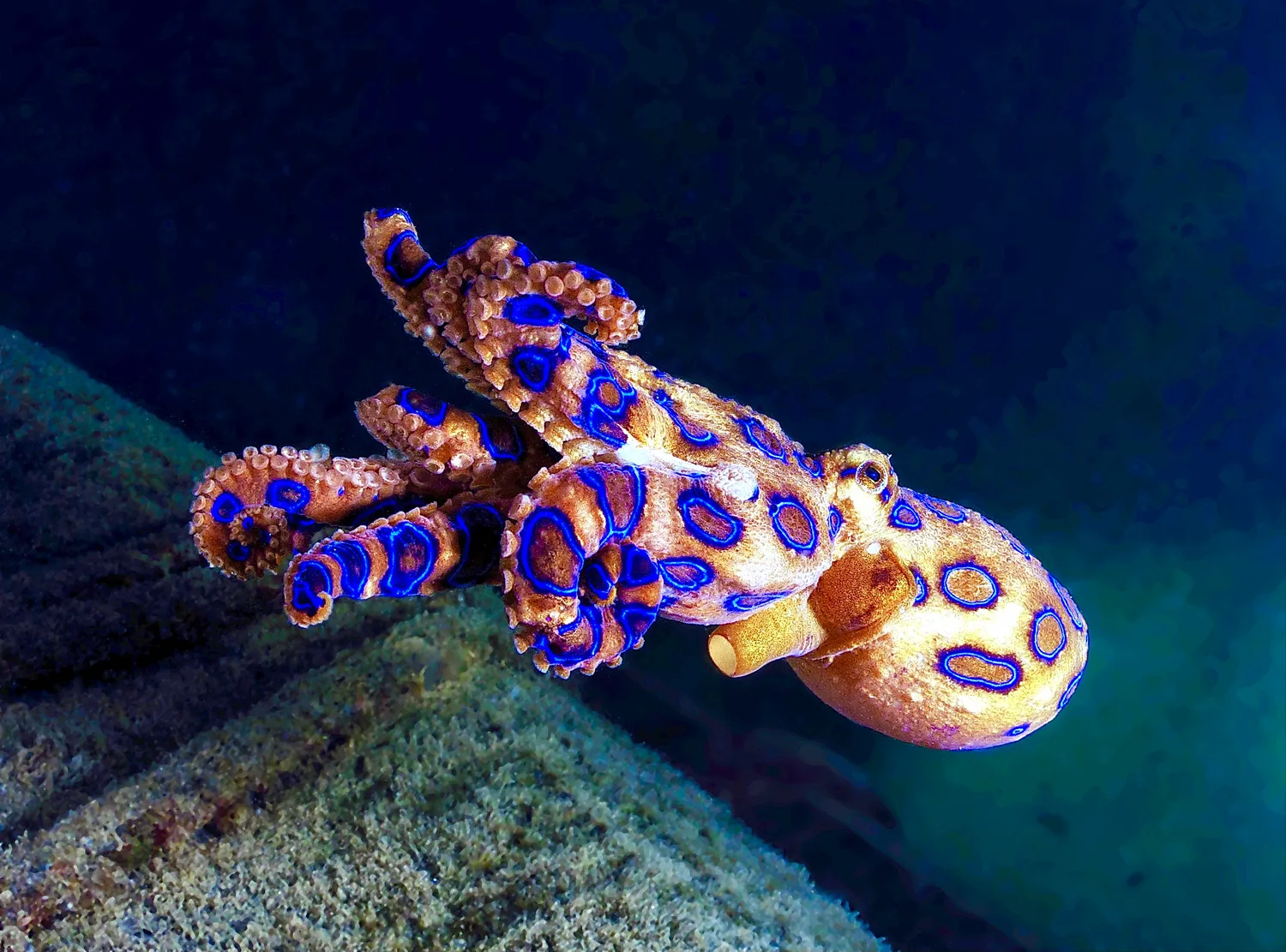
"Blue-ringed octopus" by Shaymary / Wikimedia Commons.
Imagine an animal no bigger than your hand, yet it carries enough power to be one of the most dangerous creatures in the ocean. This describes the blue-ringed octopus, a tiny but mighty resident of coral reefs and tide pools in the Pacific and Indian Oceans, including the waters of Australia and Japan. Despite its small size, this octopus is famous for being the world's most venomous octopus.
The blue-ringed octopus gets its name from the bright, iridescent blue rings that appear on its body when it feels threatened. These glowing rings are a warning sign, telling potential predators to stay away. This amazing display is a key adaptation for its survival, helping it avoid danger. The octopus itself usually has a yellowish-brown color, which helps it blend in with its surroundings, a process called camouflage.
What makes this octopus so dangerous is its venom. Unlike some animals that inject venom with fangs, the blue-ringed octopus produces a powerful neurotoxin in its saliva. A neurotoxin is a type of poison that attacks the nervous system. When the octopus bites, this venom enters the bloodstream of its victim. This internal production of venom is a remarkable structure/function adaptation. The structures (special glands) produce the venom, and the function of that venom is to paralyze its prey and defend itself from predators.
The blue-ringed octopus primarily eats small crabs, shrimp, and other tiny marine animals. It ambushes its prey, using its camouflage to sneak up close, and then delivers a quick, venomous bite. For humans, a bite from a blue-ringed octopus is very serious and can be fatal. The venom works quickly to cause muscle paralysis, which can lead to difficulty breathing and even stop the heart. There is currently no antivenom available for its bite, making it even more important to admire these beautiful creatures from a safe distance.
Studying creatures like the blue-ringed octopus helps us understand how animals develop unique ways to survive in their environments. Its venom is a powerful tool, essential for both hunting and self-defense, demonstrating a perfect example of how an organism's internal structures provide functions vital for its existence.
Interesting Fact: Despite its tiny size, a single blue-ringed octopus carries enough venom to kill more than 20 adult humans in just a few minutes!
Comprehension quiz (10 questions)
1. Where are blue-ringed octopuses typically found?
2. What is the primary diet of the blue-ringed octopus?
3. What does a blue-ringed octopus do when it feels threatened?
4. How does the blue-ringed octopus deliver its venom?
5. What is the main purpose of the octopus's camouflage?
6. Why is the blue-ringed octopus considered dangerous to humans?
7. The blue rings on the octopus serve as a warning sign. True or False?
8. What does 'neurotoxin' mean in the passage?
9. How does the blue-ringed octopus's venom help it survive?
10. What can you infer about the importance of adaptations for survival?
Perfect for the way you teach
- Build comprehension skills
- Auto-graded quiz
- Differentiated reading
- Read together at home
- Improve fluency
- Quiet reading time
- Reading curriculum support
- Independent practice
- Track Lexile growth