
Passage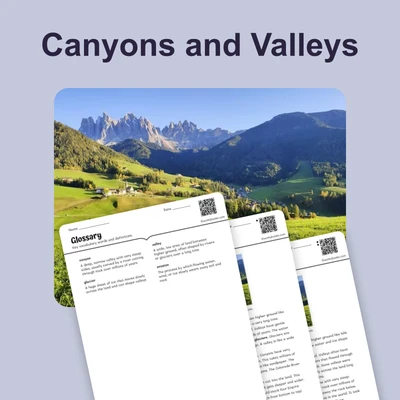
Grades 3–5
Canyons and Valleys
Reading Passage · NGSS 4-ESS2-2
$1.50

Explore our comprehensive collection of Landforms curriculum resources for grades K-5. From printable worksheets and interactive games to reading passages and graphic organizers, this hub offers no-prep, standards-aligned materials that build foundational knowledge and deepen understanding across elementary grade levels.
Reading Passage · NGSS 4-ESS2-2
Reading Passage · NGSS 4-ESS2-2
Reading Passage · NGSS 4-ESS2-2
Reading Passage · NGSS 4-ESS2-2
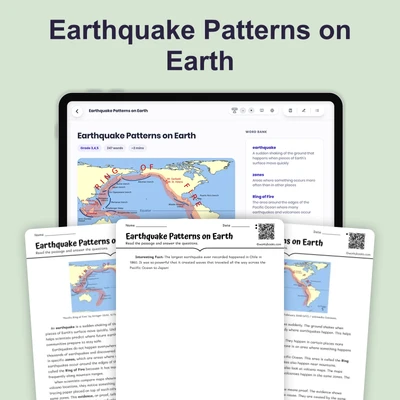
Reading Passage · NGSS 4-ESS2-2
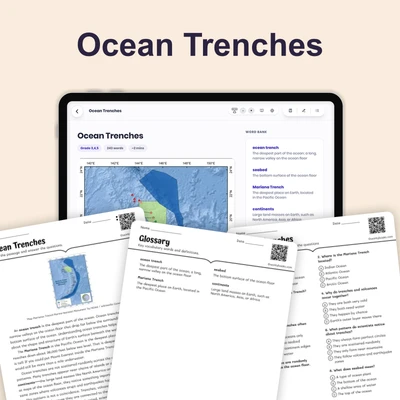
Reading Passage · NGSS 4-ESS2-2
40% off until Aug 1
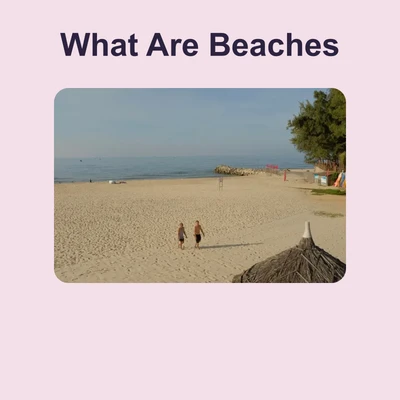
Reading Passage · MS-ESS2-2
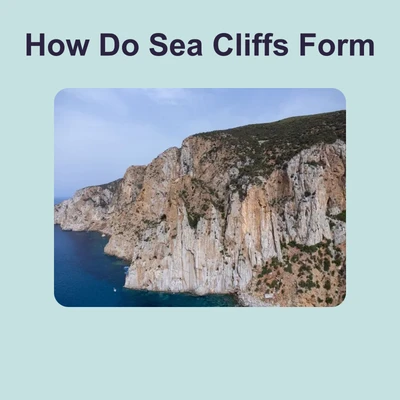
Reading Passage · MS-ESS2-2
Reading Passage · MS-ESS2-2
Reading Passage · MS-ESS2-2
Reading Passage · MS-ESS2-1
Reading Passage · MS-ESS2-1
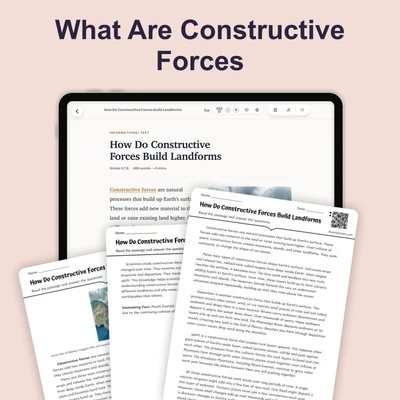
Reading Passage · MS-ESS2-1
Three ways to use Workybooks — pick what fits.
Landforms are introduced in kindergarten and first grade as basic shapes on Earth's surface, such as hills, valleys, rivers, and oceans. Students learn to identify and describe these features using simple vocabulary and visual models. As they progress through grades 2 and 3, the focus shifts to comparing and contrasting different landforms, understanding how they are formed through processes like erosion and deposition, and recognizing them on maps and globes. In grades 4 and 5, students explore more complex concepts, including the relationship between landforms and climate, the role of plate tectonics, and the impact of human activity on landscapes. Related concepts such as bodies of water, weathering, and natural resources are woven throughout the resources to provide a complete picture of Earth's physical features.
Our resources include differentiated worksheets, hands-on activities, leveled reading passages, and engaging games that reinforce key vocabulary and critical thinking. Whether students are labeling diagrams, creating models, or analyzing real-world examples, they develop skills in observation, classification, cause-and-effect reasoning, and scientific communication. The progression ensures that students build a solid foundation in the early grades and expand their knowledge systematically through upper elementary.
Teachers can use this hub to address a range of instructional needs. For whole-group lessons, select grade-appropriate reading passages or anchor charts to introduce a landform concept. In small groups or literacy centers, pair printable worksheets with digital games for hands-on practice. Differentiate easily by choosing scaffolded materials: simpler identification tasks for struggling learners and more complex analysis or research activities for advanced students. Use the resources for independent practice, homework, or intervention to reinforce learning. The mix of printable and digital options allows flexibility for both classroom and remote settings. Assessment-ready materials help teachers gauge understanding before moving to the next topic.
These resources align with grade-level Common Core State Standards for reading informational text and writing, as well as Next Generation Science Standards related to Earth's systems and processes across grades K-5.
Yes, many of our Landforms worksheets are printable. You can download and print them for classroom or home use. Some resources are also available as digital interactive activities. Please note that while some worksheets are free, most require a paid Workybooks membership to access.
Absolutely. Our Landforms worksheets for kids are designed for grades K-5, with content that progresses from basic identification in kindergarten to more complex concepts like erosion and plate tectonics in upper grades. Each resource is labeled with the appropriate grade level to help you choose the right fit.
Yes, differentiation is built into our collection. You will find worksheets at various difficulty levels, including simplified versions for struggling learners and enrichment activities for advanced students. Many resources include scaffolded questions or extension tasks, making it easy to meet diverse needs in a mixed-ability classroom.
In addition to worksheets, we offer interactive games, reading passages, graphic organizers, hands-on activities, and assessment tools. This variety allows you to address different learning styles and instructional settings, from whole-group lessons to independent practice and centers.