This learning resource is available in interactive and printable formats. The interactive worksheet can be played online and assigned to students. The Printable PDF version can be downloaded and printed for completion by hand.
This engaging 350-word science passage helps Grade 4-5 students understand how canyons and valleys form through the process of erosion. Aligned with NGSS standard 4-ESS2-2, the passage explains how valleys are low areas between mountains or hills often formed by rivers over long periods of time. Students learn how canyons are deep valleys with steep rocky walls carved by flowing water, with the Grand Canyon serving as a famous example of water carving through rock for millions of years. The passage uses age-appropriate analogies and clear explanations to help students grasp concepts like erosion, sediment, and weathering. Audio-integrated features support diverse learners, while the included glossary defines key vocabulary terms. Activities include multiple-choice questions testing recall and comprehension, writing prompts encouraging scientific explanation, and graphic organizers that help students visualize cause-and-effect relationships in landform development. A simplified differentiated version ensures all students can access the core content, and Spanish translations support English language learners.
CONTENT PREVIEW
Expand content preview
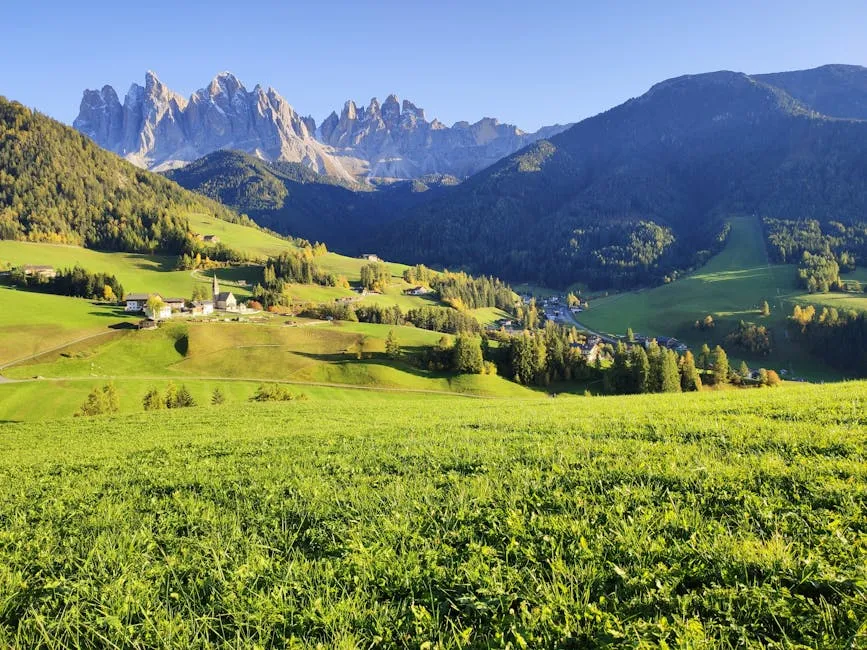
View of a valley. Image credit Sergey Nikolaev / Pexels.
Earth's surface is covered with different landforms, and some of the most interesting are valleys and canyons. These low areas between higher ground tell an amazing story about the power of water. Valleys are low areas of land between mountains or hills. Canyons are special types of valleys with very deep, steep rocky walls. Both landforms are created by flowing water over very long periods of time.
Rivers are powerful forces that shape the land. As water flows downhill, it carries tiny pieces of rock and soil called sediment. This moving water and sediment act like sandpaper, slowly wearing away the ground beneath. This process is called erosion. Think about how a pencil eraser wears down when you use it. Rivers work the same way, but instead of erasing pencil marks, they eraser rock! Over thousands and millions of years, a small stream can carve a deep valley into the earth.
Canyons form when erosion happens in places with hard rock layers. The river cuts down through the rock very slowly, creating steep walls on both sides. The walls stay steep because the rock is hard and doesn't crumble easily. Imagine cutting through a stack of hard cookies with a butter knife—it takes time and makes a narrow cut with straight sides. That's similar to how a river creates a canyon. The deeper the river cuts, the taller the canyon walls become.
The Grand Canyon in Arizona is one of the most famous canyons in the world. The Colorado River carved this massive canyon over six million years! The canyon is over one mile deep in some places and up to 18 miles wide. When you stand at the edge, you can see layers of different colored rocks in the walls. Each layer tells part of Earth's history. The rocks at the bottom are almost two billion years old! Weathering, which is the breaking down of rocks by wind, rain, and temperature changes, also helped shape the Grand Canyon's walls.
Scientists study valleys and canyons to learn about Earth's past. The rock layers in canyon walls are like pages in a history book. They show what the environment was like millions of years ago. Geologists can find fossils in these layers that tell us about ancient plants and animals. Engineers also study how rivers carve the land to help plan bridges, dams, and roads. Understanding erosion helps people protect their homes and farms from being washed away.
Interesting Fact: The Grand Canyon is so big that it creates its own weather! The bottom of the canyon can be 20 degrees warmer than the top rim.
What are valleys?
High mountain peaksLow areas between mountains or hillsFlat desert areasOcean floors
What is sediment?
Large boulders in riversDeep ocean waterTiny pieces of rock and soilFrozen ice chunks
How long did it take to carve Grand Canyon?
One hundred yearsOne thousand yearsOver six million yearsTen years
Why do canyon walls stay steep?
The rock is hard and doesn't crumblePeople build them that wayWind keeps them straightThey are made of ice
How does erosion shape the land?
It builds up mountains quicklyIt wears away rock and soil slowlyIt freezes water in placeIt creates earthquakes
What can scientists learn from canyon rock layers?
Future weather patternsHow to build bridgesEarth's past and ancient lifeOcean temperatures
Valleys can only form in one year.
TrueFalse
What does weathering mean in the passage?
Predicting rain and snowBreaking down rocks by natural forcesBuilding up mountainsMeasuring temperature
Perfect For:
👩🏫 Teachers
• Reading comprehension practice
• Auto-graded assessments
• Literacy skill development
👨👩👧👦 Parents
• Reading practice at home
• Comprehension improvement
• Educational reading time
🏠 Homeschoolers
• Reading curriculum support
• Independent reading practice
• Progress monitoring
Reading Features:
📖
Reading Passage
Engaging fiction or nonfiction text
❓
Comprehension Quiz
Auto-graded questions
📊
Instant Feedback
Immediate results and scoring
📄
Printable Version
Download for offline reading
🔊
Read Aloud
Voice-over with word highlighting
Reviews & Ratings
No reviews yet. Be the first to share your experience!
Related Content
Map Symbols
This engaging 350-word science passage introduces Grade 4-5 students to the concept of map symbols and their importance ...
NGSS 4-ESS2-2
Compass Rose
This engaging 350-word science passage introduces Grade 4-5 students to the compass rose, a fundamental map-reading tool...
NGSS 4-ESS2-2
What Are Maps
This engaging 350-word science passage introduces Grade 4-5 students to the concept of maps as flat drawings that repres...