This learning resource is available in interactive and printable formats. The interactive worksheet can be played online and assigned to students. The Printable PDF version can be downloaded and printed for completion by hand.
This Grade 4 science reading passage explores plains and plateaus, two common landforms found across Earth's surface. Aligned with NGSS standard 4-ESS2-2, the passage explains that plains are large, flat areas of land often located in the middle of continents. Students learn why plains, such as the Great Plains in the United States, are excellent for farming due to their flat terrain and rich soil. The passage also introduces plateaus as elevated flat areas with steep sides, comparing them to tables. Through simple language and relatable examples, students build foundational understanding of how landforms can be identified by their patterns and characteristics. The passage includes audio integration to support diverse learners and help students access the content through multiple modalities. Key vocabulary terms like plains, plateaus, landforms, and elevation are clearly defined to support comprehension and science literacy development.
CONTENT PREVIEW
Expand content preview
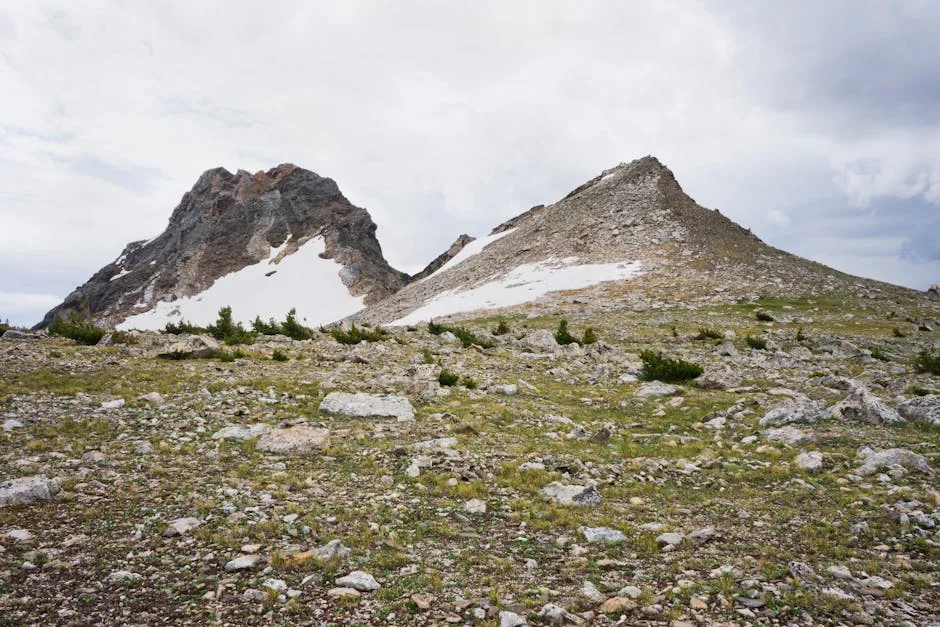
"Stunning view of rocky mountains with patches of snow under a cloudy sky." Image Credit Robert Schrader / Pexels.
A plain is a large, flat area of land. Plains stretch for many miles without big hills or mountains. They are often found in the middle of continents, far from oceans and mountain ranges. Plains are important because they provide excellent land for farming. The flat ground makes it easy for farmers to plant and harvest crops. The soil on plains is usually rich in nutrients, which helps plants grow strong and healthy.
The Great Plains in the center of the United States is a famous example of a plain. This region produces wheat, corn, and other crops that feed millions of people. Because plains are so flat and wide, you can see them clearly on maps as large areas without many changes in elevation, or height above sea level.
A plateau is different from a plain. A plateau is also a flat area of land, but it sits high above the surrounding land. Think of a plateau like a table—it has a flat top but steep sides that drop down to lower ground. Plateaus form when forces inside Earth push land upward or when water and wind wear away softer rock around harder rock. Both plains and plateaus are common landforms, which are natural features of Earth's surface. You can identify these landforms on maps by looking for flat areas at different heights.
Interesting Fact: The Colorado Plateau in the southwestern United States is so large that it covers parts of four states: Colorado, Utah, Arizona, and New Mexico!
What is a plain?
A large flat area of landA tall mountainA deep valleyA steep cliff
Where are plains often found?
Near oceansIn the middle of continentsOn mountain topsUnder water
Why are plains good for farming?
They have steep hillsThey are near oceansThey have flat land and rich soilThey have many rocks
How is a plateau like a table?
It has four legsIt has a flat top and steep sidesIt is made of woodIt is very small
What can you see on maps?
Patterns showing flat areas at different heightsPictures of farmersColors of soilTypes of crops
How do plateaus form?
When farmers plant cropsWhen it rains a lotWhen Earth pushes land up or erosion occursWhen snow melts
Plains and plateaus are both flat on top.
TrueFalse
What does elevation mean?
Type of soilHeight above sea levelAmount of rainNumber of crops
Perfect For:
👩🏫 Teachers
• Reading comprehension practice
• Auto-graded assessments
• Literacy skill development
👨👩👧👦 Parents
• Reading practice at home
• Comprehension improvement
• Educational reading time
🏠 Homeschoolers
• Reading curriculum support
• Independent reading practice
• Progress monitoring
Reading Features:
📖
Reading Passage
Engaging fiction or nonfiction text
❓
Comprehension Quiz
Auto-graded questions
📊
Instant Feedback
Immediate results and scoring
📄
Printable Version
Download for offline reading
🔊
Read Aloud
Voice-over with word highlighting
Reviews & Ratings
No reviews yet. Be the first to share your experience!
Related Content
Map Symbols
This engaging 350-word science passage introduces Grade 4-5 students to the concept of map symbols and their importance ...
NGSS 4-ESS2-2
Compass Rose
This engaging 350-word science passage introduces Grade 4-5 students to the compass rose, a fundamental map-reading tool...
NGSS 4-ESS2-2
What Are Maps
This engaging 350-word science passage introduces Grade 4-5 students to the concept of maps as flat drawings that repres...
NGSS 4-ESS2-2
Canyons and Valleys
This engaging 350-word science passage helps Grade 4-5 students understand how canyons and valleys form through the proc...
NGSS 4-ESS2-2
What Are Topographic Maps
This engaging 250-word reading passage introduces fourth-grade students to topographic maps and how they represent Earth...
NGSS 4-ESS2-2
What Are Ocean Floor Maps
This Grade 4 science reading passage introduces students to ocean floor maps and how scientists create them using sonar ...
NGSS 4-ESS2-2
How to Read Data from Maps
This 250-word reading passage introduces fourth-grade students to the essential skill of reading data from maps, aligned...
NGSS 4-ESS2-2
Maps Show Patterns
This engaging 250-word reading passage introduces fourth-grade students to the concept of identifying patterns on maps a...
NGSS 4-ESS2-2ESS2.B
Earth's Land and Water
This 250-word reading passage introduces fourth-grade students to the fundamental concept of how land and water are dist...
NGSS 4-ESS2-2ESS2.B
What Are Mountains
This 250-word reading passage introduces fourth-grade students to mountains as one of Earth's most dramatic landforms. A...
NGSS 4-ESS2-2ESS2.B
Mountain Patterns on Earth
This 250-word reading passage introduces fourth-grade students to mountain patterns on Earth, aligned with NGSS standard...
NGSS 4-ESS2-2
Rivers and Water Features
This 250-word reading passage introduces fourth-grade students to rivers and water features as outlined in NGSS 4-ESS2-2...
NGSS 4-ESS2-2ESS2.B
Volcano Patterns on Earth
This Grade 4 science reading passage introduces students to volcano patterns on Earth, aligned with NGSS standard 4-ESS2...
NGSS 4-ESS2-2
Earthquake Patterns on Earth
This engaging 250-word reading passage introduces fourth-grade students to earthquake patterns on Earth, aligned with NG...
NGSS 4-ESS2-2
Ocean Trenches
This engaging 250-word reading passage introduces fourth-grade students to ocean trenches, the deepest parts of Earth's ...
NGSS 4-ESS2-2
How Earth's Features Connect
This engaging 250-word reading passage introduces fourth-grade students to the fascinating patterns connecting Earth's m...