Cuneiform Writing
Interactive passage with audio narration, comprehension questions, and printable PDF.
By completing this purchase you agree to our Terms of Use and Privacy Policy. Your subscription renews automatically until you cancel. You can cancel anytime from your account settings. All sales are final and non-refundable. Digital content is available for download in your account immediately upon purchase.
What's included
Part of this bundle

Cuneiform Writing preview and details
About this printable Cuneiform Writing reading passage (Grades 5-8)
Sample passage and quiz from Cuneiform Writing
Reading passage and comprehension quiz preview
Cuneiform and Clay Tablets: How Writing Changed the World
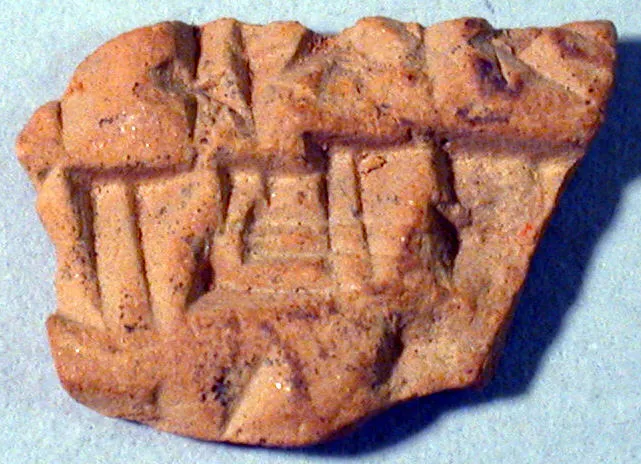
"Cuneiform tablet- fragment of a promissory note for silver MET vsz86.11.556" / Wikimedia Commons (CC0).
The earliest known writing system in world history is called cuneiform. It was developed in ancient Mesopotamia, a region located between the Tigris and Euphrates rivers in present-day Iraq. Around 3200 BCE, the Sumerians, one of the first urban societies, invented cuneiform to record information about trade, laws, and daily life. This innovation marked a turning point for civilization because it allowed people to communicate across time and space.
Cuneiform gets its name from the Latin word for "wedge," because scribes used a reed stylus to press wedge-shaped marks into soft clay tablets. As the clay dried, the writing became permanent. At first, cuneiform was used mostly for economic transactions, such as recording the exchange of barley or sheep. Archaeologists have discovered thousands of these tablets in city-states like Uruk and Ur, providing evidence of how early societies organized their economies. Over time, cuneiform expanded to include myths, prayers, and even the world's first known epic poem, the Epic of Gilgamesh.
The invention of cuneiform had profound effects on Mesopotamian society. The ability to write gave rise to a class of professional scribes who trained for years to master the complex symbols. Scribes were respected members of society, often working for temples or kings. Writing also made it possible to create and enforce laws. For example, King Hammurabi of Babylon (around 1754 BCE) used cuneiform to inscribe his famous law code on a large stone stele. This code included rules about trade, property, and justice, showing how writing helped rulers govern large populations.
Geography played a key role in these developments. Mesopotamia had few natural resources like stone or wood, but the rivers provided abundant clay. This made clay tablets an ideal material for writing, and it shaped how information was preserved. Because cuneiform tablets were durable, many have survived for thousands of years, allowing historians to study ancient beliefs and daily life. However, only a small group of people could read or write, which meant most citizens relied on scribes or public readings for important information.
Cuneiform writing continued for over 3,000 years, gradually evolving and being adapted by other cultures, such as the Akkadians and Babylonians. Its invention marked a major change in how humans recorded knowledge, solved problems, and built societies. Today, cuneiform is recognized as a foundation of written language and human achievement.
This development connects to broader themes in world history, such as how technology and geography influence human progress and social organization.
Interesting Fact: The Epic of Gilgamesh, written in cuneiform, is over 4,000 years old and contains stories similar to later myths found in other cultures.
Comprehension quiz (8 questions)
1. Where did cuneiform develop?
2. Who created the first cuneiform?
3. What material were tablets made of?
4. Why were scribes important?
5. How did geography affect writing?
6. What did Hammurabi's Code show?
7. Cuneiform lasted more than 3,000 years. True or false?
8. What is a 'city-state'?
Perfect for the way you teach
- Build comprehension skills
- Auto-graded quiz
- Differentiated reading
- Read together at home
- Improve fluency
- Quiet reading time
- Reading curriculum support
- Independent practice
- Track Lexile growth