Life in Mesopotamia
Interactive passage with audio narration, comprehension questions, and printable PDF.
By completing this purchase you agree to our Terms of Use and Privacy Policy. Your subscription renews automatically until you cancel. You can cancel anytime from your account settings. All sales are final and non-refundable. Digital content is available for download in your account immediately upon purchase.
What's included
Part of this bundle

Life in Mesopotamia preview and details
About this printable Life in Mesopotamia reading passage (Grades 5-8)
Sample passage and quiz from Life in Mesopotamia
Reading passage and comprehension quiz preview
Life of Ancient Mesopotamia
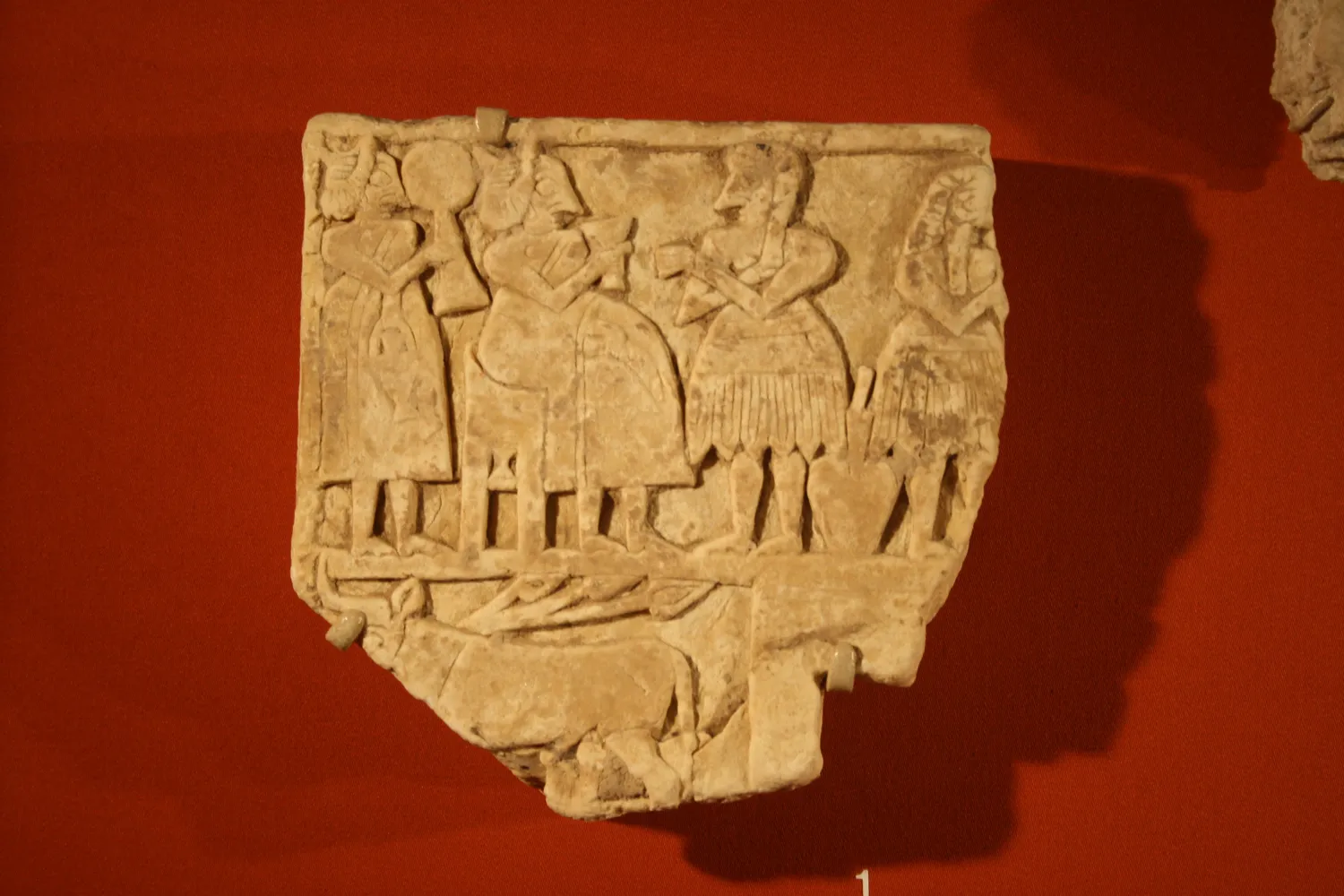
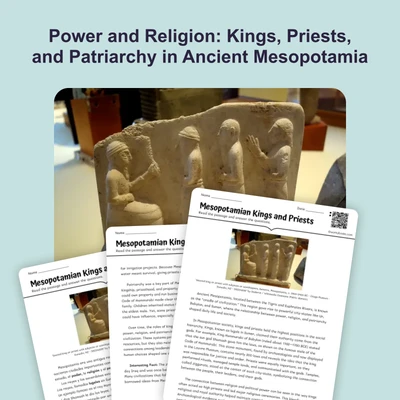
Daily Life in Mesopotamia Sumerian Banquet Scene, 2700-2350 BC, Egypt and Ancient Near East Galleries, Michael C. Carlos Museum, Atlanta, Georgia, USA Wikimedia Commons
Ancient Mesopotamia, located between the Tigris and Euphrates rivers, was one of the world’s first advanced civilizations. The region’s fertile land allowed people to develop organized **city-states** such as Sumer, Akkad, and Babylon, beginning as early as 3500 BCE. Mesopotamians built complex societies with clear social structures, specialized jobs, and written laws.
Daily life in Mesopotamia depended on social class. At the top were the **priests** and **nobles**, who controlled religious ceremonies and owned much of the land. Most people were **farmers**, working small plots along irrigation canals that brought water from the rivers. Farmers grew barley, wheat, and dates, using tools like the plow and the seeder. Archaeologists have found clay tablets showing lists of grain deliveries, which help us understand the importance of agriculture. Families often worked together, and even children helped with planting and harvesting. However, droughts or floods could destroy crops, leading to food shortages and hardship.
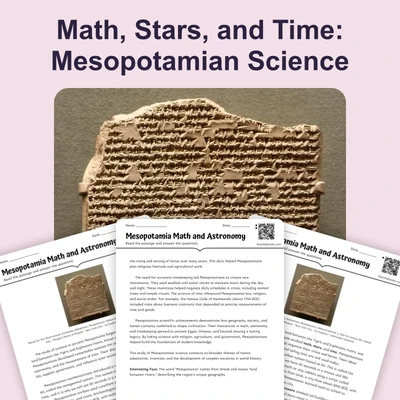
Another group in Mesopotamian society were **craftspeople** and **merchants**. Craftspeople made pottery, textiles, and metal tools, while merchants traded goods in the marketplace. Written records in **cuneiform**, the world’s first writing system, reveal contracts and business deals, indicating that trade was essential to city life. Women sometimes owned businesses or acted as priestesses, though most had fewer rights than men.
At the bottom of the social structure were enslaved people. Slavery in Mesopotamia was often a result of debt, war, or punishment. Enslaved people worked in households, on farms, or in temples. Some could eventually buy their freedom, but their lives were usually hard. Archaeological evidence, such as the Law Code of Hammurabi (around 1754 BCE), lists rules about the treatment of slaves and their legal rights. These laws show that slavery was a recognized part of society but also that there were limits on the power of masters.
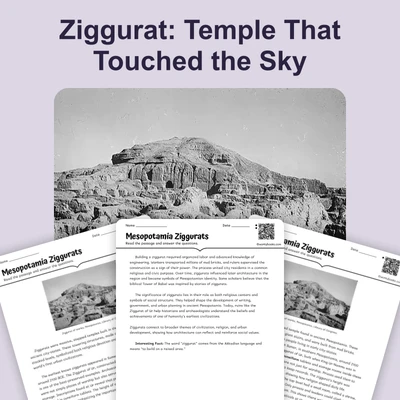
Despite these differences, most Mesopotamians shared certain customs. They worshipped many gods and goddesses, built large **ziggurats** as religious centers, and gathered for festivals. The society’s organization reflected its geography: rivers supported agriculture, which in turn allowed cities and complex labor systems to develop. Over time, the roles of families, farmers, and slaves changed, but the basic structure of Mesopotamian society remained for centuries.
This study of Mesopotamian daily life helps us see how geography, technology, and social organization can shape civilizations—an important theme in world history.
Interesting Fact: Some Mesopotamian children went to tablet schools to learn how to write cuneiform, making them some of the earliest students in history!
Comprehension quiz (8 questions)
1. Where was Mesopotamia located?
2. Which group was at the top of society?
3. What crops did farmers mainly grow?
4. Why was cuneiform important?
5. What caused some people to become slaves?
6. How did geography shape Mesopotamian society?
7. There were no slaves in Mesopotamia.
8. What is a ziggurat?
Perfect for the way you teach
- Build comprehension skills
- Auto-graded quiz
- Differentiated reading
- Read together at home
- Improve fluency
- Quiet reading time
- Reading curriculum support
- Independent practice
- Track Lexile growth