This learning resource is available in interactive and printable formats. The interactive worksheet can be played online and assigned to students. The Printable PDF version can be downloaded and printed for completion by hand.
This passage explores the formation, struggle, and legacy of the 54th Massachusetts Regiment, one of the first official Black units in the Union Army during the American Civil War. Students will analyze the causes that led to the unit’s creation, motivations of Black soldiers, and the impact of their actions at Fort Wagner. The reading integrates multiple perspectives—including those of Black soldiers, Union leaders, and critics—highlighting the complexities of fighting for freedom in a divided society. Historical evidence, such as primary source quotes, is woven throughout to model historical reasoning. The passage is fully aligned to C3 Framework and Common Core standards, offering a rigorous, inquiry-based approach. Included are a glossary, timeline, multiple choice and writing activities, and graphic organizer. A Spanish translation and read aloud feature support accessibility and language learning. This resource is ideal for teaching about the Civil War, African American history, and the fight for equality in the United States.
CONTENT PREVIEW
Expand content preview
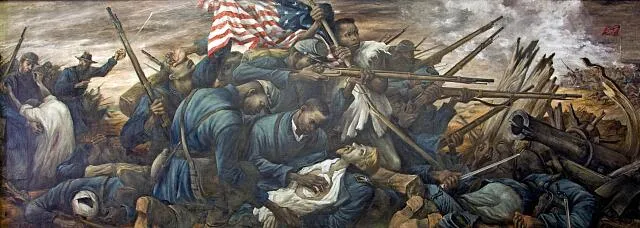
""The 54th Massachusetts regiment, under the leadership of Colonel Shaw in the attack on Fort Wagner, Morris Island, South Carolina, in 1863," mural at the Recorder of Deeds building, built in 1943. 515 D St., NW, Washington, D.C." by Highsmith, Carol M., 1946- / Library of Congress.
The 54th Massachusetts Regiment was one of the first official African American units in the Union Army during the Civil War. It was formed in 1863, at a time when most African Americans were not allowed to serve as soldiers. The Union needed more troops, and some leaders believed African American men could help win the war. However, many people still doubted the abilities of Black soldiers, and discrimination was widespread.
When the 54th Massachusetts Regiment was created, volunteers came from many places, including northern states and even Canada. Colonel Robert Gould Shaw, a young white officer, was chosen to lead the regiment. African American soldiers faced many obstacles, such as lower pay and poor equipment compared to white soldiers. Despite these challenges, the men of the 54th demonstrated strong determination and a sense of service to their country and to the cause of ending slavery.
The regiment’s most famous battle took place at Fort Wagner in South Carolina on July 18, 1863. The Union Army planned an attack on the Confederate fort, and the 54th Massachusetts volunteered to lead the assault. The battle was extremely dangerous, and the regiment suffered heavy losses. More than half of the soldiers were killed, wounded, or captured. Their bravery under fire impressed many, including Union officers and members of the public who had doubted their courage. Although the attack on Fort Wagner did not succeed in capturing the fort, it became a powerful symbol of Black soldiers’ abilities and commitment.
The actions of the 54th Massachusetts Regiment helped change public opinion in the North. Newspapers reported on their heroism, and President Abraham Lincoln and other leaders recognized the importance of African American soldiers. Soon after, thousands more Black men joined the Union Army. Over time, African American soldiers gained more recognition and respect, though they still faced prejudice and unequal treatment. Their service played a crucial role in the eventual Union victory and the abolition of slavery.
The story of the 54th Massachusetts Regiment shows how individuals can fight for justice, even when facing great challenges. The regiment’s legacy continues to inspire people today, reminding us that courage and determination can help bring about important changes in society.
Interesting Fact: After the war, Sergeant William Carney of the 54th became the first African American to receive the Medal of Honor for his actions at Fort Wagner.
When was the 54th Massachusetts formed?
1863186118701850
Who led the 54th Regiment?
Robert Gould ShawAbraham LincolnWilliam CarneyFrederick Douglass
Where was Fort Wagner located?
South CarolinaGeorgiaVirginiaNew York
Why did the Union Army form the 54th?
They needed more troopsTo attack the SouthTo train new officersFor parade purposes
What was a major problem for the 54th?
Lower payBetter suppliesNo leadersToo many horses
How did the 54th impact public opinion?
Showed Black soldiers' abilitiesLost all battlesDid not fightRefused to serve
The 54th Massachusetts lost no soldiers at Wagner.
TrueFalse
What does 'service' mean in the passage?
Duty to countryA mealA train rideA speech
Perfect For:
👩🏫 Teachers
• Reading comprehension practice
• Auto-graded assessments
• Literacy skill development
👨👩👧👦 Parents
• Reading practice at home
• Comprehension improvement
• Educational reading time
🏠 Homeschoolers
• Reading curriculum support
• Independent reading practice
• Progress monitoring
Reading Features:
📖
Reading Passage
Engaging fiction or nonfiction text
❓
Comprehension Quiz
Auto-graded questions
📊
Instant Feedback
Immediate results and scoring
📄
Printable Version
Download for offline reading
🔊
Read Aloud
Voice-over with word highlighting
Reviews & Ratings
No reviews yet. Be the first to share your experience!
Related Content
Native American Tribes Across America
This engaging history reading passage introduces students to Native American tribes across America, focusing on their da...
D2.HIS.1.3-5D2.HIS.2.3-5RI.4.1RI.4.2
Teepees: Homes on the Great Plains
This engaging history reading passage introduces students to teepees, the unique homes of Native American tribes on the ...
D2.HIS.2.3-5D2.HIS.14.3-5RI.4.1RI.4.2RI.4.4
Traditional Native American Clothing
This engaging history passage explores traditional Native American clothing and how it reflected the environment, values...
D2.HIS.2.3-5D2.HIS.3.3-5RI.4.3RI.4.4
The Iroquois Confederacy: A System of Peace
This engaging U.S. History reading passage introduces students to the Iroquois Confederacy, a powerful alliance of Nativ...
D2.HIS.2.3-5D2.HIS.3.3-5RI.4.3RI.4.4
The Cherokee Nation: History and Culture
This reading passage explores the rich history and culture of the Cherokee Nation, one of the largest Native American tr...
D2.HIS.2.3-5D2.HIS.14.3-5RI.4.3RI.4.4RI.4.10
The Sioux: Warriors and Tribal Leaders
This history reading passage explores the Sioux Nation, focusing on their roles as warriors and tribal leaders. Students...
D2.HIS.1.3-5D2.HIS.2.3-5RI.4.1RI.4.3
Native American Respect for Nature
This engaging history reading passage explores Native American respect for nature, emphasizing the close relationship be...
D2.HIS.2.3-5D2.HIS.3.3-5RI.4.3RI.4.4
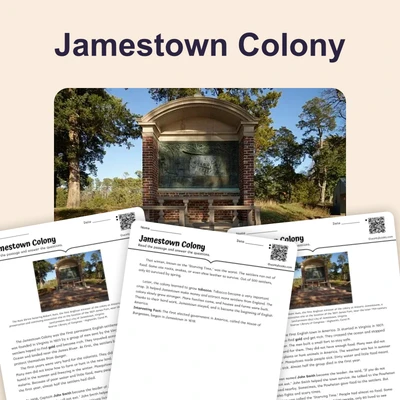
Jamestown: The First Permanent English Colony
This engaging history passage explores the founding of Jamestown, the first permanent English colony in America. Aligned...
D2.HIS.1.3-5D2.HIS.2.3-5RI.4.3RI.4.4
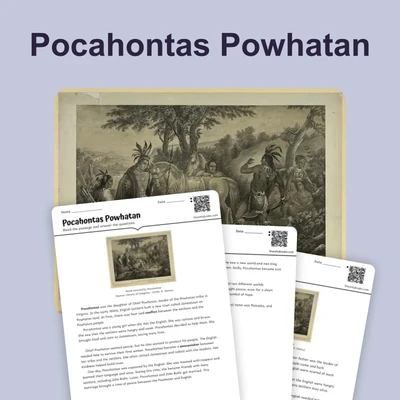
Pocahontas and the Powhatan People
This engaging reading passage explores the life of Pocahontas and the Powhatan people and their important role in early ...
D2.HIS.1.3-5D2.HIS.2.3-5RI.4.1RI.4.3
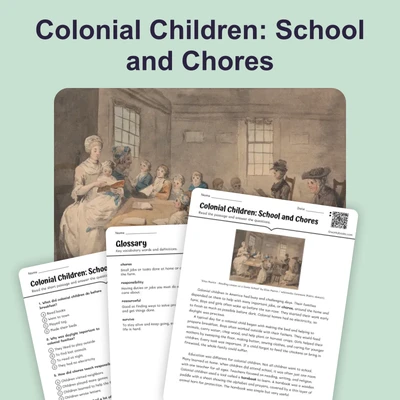
Colonial Children: School and Chores
This reading passage explores the daily lives of colonial children, focusing on their experiences at school and their ma...
D2.HIS.2.3-5D2.HIS.3.3-5RI.4.1RI.4.2RI.4.4
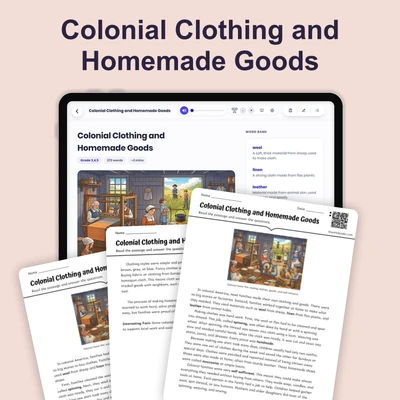
Colonial Clothing and Homemade Goods
This engaging U.S. history passage explores the daily life of early American colonists with a focus on colonial clothing...
D2.HIS.2.3-5RI.4.3RI.4.4
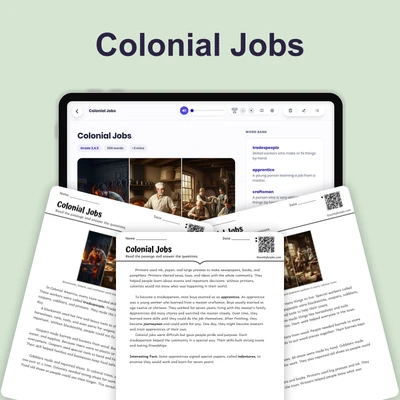
Colonial Jobs: Blacksmiths, Bakers, and Craftsmen
This engaging history reading passage explores the vital roles of blacksmiths, bakers, and craftsmen in colonial America...
D2.HIS.2.3-5D2.HIS.3.3-5RI.4.3RI.4.4
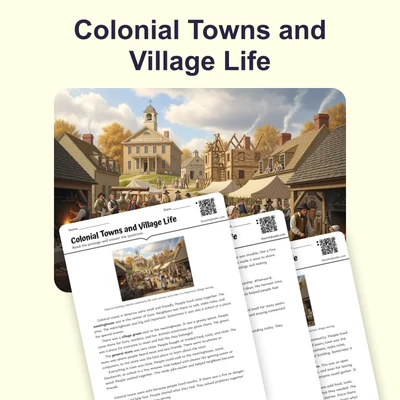
Colonial Towns and Village Life
This engaging history reading passage explores the daily life, work, and unity found in colonial towns and villages. Ali...
D2.HIS.1.3-5D2.HIS.2.3-5RI.4.3RI.4.4
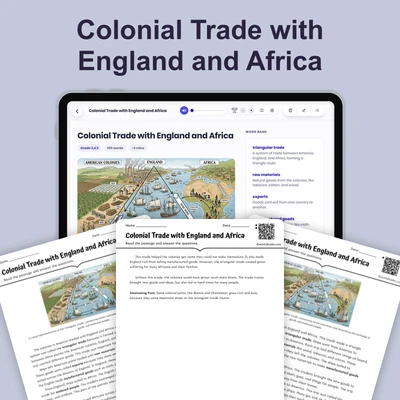
Colonial Trade with England and Africa
This history reading passage explores colonial trade between the American colonies, England, and Africa, focusing on the...
D2.HIS.2.3-5D2.HIS.14.3-5RI.4.3RI.4.4
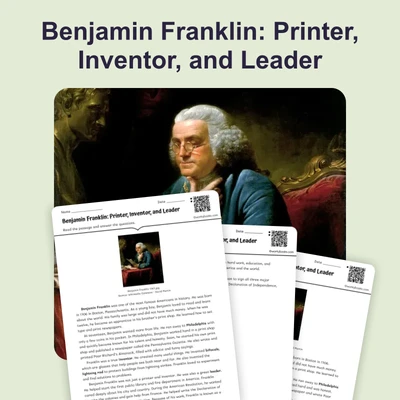
Benjamin Franklin: Printer, Inventor, and Leader
This history reading passage explores the life and achievements of Benjamin Franklin, one of America's most important ea...
D2.HIS.2.3-5D2.HIS.3.3-5RI.4.1RI.4.3
George Washington Leads the Army
This engaging history reading passage explores how George Washington bravely led the Continental Army during the America...
D2.HIS.1.3-5D2.HIS.2.3-5RI.4.3RI.4.4
Women and Children During the Revolutionary War
This reading passage explores the important roles women and children played during the Revolutionary War. Students will ...
D2.HIS.2.3-5RI.4.3RI.5.3
African Americans Fight for Freedom
This educational passage explores the brave and inspiring story of how African Americans fought for freedom in the Unite...
D2.HIS.2.3-5D2.HIS.3.3-5RI.4.3RI.4.4
The Battle of Yorktown Ends War
This engaging U.S. history reading passage explores the Battle of Yorktown, a key event that ended the American Revoluti...
D2.HIS.1.3-5D2.HIS.2.3-5RI.4.1RI.4.3
Loyalists vs. Patriots: Divided Families
This engaging U.S. history reading passage explores the division between Loyalists and Patriots during the American Revo...