George Washington: Our First President — Reading Comprehension
Rate this
Premium Resource
Present
Present in classroom. No work saved
Assign
Classroom with student accounts, Track progress
Quick Play
No student accounts, assign with a link
Grades
3
4
5
Standards
D2.HIS.2.3-5
D2.HIS.3.3-5
RI.4.3
RI.4.4
W.4.2
PRINT+DIGITAL RESOURCE
This learning resource is available in interactive and printable formats. The interactive worksheet can be played online and assigned to students. The Printable PDF version can be downloaded and printed for completion by hand.
This engaging U.S. history reading passage introduces students to George Washington, America’s first president, through a clear, chronological narrative. Students will learn about Washington's early life, leadership during the American Revolution, and his role in uniting the nation as its first president. The passage uses grade-appropriate vocabulary, supports literacy growth, and is formatted for accessibility. It includes a glossary, timeline, multiple-choice quiz, and writing activities to foster deeper understanding. Audio read aloud and a Spanish translation are provided for language support. This resource aligns with the C3 Framework for Social Studies and Common Core ELA standards, making it ideal for classroom or homeschool use. Key themes of bravery, unity, and problem-solving are highlighted to inspire students and connect past events to present-day democratic values.
CONTENT PREVIEW
Expand content preview
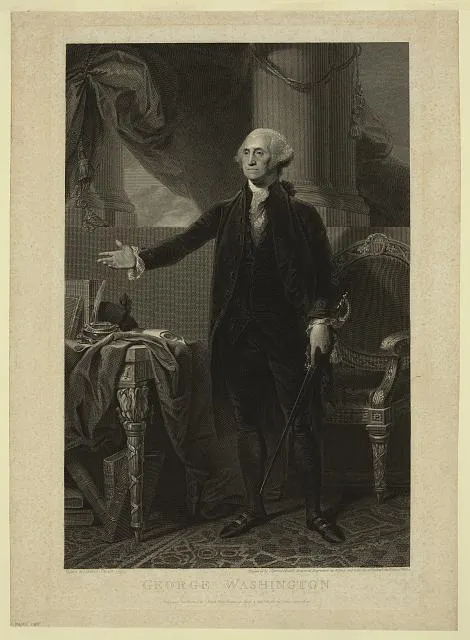
George Washington Source: Library of Congress - Heath, James
George Washington became the first president of the United States in 1789. As the leader of the new country, he set important examples called precedents for future presidents. Washington helped guide the young nation through its early years and showed what a president should be.
Before he was president, Washington was the commander of the Continental Army during the American Revolution. People trusted him because of his bravery and honesty. After the war, leaders met to create a new government. They chose Washington to lead because they believed he would put the country first.
When Washington became president, there were no rules for how a president should act. He created many traditions. First, he decided to be called "Mr. President" instead of "King" or "Your Highness." This showed that the president was not above the people. He also formed a group of advisors called the Cabinet to help him make decisions.
Washington worked hard to keep peace in the country. He did not want the U.S. to get involved in other countries' fights. He believed the nation should stay united and avoid arguments between different groups. Washington also helped set up the Constitution, the set of rules for the government. He made sure everyone followed these rules.
Another important precedent Washington set was serving only two terms as president. He could have stayed in power longer, but he chose to step down after eight years. This peaceful transfer of power showed that leaders should not keep power forever. It helped make the U.S. a democracy.
Because of his actions, people called Washington the "Father of Our Country." He showed courage, honesty, and respect for the law. His leadership helped the United States become a strong and free nation.
Interesting Fact: George Washington is the only president who did not live in the White House. The capital was moved to Washington, D.C. after his presidency.
When did Washington become president?
1789177618011796
Who did Washington lead before becoming president?
The Continental ArmyThe British ArmyThe CabinetThe Supreme Court
What did Washington help set up?
The ConstitutionThe White HouseThe Supreme CourtThe Declaration
Why did Washington want to be called 'Mr. President'?
To show he was not a kingHe liked the soundIt was a family nameHe wanted to be different
How did Washington show peaceful leadership?
He avoided other countries’ warsHe built the White HouseHe fought battlesHe made new laws
Why is Washington called the 'Father of Our Country'?
He helped start the nationHe had many childrenHe built the CapitolHe wrote the laws alone
Washington lived in the White House. True or false?
TrueFalse
What is a 'precedent'?
An example for othersA type of lawA holidayA government building
Perfect For:
👩🏫 Teachers
• Reading comprehension practice
• Auto-graded assessments
• Literacy skill development
👨👩👧👦 Parents
• Reading practice at home
• Comprehension improvement
• Educational reading time
🏠 Homeschoolers
• Reading curriculum support
• Independent reading practice
• Progress monitoring
Reading Features:
📖
Reading Passage
Engaging fiction or nonfiction text
❓
Comprehension Quiz
Auto-graded questions
📊
Instant Feedback
Immediate results and scoring
📄
Printable Version
Download for offline reading
🔊
Read Aloud
Voice-over with word highlighting
Reviews & Ratings
No reviews yet. Be the first to share your experience!
Related Content
Native American Tribes Across America
This engaging history reading passage introduces students to Native American tribes across America, focusing on their da...
D2.HIS.1.3-5D2.HIS.2.3-5RI.4.1RI.4.2
Teepees: Homes on the Great Plains
This engaging history reading passage introduces students to teepees, the unique homes of Native American tribes on the ...
D2.HIS.2.3-5D2.HIS.14.3-5RI.4.1RI.4.2RI.4.4
Traditional Native American Clothing
This engaging history passage explores traditional Native American clothing and how it reflected the environment, values...
D2.HIS.2.3-5D2.HIS.3.3-5RI.4.3RI.4.4
The Iroquois Confederacy: A System of Peace
This engaging U.S. History reading passage introduces students to the Iroquois Confederacy, a powerful alliance of Nativ...
D2.HIS.2.3-5D2.HIS.3.3-5RI.4.3RI.4.4
The Cherokee Nation: History and Culture
This reading passage explores the rich history and culture of the Cherokee Nation, one of the largest Native American tr...
D2.HIS.2.3-5D2.HIS.14.3-5RI.4.3RI.4.4RI.4.10
The Sioux: Warriors and Tribal Leaders
This history reading passage explores the Sioux Nation, focusing on their roles as warriors and tribal leaders. Students...
D2.HIS.1.3-5D2.HIS.2.3-5RI.4.1RI.4.3
Native American Respect for Nature
This engaging history reading passage explores Native American respect for nature, emphasizing the close relationship be...
D2.HIS.2.3-5D2.HIS.3.3-5RI.4.3RI.4.4
Jamestown: The First Permanent English Colony
This engaging history passage explores the founding of Jamestown, the first permanent English colony in America. Aligned...
D2.HIS.1.3-5D2.HIS.2.3-5RI.4.3RI.4.4
Pocahontas and the Powhatan People
This engaging reading passage explores the life of Pocahontas and the Powhatan people and their important role in early ...
D2.HIS.1.3-5D2.HIS.2.3-5RI.4.1RI.4.3
Colonial Children: School and Chores
This reading passage explores the daily lives of colonial children, focusing on their experiences at school and their ma...
D2.HIS.2.3-5D2.HIS.3.3-5RI.4.1RI.4.2RI.4.4
Colonial Clothing and Homemade Goods
This engaging U.S. history passage explores the daily life of early American colonists with a focus on colonial clothing...
D2.HIS.2.3-5RI.4.3RI.4.4
Colonial Jobs: Blacksmiths, Bakers, and Craftsmen
This engaging history reading passage explores the vital roles of blacksmiths, bakers, and craftsmen in colonial America...
D2.HIS.2.3-5D2.HIS.3.3-5RI.4.3RI.4.4
Colonial Towns and Village Life
This engaging history reading passage explores the daily life, work, and unity found in colonial towns and villages. Ali...
D2.HIS.1.3-5D2.HIS.2.3-5RI.4.3RI.4.4
Colonial Trade with England and Africa
This history reading passage explores colonial trade between the American colonies, England, and Africa, focusing on the...
D2.HIS.2.3-5D2.HIS.14.3-5RI.4.3RI.4.4
Benjamin Franklin: Printer, Inventor, and Leader
This history reading passage explores the life and achievements of Benjamin Franklin, one of America's most important ea...
D2.HIS.2.3-5D2.HIS.3.3-5RI.4.1RI.4.3
George Washington Leads the Army
This engaging history reading passage explores how George Washington bravely led the Continental Army during the America...
D2.HIS.1.3-5D2.HIS.2.3-5RI.4.3RI.4.4
Women and Children During the Revolutionary War
This reading passage explores the important roles women and children played during the Revolutionary War. Students will ...
D2.HIS.2.3-5RI.4.3RI.5.3
African Americans Fight for Freedom
This educational passage explores the brave and inspiring story of how African Americans fought for freedom in the Unite...
D2.HIS.2.3-5D2.HIS.3.3-5RI.4.3RI.4.4
The Battle of Yorktown Ends War
This engaging U.S. history reading passage explores the Battle of Yorktown, a key event that ended the American Revoluti...
D2.HIS.1.3-5D2.HIS.2.3-5RI.4.1RI.4.3
Loyalists vs. Patriots: Divided Families
This engaging U.S. history reading passage explores the division between Loyalists and Patriots during the American Revo...