A Day on a Middle Colony Farm
Interactive passage with audio narration, comprehension questions, and printable PDF.
By completing this purchase you agree to our Terms of Use and Privacy Policy. Your subscription renews automatically until you cancel. You can cancel anytime from your account settings. All sales are final and non-refundable. Digital content is available for download in your account immediately upon purchase.
What's included
Part of this bundle

A Day on a Middle Colony Farm preview and details
About this printable A Day on a Middle Colony Farm reading passage (Grades 3-5)
Sample passage and quiz from A Day on a Middle Colony Farm
Reading passage and comprehension quiz preview
Middle Colony Farm Life
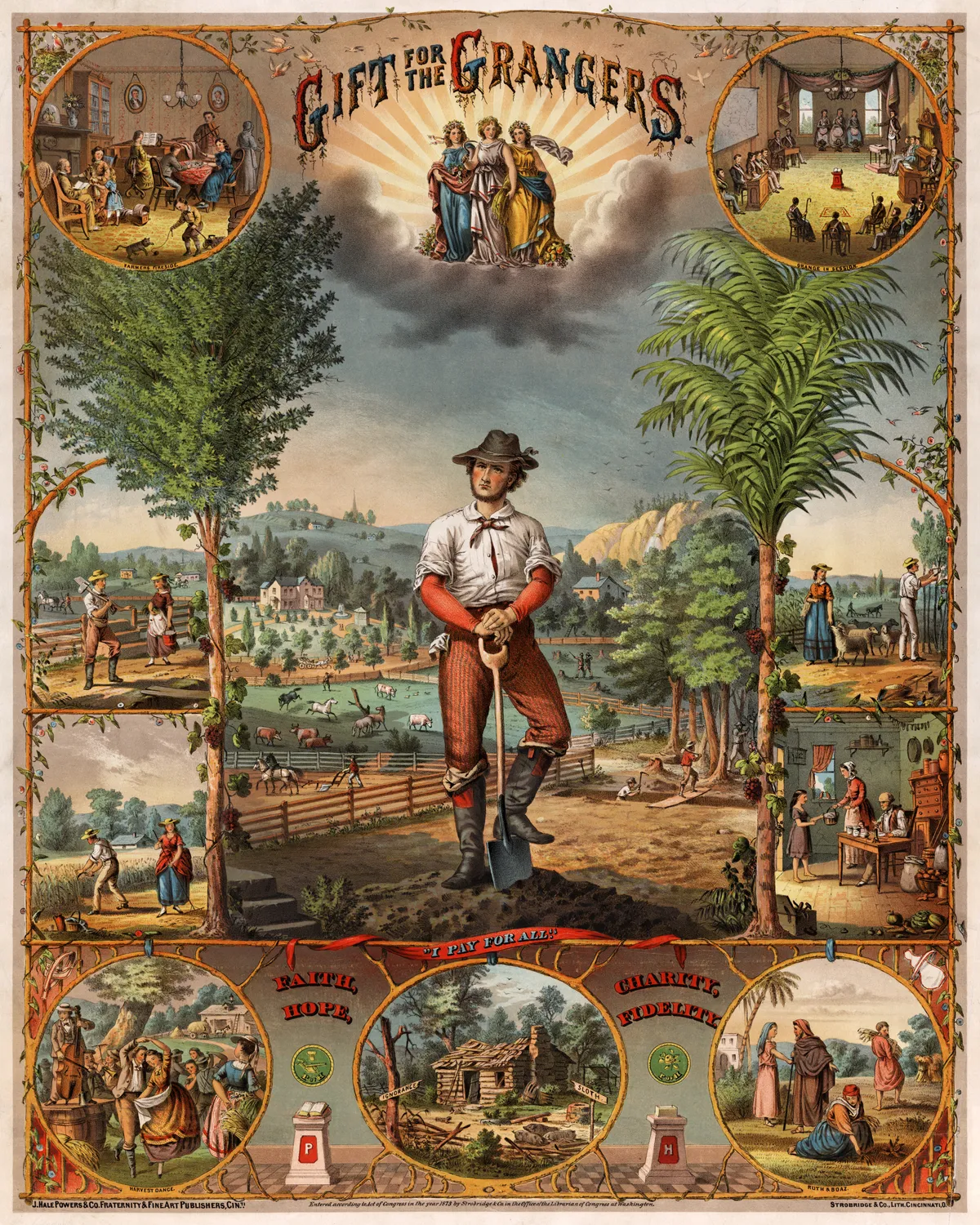
"Gift for the grangers ppmsca02956u" by Strobridge & Co. Lith. / Wikimedia Commons.
Farm life in the Middle Colonies was an important part of colonial America. Families lived and worked together on small and medium-sized farms. These farms were larger than those in New England, but not as big as the plantations in the South.
The Middle Colonies, including New York, New Jersey, Pennsylvania, and Delaware, had rich, fertile soil in the river valleys. This made the land perfect for growing crops. Families grew wheat, corn, vegetables, and sometimes fruit. Wheat was the most important crop and was often called the "breadbasket" crop because it was used to make bread for many people. Corn and vegetables helped feed the family and their animals.
Everyone in the family had jobs on the farm. Fathers and older sons plowed the fields, planted seeds, and harvested the grain crops. Mothers and daughters worked in the gardens, cooked food, and cared for chickens and cows. Even young children helped by collecting eggs or picking vegetables. Daily chores started early in the morning and ended at sunset.
Middle Colony farms were different from those in other regions. In New England, the rocky soil made farming difficult, so farms were small and families focused on other work like fishing or trading. In the Southern Colonies, the warm climate and large flat land made it possible to have huge plantations. These plantations used many workers, sometimes enslaved people, to grow cash crops like tobacco and rice. The Middle Colonies were in between. Their farms were big enough to grow lots of food, but families did most of the work themselves. Sometimes neighbors came together to help each other harvest crops or build a barn. This showed the strong sense of community in the Middle Colonies.
Farmers in the Middle Colonies took their grain to be ground at local mills. They would load wagons with wheat or corn and travel to a mill powered by water. The ground grain could be sold at town markets or shipped to other colonies. This trade helped the Middle Colonies grow wealthy and important in colonial America.
Life on a Middle Colony farm was hard work, but it brought families together. They worked as a team, planting, caring for animals, and sharing the rewards of their labor. Their farms helped feed the growing towns and cities, making the Middle Colonies known as the "breadbasket" of America.
Interesting Fact: Many different people lived in the Middle Colonies, including English, Dutch, German, and Swedish settlers. This made farm life and community events very diverse and lively!
Comprehension quiz (8 questions)
1. Which crop was the most important?
2. Why was the land good for farming?
3. Who helped with chores on the farm?
4. What made Middle Colony farms different from New England?
5. Why were the Middle Colonies called the breadbasket?
6. What did farmers do with their grain?
7. Middle Colony farms were smaller than Southern plantations.
8. What does community mean?
Common Core standards for A Day on a Middle Colony Farm
Explain events, procedures, ideas, or concepts in a historical, scientific, or technical text, including what happened and why, based on specific information in the text.
Determine the meaning of general academic and domain-specific words or phrases in a text relevant to a grade 4 topic or subject area.
Write informative/explanatory texts to examine a topic and convey ideas and information clearly.
Perfect for the way you teach
- Build comprehension skills
- Auto-graded quiz
- Differentiated reading
- Read together at home
- Improve fluency
- Quiet reading time
- Reading curriculum support
- Independent practice
- Track Lexile growth