Abraham Lincoln Assassination — Reading Comprehension
Rate this
Premium Resource
Present
Present in classroom. No work saved
Assign
Classroom with student accounts, Track progress
Quick Play
No student accounts, assign with a link
Grades
6
7
8
Standards
HSS 8.10.7
8.11
RI.6-8.1
RI.6-8.2
PRINT+DIGITAL RESOURCE
This learning resource is available in interactive and printable formats. The interactive worksheet can be played online and assigned to students. The Printable PDF version can be downloaded and printed for completion by hand.
This passage explores the significant event of President Abraham Lincoln's assassination in April 1865, just days after the Civil War ended. Students will learn how John Wilkes Booth's actions shocked the nation, leading to a period of national mourning and impacting the course of Reconstruction in the South. The passage addresses the motivations behind the assassination, the immediate aftermath, and the lasting consequences for the United States. It aligns with history standard HSS 8.10.7, 8.11 and Common Core ELA standards RI.6-8.1, RI.6-8.2. The resource includes a rigorous main passage, a simplified differentiated version, Spanish translations of both, a comprehensive glossary, multiple-choice and writing activities, graphic organizers, and a timeline. A read aloud audio and a public domain image enhance accessibility and engagement. This passage is ideal for supporting historical analysis, vocabulary development, and understanding the complexities of U.S. history during the Reconstruction era.
CONTENT PREVIEW
Expand content preview
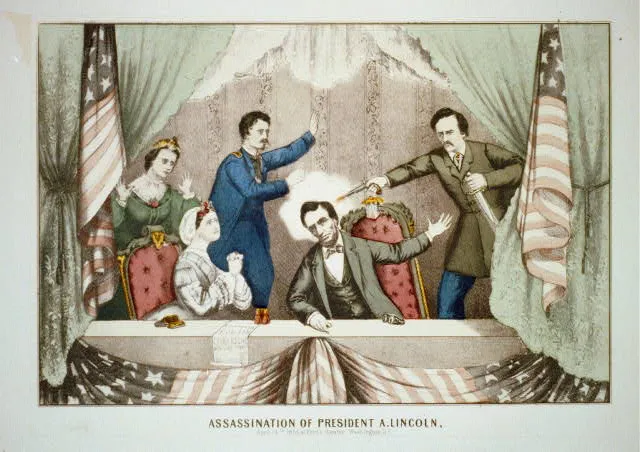
"Assassination of President A. Lincoln, April 14th 1865 at Ford's theater, Washington, D.C." by Gibson & Co. (Cincinnati, Ohio) / Library of Congress.
On April 14, 1865, just days after the American Civil War ended, President Abraham Lincoln was shot by John Wilkes Booth while attending a play at Ford's Theatre in Washington, D.C. This assassination was a tragic event that shocked the nation. The Civil War had caused deep divisions between the North and South, and Lincoln had worked tirelessly to reunite the country. Booth, a well-known actor and Confederate sympathizer, believed that killing Lincoln would help the South regain power. His actions, however, had the opposite effect, leading to national mourning and greater challenges for the South.
The tragedy of Lincoln's death created immediate uncertainty in the government. Vice President Andrew Johnson became president, but he did not share all of Lincoln's plans for Reconstruction—the process of rebuilding the South and reuniting the nation. Many Americans wondered if the peace Lincoln had hoped for would last. The assassination raised questions about how to treat former Confederate states and what rights newly freed African Americans would have. The country faced a complex problem: how to heal old wounds while promoting justice and unity.
One major consequence of Lincoln's assassination was a harsher approach to Reconstruction. Radical Republicans in Congress wanted to punish the South more severely. They passed laws making it difficult for Southern states to rejoin the Union unless they met strict requirements. This created tension between President Johnson and Congress, resulting in political conflict and slow progress. The aftermath of Lincoln’s death made it harder for the country to move forward peacefully.
Booth's plan was not just to kill Lincoln. He and his co-conspirators also targeted other leaders, hoping to create chaos in the government. Although Booth was captured and killed days later, the sense of national vulnerability remained. The United States had to balance the need for order with the desire for justice. Citizens felt both anger and sorrow, and the government struggled to find solutions that respected Lincoln’s vision of unity.
The assassination of Abraham Lincoln changed American history. It intensified debates over civil rights and the future of the South. While Lincoln had urged a spirit of forgiveness, his death led to policies that deepened divisions. The nation learned that leadership matters, especially during times of crisis. The tragedy also reminded Americans that violence can have far-reaching, unintended consequences.
Interesting Fact: After Lincoln’s assassination, thousands of people lined the streets to watch his funeral train travel from Washington, D.C. to Springfield, Illinois. The journey became a symbol of national mourning and unity.
Who assassinated Abraham Lincoln?
John Wilkes BoothAndrew JohnsonUlysses S. GrantFrederick Douglass
Where did Lincoln's assassination take place?
Ford's TheatreThe White HouseSpringfieldThe Capitol
Who became president after Lincoln?
Andrew JohnsonJohn Wilkes BoothUlysses S. GrantRobert E. Lee
What was Reconstruction?
Rebuilding the SouthEnding slaveryA new warA peace treaty
How did Lincoln's death affect Reconstruction?
It made it harsherIt ended quicklyIt brought peaceIt helped the South
Why did Booth assassinate Lincoln?
He supported the SouthHe wanted peaceHe was presidentHe was a soldier
Lincoln's funeral train traveled to Springfield. True or false?
TrueFalse
What does 'aftermath' mean?
Events after something happensA type of theaterA famous actorA place in Illinois
Perfect For:
👩🏫 Teachers
• Reading comprehension practice
• Auto-graded assessments
• Literacy skill development
👨👩👧👦 Parents
• Reading practice at home
• Comprehension improvement
• Educational reading time
🏠 Homeschoolers
• Reading curriculum support
• Independent reading practice
• Progress monitoring
Reading Features:
📖
Reading Passage
Engaging fiction or nonfiction text
❓
Comprehension Quiz
Auto-graded questions
📊
Instant Feedback
Immediate results and scoring
📄
Printable Version
Download for offline reading
🔊
Read Aloud
Voice-over with word highlighting
Reviews & Ratings
No reviews yet. Be the first to share your experience!
Related Content
Pocahontas: Myth vs. Historical Reality
This passage explores the nuanced history of Pocahontas, moving beyond the myth made popular by movies and stories. Stud...
HSS 5.3.1RI.6-8.1RI.6-8.8
Roger Williams Religious Freedom
This passage explores the life and legacy of Roger Williams, a key figure in Colonial America who was banished from Mass...
HSS 5.4.38.2.2RI.6-8.1RI.6-8.6
Benjamin Franklin in Colonial America
This U.S. History reading passage explores the life and influence of Benjamin Franklin, a key colonial leader whose idea...
HSS 5.58.1RI.6-8.1RI.6-8.3
Colonial Apprenticeship System
This comprehensive passage explores the Colonial Apprenticeship System and its role in education during Colonial America...
HSS 5.4.6RI.6-8.1RI.6-8.2
Colonial Printing Press
This passage explores the revolutionary impact of the colonial printing press in America, examining how it enabled the s...
HSS 5.58.1RI.6-8.1RI.6-8.2
Cities in Colonial America
This engaging U.S. history reading passage explores the rise of colonial American cities such as Boston, Philadelphia, a...
HSS 5.4.68.1RI.6-8.1RI.6-8.7
Frontier Life in Colonial America
This passage examines the realities of frontier life in colonial America, highlighting both the promise and peril faced ...
HSS 5.4.68.1RI.6-8.1RI.6-8.2
Mercy Otis Warren: Political Writer
This passage explores the life and impact of Mercy Otis Warren, a significant political writer during the American Revol...
HSS 5.6.38.1RI.6-8.1RI.6-8.6
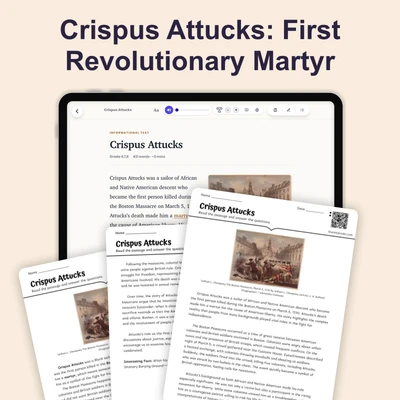
Crispus Attucks
This comprehensive U.S. History reading passage examines the life and legacy of Crispus Attucks, the first person killed...
HSS 5.5.38.1RI.6-8.1RI.6-8.3
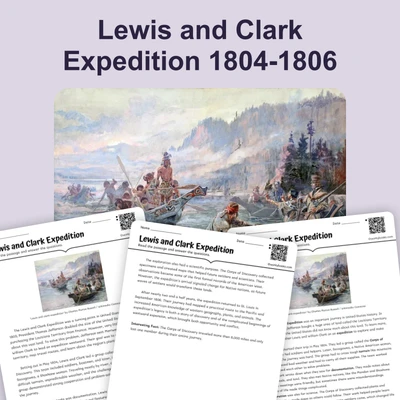
Lewis and Clark Expedition
This comprehensive U.S. History reading passage explores the Lewis and Clark Expedition (1804-1806), a pivotal journey l...
HSS 8.4.18.8.2RI.6-8.1RI.6-8.3
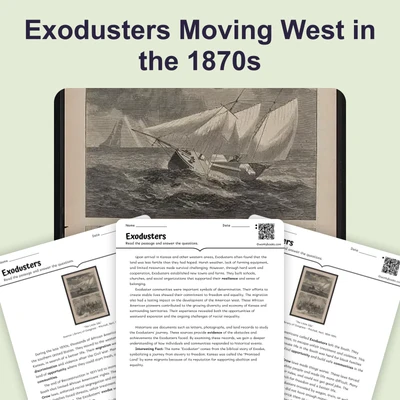
Exodusters
This passage explores the migration of Exodusters—African Americans who left the South in the 1870s to escape discrimina...
HSS 8.12.1RI.6-8.1RI.6-8.2
Uncle Tom's Cabin
This passage explores the impact of Harriet Beecher Stowe’s Uncle Tom’s Cabin on American society in the 1850s. It exami...
HSS 8.9.48.10.2RI.6-8.1RI.6-8.6
Dred Scott Decision
This rigorous history reading passage delves into the 1857 Dred Scott Decision, a pivotal moment in the lead-up to the C...
HSS 8.9.48.10.3RI.6-8.1RI.6-8.8
Election of 1860
This passage explores Abraham Lincoln’s election in 1860 and the critical reactions from Southern states, which set the ...
HSS 8.10.4RI.6-8.1RI.6-8.6
Southern Secession
This passage explores the significant moment in U.S. history when seven Southern states seceded from the Union after Abr...
HSS 8.10.4RI.6-8.1RI.6-8.2
Advantages and Disadvantages: North vs. South
This history reading passage examines the contrasting strengths of the Union and Confederacy during the U.S. Civil War. ...
HSS 8.10.5RI.6-8.1RI.6-8.3
Emancipation Proclamation
This U.S. history passage explores the Emancipation Proclamation of 1863, an executive order issued by President Abraham...
HSS 8.10.6RI.6-8.1RI.6-8.3
Women's Roles in Civil War
This reading passage explores the critical roles women played during the U.S. Civil War, highlighting how they managed f...
HSS 8.10.7RI.6-8.1RI.6-8.2
Surrender at Appomattox
This reading passage explores the historic surrender at Appomattox Court House in April 1865, which marked the conclusio...