This learning resource is available in interactive and printable formats. The interactive worksheet can be played online and assigned to students. The Printable PDF version can be downloaded and printed for completion by hand.
This U.S. history passage explores the Emancipation Proclamation of 1863, an executive order issued by President Abraham Lincoln during the Civil War. Students will learn about the document’s significance, the historical context, and how it shifted the goals of the war from preserving the Union to also seeking the abolition of slavery in the Confederate states. The passage explains the vocabulary and reasoning behind Lincoln’s decision, addresses the impact on enslaved people, and highlights the participation of African Americans in the Union military. Activities include a detailed glossary, multiple-choice quiz, explanatory writing prompts, and graphic organizers. This passage aligns with history standard HSS 8.10.6 and Common Core standards RI.6-8.1 and RI.6-8.3. Spanish translation, differentiated version for accessibility, and read aloud audio are also provided to support diverse learners. Perfect for building critical thinking skills and historical understanding.
CONTENT PREVIEW
Expand content preview
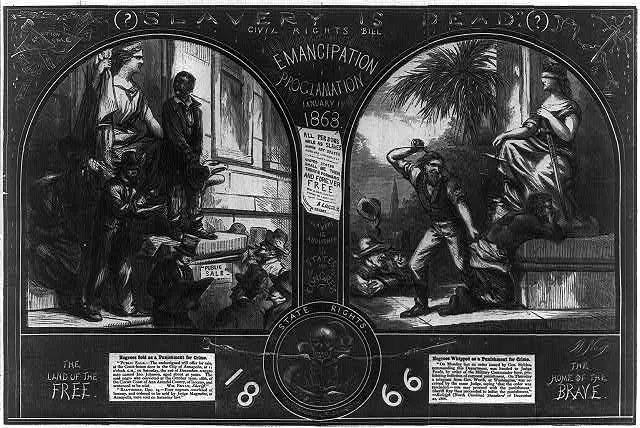
Emancipation Proclamation, January 1, 1863. Source: Library of Congress
The Emancipation Proclamation of 1863 was a major turning point in American history. During the Civil War, President Abraham Lincoln used his power as Commander in Chief to issue this executive order. The document declared that all enslaved people in the Confederate states were to be set free. However, the proclamation did not immediately end slavery everywhere in the United States. It only applied to states that had seceded from the Union, not to border states or areas under Union control.
The problem of slavery had deep roots in the United States. By the mid-1800s, the nation was divided. Southern states depended on slavery for their agricultural economy, while many people in the North opposed the practice. When the Civil War began in 1861, the main goal of the Union was to preserve the United States, not necessarily to end slavery. However, as the war continued, it became clear that slavery was at the heart of the conflict.
President Lincoln faced many challenges in drafting the Emancipation Proclamation. He had to consider the feelings of the border states, which still allowed slavery but had not joined the Confederacy. Lincoln also worried about keeping support from Northern citizens who were not abolitionists. Despite these obstacles, Lincoln believed that ending slavery would weaken the Confederacy and add moral force to the Union cause.
The Emancipation Proclamation was announced on September 22, 1862, and took effect on January 1, 1863. It declared, "all persons held as slaves within any State... in rebellion... shall be then, thenceforward, and forever free." The decree gave a new purpose to the war. The struggle was no longer just about saving the Union; it was also about freedom for millions of enslaved people.
Although the proclamation did not free every enslaved person right away, it had significant effects. It encouraged thousands of African Americans to escape slavery and join the Union army. Over 180,000 African American soldiers and sailors eventually fought for the Union. Their participation strengthened the North’s military and was a step toward citizenship for all Americans.
Some people criticized the Emancipation Proclamation, arguing that it was only a political move or that it did not go far enough. Others celebrated it as a bold step toward justice. The proclamation also paved the way for the Thirteenth Amendment, which would finally abolish slavery in the entire United States in 1865.
The Emancipation Proclamation did not solve every problem related to slavery or racism, but it marked a crucial change in U.S. history. It showed how the presidency could shape the nation’s laws and values through an executive order. The document remains a symbol of the fight for human rights and equality.
Interesting Fact: The original Emancipation Proclamation was destroyed in a fire, but copies and drafts written by Lincoln still exist in museums and archives today.
Who issued the Emancipation Proclamation?
Abraham LincolnUlysses S. GrantRobert E. LeeFrederick Douglass
When did the Emancipation Proclamation take effect?
July 4, 1776January 1, 1863April 12, 1861December 6, 1865
What did the Proclamation declare?
End of the Civil WarFreedom for enslaved people in Confederate statesNew president electedSlavery in all states ended
Why was the Emancipation Proclamation important for the Union army?
It ended the warIt increased soldiersIt changed generalsIt gave them new uniforms
How did the Proclamation change the war's purpose?
It was only about territoryIt included ending slaveryIt started a new warIt made peace with Britain
Why did Lincoln worry about border states?
They might join the ConfederacyThey had no armiesThey were far awayThey disliked him
The Emancipation Proclamation ended slavery everywhere. True or false?
TrueFalse
What does 'executive order' mean?
A new law passed by CongressA formal command by the presidentA military battleA speech to the nation
Perfect For:
👩🏫 Teachers
• Reading comprehension practice
• Auto-graded assessments
• Literacy skill development
👨👩👧👦 Parents
• Reading practice at home
• Comprehension improvement
• Educational reading time
🏠 Homeschoolers
• Reading curriculum support
• Independent reading practice
• Progress monitoring
Reading Features:
📖
Reading Passage
Engaging fiction or nonfiction text
❓
Comprehension Quiz
Auto-graded questions
📊
Instant Feedback
Immediate results and scoring
📄
Printable Version
Download for offline reading
🔊
Read Aloud
Voice-over with word highlighting
Reviews & Ratings
No reviews yet. Be the first to share your experience!
Related Content
Pocahontas: Myth vs. Historical Reality
This passage explores the nuanced history of Pocahontas, moving beyond the myth made popular by movies and stories. Stud...
HSS 5.3.1RI.6-8.1RI.6-8.8
Roger Williams Religious Freedom
This passage explores the life and legacy of Roger Williams, a key figure in Colonial America who was banished from Mass...
HSS 5.4.38.2.2RI.6-8.1RI.6-8.6
Benjamin Franklin in Colonial America
This U.S. History reading passage explores the life and influence of Benjamin Franklin, a key colonial leader whose idea...
HSS 5.58.1RI.6-8.1RI.6-8.3
Colonial Apprenticeship System
This comprehensive passage explores the Colonial Apprenticeship System and its role in education during Colonial America...
HSS 5.4.6RI.6-8.1RI.6-8.2
Colonial Printing Press
This passage explores the revolutionary impact of the colonial printing press in America, examining how it enabled the s...
HSS 5.58.1RI.6-8.1RI.6-8.2
Cities in Colonial America
This engaging U.S. history reading passage explores the rise of colonial American cities such as Boston, Philadelphia, a...
HSS 5.4.68.1RI.6-8.1RI.6-8.7
Frontier Life in Colonial America
This passage examines the realities of frontier life in colonial America, highlighting both the promise and peril faced ...
HSS 5.4.68.1RI.6-8.1RI.6-8.2
Mercy Otis Warren: Political Writer
This passage explores the life and impact of Mercy Otis Warren, a significant political writer during the American Revol...
HSS 5.6.38.1RI.6-8.1RI.6-8.6
Crispus Attucks
This comprehensive U.S. History reading passage examines the life and legacy of Crispus Attucks, the first person killed...
HSS 5.5.38.1RI.6-8.1RI.6-8.3
Lewis and Clark Expedition
This comprehensive U.S. History reading passage explores the Lewis and Clark Expedition (1804-1806), a pivotal journey l...
HSS 8.4.18.8.2RI.6-8.1RI.6-8.3
Exodusters
This passage explores the migration of Exodusters—African Americans who left the South in the 1870s to escape discrimina...
HSS 8.12.1RI.6-8.1RI.6-8.2
Uncle Tom's Cabin
This passage explores the impact of Harriet Beecher Stowe’s Uncle Tom’s Cabin on American society in the 1850s. It exami...
HSS 8.9.48.10.2RI.6-8.1RI.6-8.6
Dred Scott Decision
This rigorous history reading passage delves into the 1857 Dred Scott Decision, a pivotal moment in the lead-up to the C...
HSS 8.9.48.10.3RI.6-8.1RI.6-8.8
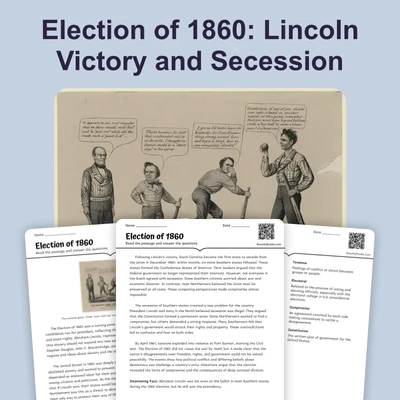
Election of 1860
This passage explores Abraham Lincoln’s election in 1860 and the critical reactions from Southern states, which set the ...
HSS 8.10.4RI.6-8.1RI.6-8.6
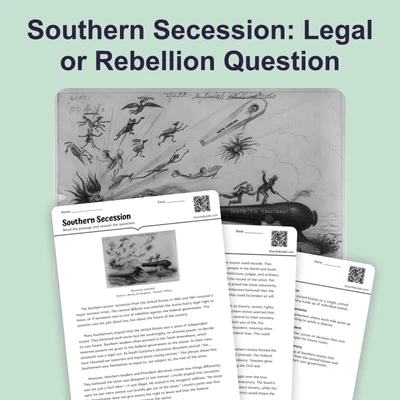
Southern Secession
This passage explores the significant moment in U.S. history when seven Southern states seceded from the Union after Abr...
HSS 8.10.4RI.6-8.1RI.6-8.2
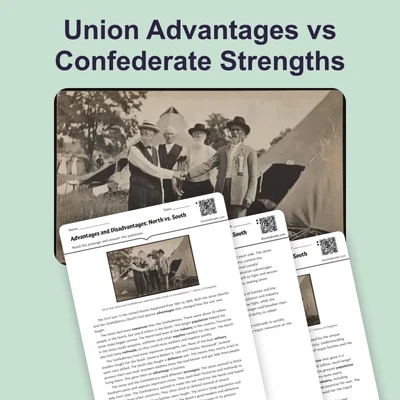
Advantages and Disadvantages: North vs. South
This history reading passage examines the contrasting strengths of the Union and Confederacy during the U.S. Civil War. ...
HSS 8.10.5RI.6-8.1RI.6-8.3
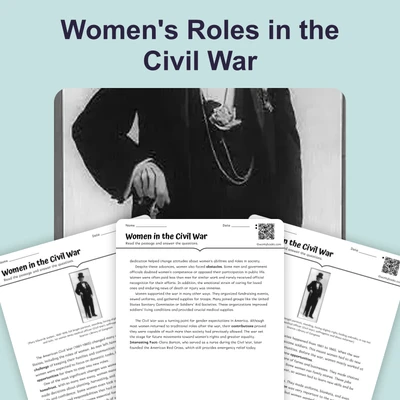
Women's Roles in Civil War
This reading passage explores the critical roles women played during the U.S. Civil War, highlighting how they managed f...
HSS 8.10.7RI.6-8.1RI.6-8.2
Surrender at Appomattox
This reading passage explores the historic surrender at Appomattox Court House in April 1865, which marked the conclusio...
HSS 8.10.7RI.6-8.1RI.6-8.6
Abraham Lincoln Assassination
This passage explores the significant event of President Abraham Lincoln's assassination in April 1865, just days after ...