Roger Williams Religious Freedom — Reading Comprehension
Rate this
Premium Resource
Present
Present in classroom. No work saved
Assign
Classroom with student accounts, Track progress
Quick Play
No student accounts, assign with a link
Grades
6
7
8
Standards
HSS 5.4.3
8.2.2
RI.6-8.1
RI.6-8.6
PRINT+DIGITAL RESOURCE
This learning resource is available in interactive and printable formats. The interactive worksheet can be played online and assigned to students. The Printable PDF version can be downloaded and printed for completion by hand.
This passage explores the life and legacy of Roger Williams, a key figure in Colonial America who was banished from Massachusetts for his religious beliefs. Williams established Rhode Island as a colony founded on the principles of religious freedom, tolerance, and the separation of church and state. The text addresses the challenges faced by Williams, the dissent he inspired, and the solutions he created to protect individual rights and sanctuary for all faiths. Students will analyze complex cause-and-effect relationships, learn new academic vocabulary, and examine how Williams's ideas influenced American values. The passage aligns with history standards HSS 5.4.3 and 8.2.2, as well as Common Core informational text standards RI.6-8.1 and RI.6-8.6. Features include read aloud audio, Spanish translation, a differentiated version, and multiple engaging activities.
CONTENT PREVIEW
Expand content preview
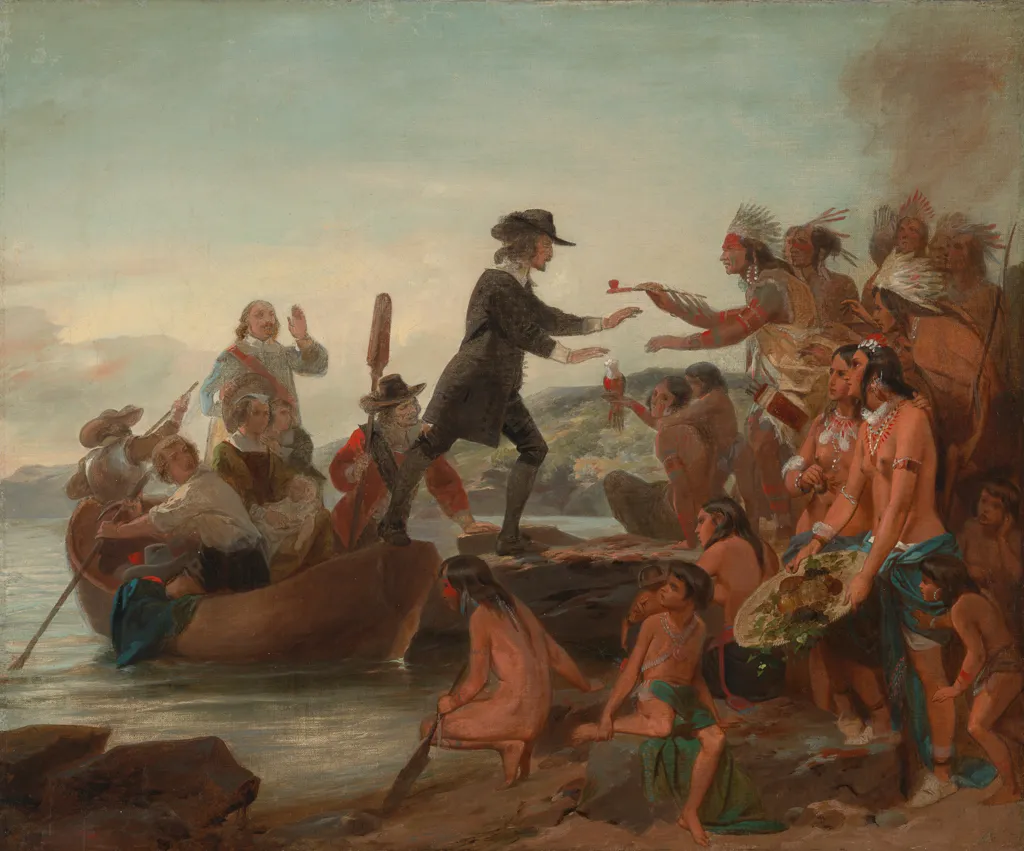
"Alonzo Chappel - The Landing of Roger Williams in 1636 - 43.003 - Rhode Island School of Design Museum" by Alonzo Chappel. Source: Wikimedia Commons (Public domain).
Roger Williams was a minister in the Massachusetts Bay Colony who believed that everyone should have the right to choose their own religious beliefs. His ideas were considered dangerous by leaders who wanted a single official religion. Because of his outspoken dissent, Williams was banished from Massachusetts in 1636. This punishment forced him to leave behind his home and community simply for questioning the strict religious rules of the colony.
Williams traveled south and founded the colony of Rhode Island. Unlike Massachusetts, Rhode Island became known as a place of tolerance. Williams believed that government should not control religion, an idea known as the separation of church and state. In his new colony, people of all faiths—including Quakers, Jews, and Catholics—were welcomed. This radical policy made Rhode Island a sanctuary for those facing persecution elsewhere.
The problem faced by Williams was the lack of religious freedom in the colonies. Most colonies punished or excluded those who disagreed with official religious practices. Williams's solution was to create a society based on individual rights and religious liberty. This approach contrasted sharply with the surrounding New England colonies, where strict religious conformity was enforced.
Williams also argued that land should be fairly purchased from Native Americans, rather than taken without consent. This belief in fair treatment extended to both religious and cultural differences. His principles influenced the later development of American ideas about freedom and justice, even though they were controversial at the time.
The impact of Williams's actions can be seen in the U.S. Constitution, which later guaranteed the right to free exercise of religion and the separation of church and state. Williams's commitment to pluralism—the acceptance of many different beliefs—helped shape the values of the United States.
Interesting Fact: The charter for Rhode Island, granted in 1663, was the first in America to guarantee religious freedom to all residents. This made Rhode Island a refuge for people from many backgrounds.
Why was Roger Williams banished?
He disagreed with religious rulesHe stole from the colonyHe was a QuakerHe broke the law
Which colony did Williams found?
Rhode IslandConnecticutNew YorkVirginia
What did Rhode Island guarantee?
Freedom of religionFree landFree educationNo taxes
What does tolerance mean in this passage?
Accepting different beliefsFollowing one religionPunishing dissentOwning land
How did Williams treat Native Americans?
He bought land fairlyHe forced them outHe ignored themHe punished their beliefs
What is the impact of Williams's ideas?
Influenced U.S. valuesCreated new laws for farmingLimited religious freedomEnded all conflicts
Williams supported separation of church and state. True or false?
TrueFalse
What is a sanctuary?
A safe placeA type of meetingA lawA group of leaders
Perfect For:
👩🏫 Teachers
• Reading comprehension practice
• Auto-graded assessments
• Literacy skill development
👨👩👧👦 Parents
• Reading practice at home
• Comprehension improvement
• Educational reading time
🏠 Homeschoolers
• Reading curriculum support
• Independent reading practice
• Progress monitoring
Reading Features:
📖
Reading Passage
Engaging fiction or nonfiction text
❓
Comprehension Quiz
Auto-graded questions
📊
Instant Feedback
Immediate results and scoring
📄
Printable Version
Download for offline reading
🔊
Read Aloud
Voice-over with word highlighting
Reviews & Ratings
No reviews yet. Be the first to share your experience!
Related Content
Breadbasket Colonies
This reading passage explores the Breadbasket Colonies, also known as the Middle Colonies, in early U.S. history. Studen...
HSS 5.4.3RI.4.1
Pocahontas: Myth vs. Historical Reality
This passage explores the nuanced history of Pocahontas, moving beyond the myth made popular by movies and stories. Stud...
HSS 5.3.1RI.6-8.1RI.6-8.8
Benjamin Franklin in Colonial America
This U.S. History reading passage explores the life and influence of Benjamin Franklin, a key colonial leader whose idea...
HSS 5.58.1RI.6-8.1RI.6-8.3
Colonial Apprenticeship System
This comprehensive passage explores the Colonial Apprenticeship System and its role in education during Colonial America...
HSS 5.4.6RI.6-8.1RI.6-8.2
Colonial Printing Press
This passage explores the revolutionary impact of the colonial printing press in America, examining how it enabled the s...
HSS 5.58.1RI.6-8.1RI.6-8.2
Cities in Colonial America
This engaging U.S. history reading passage explores the rise of colonial American cities such as Boston, Philadelphia, a...
HSS 5.4.68.1RI.6-8.1RI.6-8.7
Frontier Life in Colonial America
This passage examines the realities of frontier life in colonial America, highlighting both the promise and peril faced ...
HSS 5.4.68.1RI.6-8.1RI.6-8.2
Mercy Otis Warren: Political Writer
This passage explores the life and impact of Mercy Otis Warren, a significant political writer during the American Revol...
HSS 5.6.38.1RI.6-8.1RI.6-8.6
Crispus Attucks
This comprehensive U.S. History reading passage examines the life and legacy of Crispus Attucks, the first person killed...
HSS 5.5.38.1RI.6-8.1RI.6-8.3
Lewis and Clark Expedition
This comprehensive U.S. History reading passage explores the Lewis and Clark Expedition (1804-1806), a pivotal journey l...
HSS 8.4.18.8.2RI.6-8.1RI.6-8.3
Exodusters
This passage explores the migration of Exodusters—African Americans who left the South in the 1870s to escape discrimina...
HSS 8.12.1RI.6-8.1RI.6-8.2
Uncle Tom's Cabin
This passage explores the impact of Harriet Beecher Stowe’s Uncle Tom’s Cabin on American society in the 1850s. It exami...
HSS 8.9.48.10.2RI.6-8.1RI.6-8.6
Dred Scott Decision
This rigorous history reading passage delves into the 1857 Dred Scott Decision, a pivotal moment in the lead-up to the C...
HSS 8.9.48.10.3RI.6-8.1RI.6-8.8
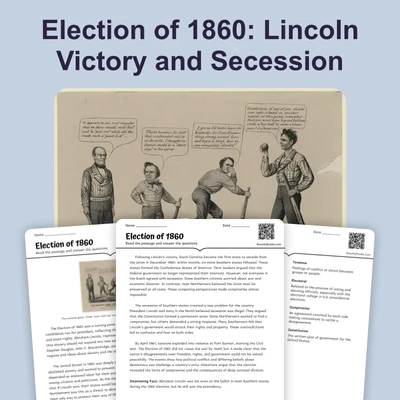
Election of 1860
This passage explores Abraham Lincoln’s election in 1860 and the critical reactions from Southern states, which set the ...
HSS 8.10.4RI.6-8.1RI.6-8.6
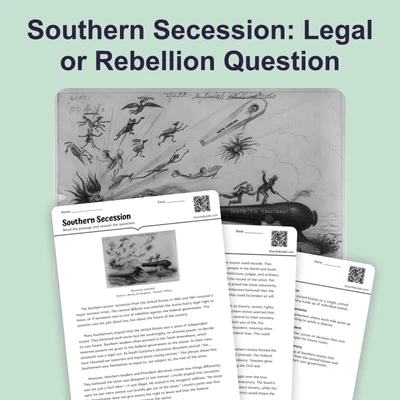
Southern Secession
This passage explores the significant moment in U.S. history when seven Southern states seceded from the Union after Abr...
HSS 8.10.4RI.6-8.1RI.6-8.2
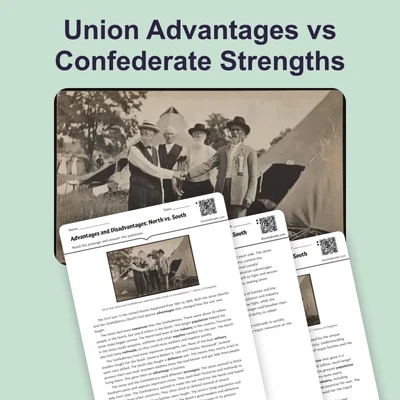
Advantages and Disadvantages: North vs. South
This history reading passage examines the contrasting strengths of the Union and Confederacy during the U.S. Civil War. ...
HSS 8.10.5RI.6-8.1RI.6-8.3
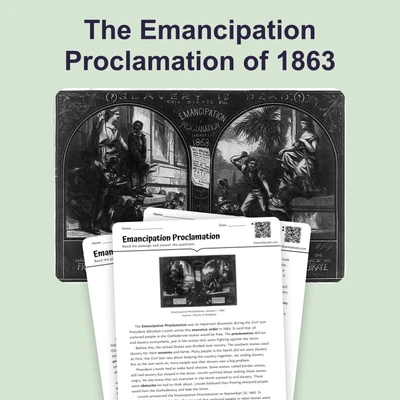
Emancipation Proclamation
This U.S. history passage explores the Emancipation Proclamation of 1863, an executive order issued by President Abraham...
HSS 8.10.6RI.6-8.1RI.6-8.3
Women's Roles in Civil War
This reading passage explores the critical roles women played during the U.S. Civil War, highlighting how they managed f...
HSS 8.10.7RI.6-8.1RI.6-8.2
Surrender at Appomattox
This reading passage explores the historic surrender at Appomattox Court House in April 1865, which marked the conclusio...