African Americans Fighting in Revolutionary War
Interactive passage with audio narration, comprehension questions, and printable PDF.
What's included
African Americans Fighting in Revolutionary War preview and details
About this printable African Americans Fighting in Revolutionary War reading passage (Grades 6-8)
Sample passage and quiz from African Americans Fighting in Revolutionary War
Reading passage and comprehension quiz preview
African Americans Fighting in Revolutionary War
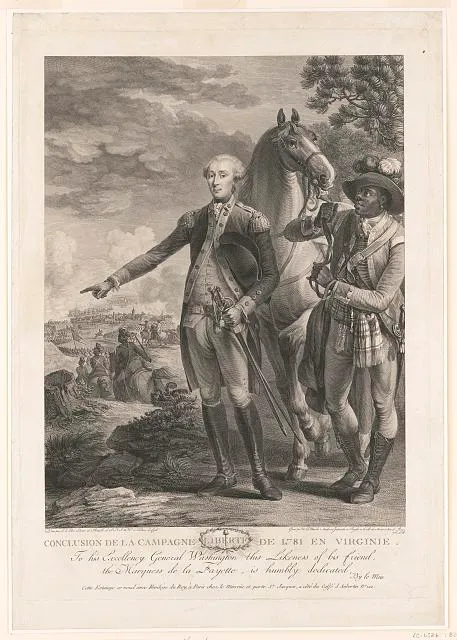
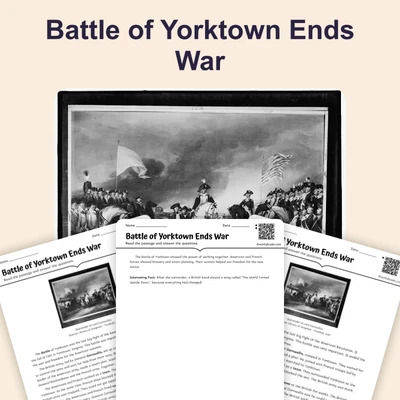
"Conclusion of the Campaign of 1781 in Virginia. To his excellency General Washington..." by Le Mire, Noël, 1724-1801 / Library of Congress.
During the American Revolution, approximately 5,000 African Americans fought on both the British and American sides. Their contributions, often overlooked, played an essential role in shaping the outcome of the war. Many joined military regiments with the hope of gaining emancipation, or freedom from slavery. However, the reality was much more complicated. While some African Americans were granted liberty after their service, the majority returned to a life of bondage despite their sacrifices.
At the beginning of the war, the Continental Army hesitated to allow Black soldiers to enlist. Some colonies even banned them from joining. In contrast, the British offered freedom to enslaved people who escaped and fought for their side, creating a difficult dilemma for many. African Americans had to weigh the risks of escaping, the likelihood of true freedom, and the dangers of combat. Despite these challenges, both free and enslaved Black men chose to fight, motivated by the possibility of a better future and the hope of changing their social status.
On the American side, notable regiments like the 1st Rhode Island Regiment became famous for their large numbers of African American soldiers. These units often faced prejudice and discrimination within the army, but their bravery in battles such as the Battle of Newport and the Siege of Savannah was widely recognized by their peers. Their participation demonstrated the contradiction between the ideals of liberty promoted by the Revolution and the continued existence of slavery.
After the war, the promises of freedom frequently went unfulfilled. Some African American veterans were able to secure their liberty through legal petitions or the support of influential allies. Others, however, were forced back into slavery or faced new restrictions on their rights. The fight for true citizenship and equality would continue for generations. The experience of African American soldiers in the Revolutionary War highlights the complexities of American history and the ongoing struggle for justice and recognition.
Despite their hardships, the legacy of these soldiers influenced future movements for abolition and civil rights. Their courage set important precedents and contributed to the gradual changes in attitudes toward slavery and race in America. The story of African Americans in the Revolution reminds us of the diverse voices that shaped the nation’s founding and the persistent fight for freedom.
Interesting Fact: Some African American soldiers gained their freedom only to later be kidnapped and sold back into slavery, demonstrating the risks they faced even after the war ended.
Comprehension quiz (8 questions)
1. How many African Americans fought in the war?
2. Which side offered freedom for service?
3. What famous regiment had many Black soldiers?
4. Why did some African Americans join the British?
5. What challenge did Black soldiers face after the war?
6. How did their service impact future rights movements?
7. Most African American soldiers gained lasting freedom. True or false?
8. What does 'emancipation' mean?
Common Core standards for African Americans Fighting in Revolutionary War
Explain events, procedures, ideas, or concepts in a historical, scientific, or technical text, including what happened and why, based on specific information in the text.
Determine the meaning of general academic and domain-specific words or phrases in a text relevant to a grade 4 topic or subject area.
Write informative/explanatory texts to examine a topic and convey ideas and information clearly.
Perfect for the way you teach
- Build comprehension skills
- Auto-graded quiz
- Differentiated reading
- Read together at home
- Improve fluency
- Quiet reading time
- Reading curriculum support
- Independent practice
- Track Lexile growth