Agricultural Innovation: The Three Sisters
Interactive passage with audio narration, comprehension questions, and printable PDF.
By completing this purchase you agree to our Terms of Use and Privacy Policy. Your subscription renews automatically until you cancel. You can cancel anytime from your account settings. All sales are final and non-refundable. Digital content is available for download in your account immediately upon purchase.
What's included
Agricultural Innovation: The Three Sisters preview and details
About this printable Agricultural Innovation: The Three Sisters reading passage (Grades 6-8)
Sample passage and quiz from Agricultural Innovation: The Three Sisters
Reading passage and comprehension quiz preview
Agricultural Innovation: The Three Sisters
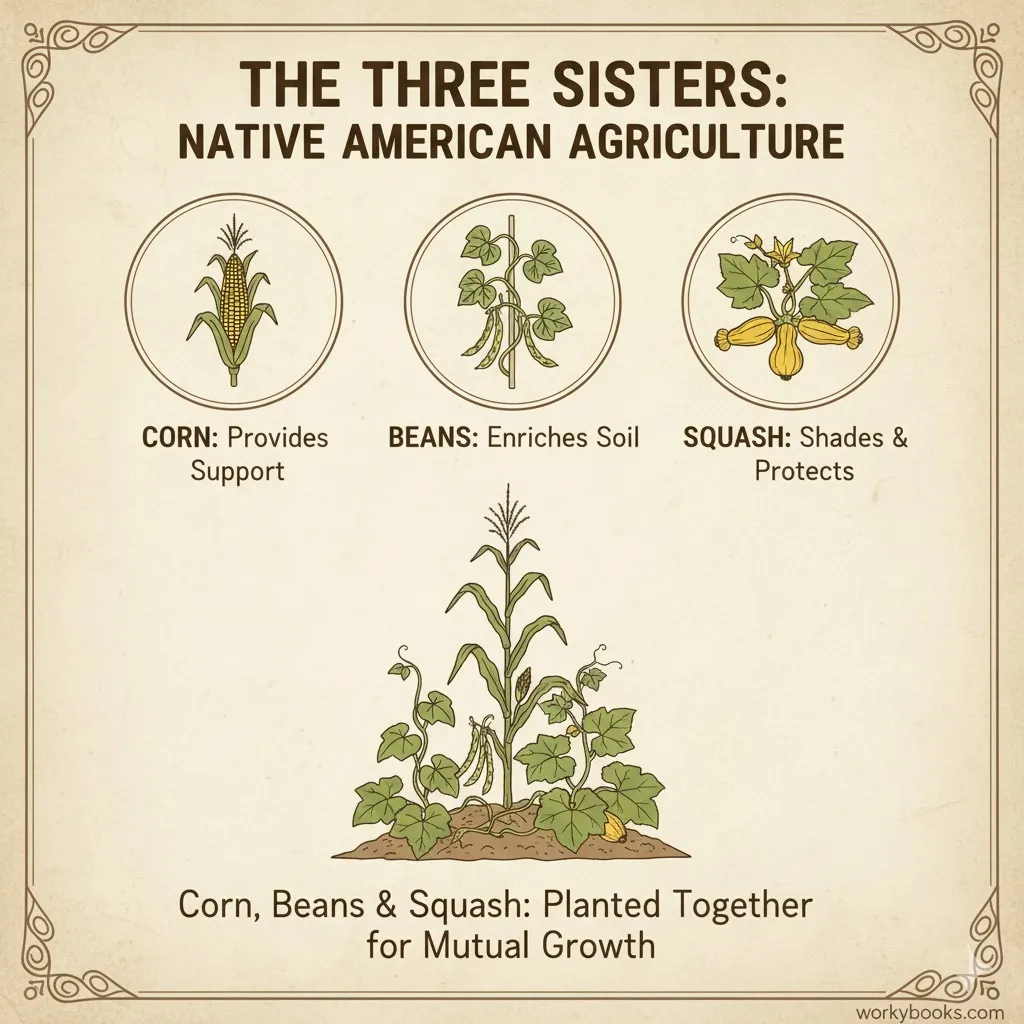
The Three Sisters agricultural method was developed by Native American farmers in North America centuries before European settlers arrived. This innovative system involved planting three crops—corn, beans, and squash—together in the same field. The practice is known as companion planting, a strategy where different plants are grown close to help each other. The Three Sisters created a balanced, sustainable food source that supported large populations.
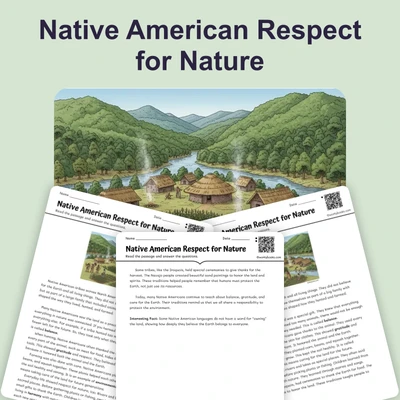
One central problem faced by early Native societies was how to cultivate enough food to feed their communities year after year. Corn was a valuable crop, but growing it alone could wear out the soil, making it difficult to produce healthy harvests. To solve this, Native farmers used their knowledge of the environment to plant beans and squash with corn. Each plant contributed something unique. Corn provided tall stalks for the beans to climb, beans added nutrients like nitrogen to the soil, and squash leaves shaded the ground, limiting weeds and keeping soil moist.
This method not only increased the yield, or amount of food grown, but also improved the nutrition available to the community. Corn supplied energy, beans were rich in protein, and squash gave important vitamins. By combining these crops, Native Americans could create a complete and healthy diet. The Three Sisters system allowed food supplies to last through the winter and helped communities survive during difficult seasons.
Another benefit of the Three Sisters was its impact on the land. Unlike European farming, which often used single crops and required new fields after a few years, the Native method preserved soil health. This sustainability meant that fields could be used for a long time without damaging the environment. This approach demonstrated a sophisticated understanding of ecology—how living things, including people and plants, depend on each other for survival.
Evidence of the Three Sisters method is found in archaeological sites and oral histories across the eastern United States, from the Haudenosaunee (Iroquois) to tribes in the Southwest. Farmers planned the timing of planting carefully, starting with corn, then beans, followed by squash. This careful management of the harvest was a key part of community life and ceremony.
The Three Sisters is an example of how Native American innovation shaped the landscape and supported complex societies. While European settlers brought new crops and tools, many Native practices, including companion planting, continued to influence agriculture for generations.
Interesting Fact: Some Native American communities still use the Three Sisters method today, preserving both tradition and environmental health.
Comprehension quiz (8 questions)
1. Which crops make up the Three Sisters?
2. What is companion planting?
3. Which plant added nitrogen to the soil?
4. Why did Native Americans create the Three Sisters method?
5. How did squash help the other plants?
6. What does sustainable mean?
7. The Three Sisters method is still used today.
8. Which word means 'gathering crops'?
Common Core standards for Agricultural Innovation: The Three Sisters
Explain events, procedures, ideas, or concepts in a historical, scientific, or technical text, including what happened and why, based on specific information in the text.
Determine the meaning of general academic and domain-specific words or phrases in a text relevant to a grade 4 topic or subject area.
Write informative/explanatory texts to examine a topic and convey ideas and information clearly.
Perfect for the way you teach
- Build comprehension skills
- Auto-graded quiz
- Differentiated reading
- Read together at home
- Improve fluency
- Quiet reading time
- Reading curriculum support
- Independent practice
- Track Lexile growth