Alexander Hamilton's Economic Plan — Reading Comprehension
Rate this
Premium Resource
Present
Present in classroom. No work saved
Assign
Classroom with student accounts, Track progress
Quick Play
No student accounts, assign with a link
Grades
6
7
8
Standards
D2.HIS.2.3-5
D2.HIS.3.3-5
RI.4.3
RI.4.4
W.4.2
PRINT+DIGITAL RESOURCE
This learning resource is available in interactive and printable formats. The interactive worksheet can be played online and assigned to students. The Printable PDF version can be downloaded and printed for completion by hand.
This engaging U.S. History reading passage explores Alexander Hamilton's Economic Plan for America, a crucial development during the early years of the United States. Students will analyze the causes, motivations, and effects of Hamilton's proposals, including the creation of a national bank, assumption of state debts, and the use of tariffs to strengthen the American economy. The passage incorporates multiple perspectives, including opposition from Thomas Jefferson and Southern states, and weaves in primary source evidence to model historical reasoning. Students will enhance their vocabulary with key academic terms and build reading comprehension skills through a rigorous, standards-aligned text. The resource includes a read aloud audio and a full Spanish translation. Activities such as multiple-choice questions, writing prompts, and a graphic organizer support deeper understanding and critical thinking. Aligned with C3 Framework D2.His.2.3-5, D2.His.3.3-5, and Common Core RI.4.3, RI.4.4, W.4.2, this passage is perfect for fostering historical analysis and ELA skills in middle school students.
CONTENT PREVIEW
Expand content preview
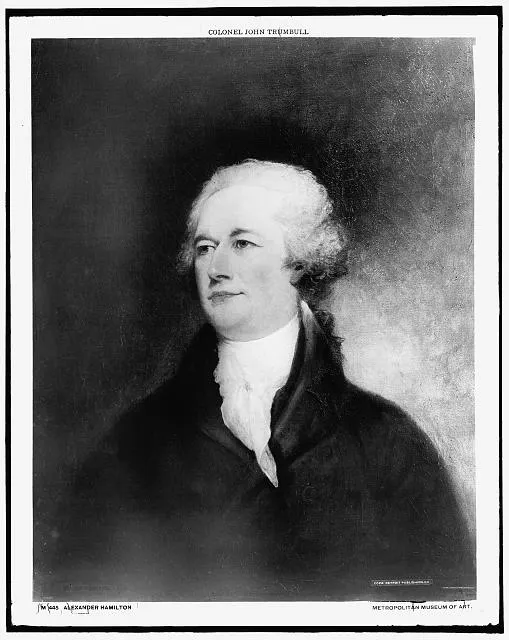
"Alexander Hamilton" by Trumbull, John, 1756-1843 / Library of Congress.
In 1789, the United States faced major economic challenges as a new nation. Alexander Hamilton, the first Secretary of the Treasury, developed a plan to solve these problems and create a strong national economy. Hamilton believed that the young country needed a solid financial foundation to survive and grow. His economic plan became one of the most influential—and controversial—policies in early American history.
One of the primary issues was the country's large debt from the Revolutionary War. Many states and the national government owed money to foreign countries and private citizens. Hamilton proposed that the federal government pay off all these debts, both national and state. He argued that paying the debts would build trust in the government and encourage people to invest in the United States. However, some states had already paid their share and disagreed with helping states that still owed money, causing conflict among leaders.
Hamilton also wanted to raise money for the government and protect American businesses. He recommended the use of a tariff, which is a tax on imported goods. The tariff would make foreign products more expensive and encourage Americans to buy goods made in the United States. This idea supported the growth of manufacturing and industry, which Hamilton believed were essential for national strength and independence. However, some Southerners, whose economies were based mainly on farming, opposed tariffs because they imported many goods and felt tariffs would hurt them financially.
Another part of Hamilton’s plan was to create a national bank. The Bank of the United States would hold government funds, issue paper money, and provide loans to businesses. Hamilton argued that a national bank would make the economy more stable and help the government manage its finances. Critics, including Thomas Jefferson, feared that the bank gave too much power to the federal government and was not allowed by the Constitution. This debate reflected deep differences about how much authority the national government should have compared to the states.
The debates over Hamilton’s plan highlighted the conflict between those who wanted a strong central government and those who preferred more power for individual states. Hamilton’s supporters, known as Federalists, believed that a powerful government could guarantee the country’s survival and prosperity. Opponents, called Democratic-Republicans, worried about losing local control and the interests of farmers and small states.
Despite fierce opposition, much of Hamilton’s plan was eventually adopted. The federal government assumed state debts, tariffs were enacted, and the Bank of the United States was established in 1791. These actions shaped the economic future of the nation and set important precedents for how government would interact with the economy. Hamilton’s vision helped lay the groundwork for the United States to become a powerful, financially stable country—but also left ongoing debates about the role of government in people’s lives.
Interesting Fact: Hamilton’s face is on the ten-dollar bill today, honoring his lasting impact on America’s financial system.
Who was the first Secretary of the Treasury?
Alexander HamiltonThomas JeffersonJames MadisonGeorge Washington
What year did Hamilton become Secretary?
1789179117761800
What did Hamilton propose to pay off?
DebtsLandGoldSlaves
Why did Hamilton want tariffs?
To raise money and help businessTo punish foreign countriesTo hurt southern farmersTo reduce exports
What was the major southern concern about tariffs?
They imported many goodsThey wanted more factoriesThey liked high taxesThey had no debt
Why did critics oppose the national bank?
Too much federal powerLack of farmersToo many factoriesHigh tariffs
The Bank of the United States started in 1791. True or false?
TrueFalse
What is a tariff?
A tax on importsA type of moneyFederal governmentA bank
Perfect For:
👩🏫 Teachers
• Reading comprehension practice
• Auto-graded assessments
• Literacy skill development
👨👩👧👦 Parents
• Reading practice at home
• Comprehension improvement
• Educational reading time
🏠 Homeschoolers
• Reading curriculum support
• Independent reading practice
• Progress monitoring
Reading Features:
📖
Reading Passage
Engaging fiction or nonfiction text
❓
Comprehension Quiz
Auto-graded questions
📊
Instant Feedback
Immediate results and scoring
📄
Printable Version
Download for offline reading
🔊
Read Aloud
Voice-over with word highlighting
Reviews & Ratings
No reviews yet. Be the first to share your experience!
Related Content
Native American Tribes Across America
This engaging history reading passage introduces students to Native American tribes across America, focusing on their da...
D2.HIS.1.3-5D2.HIS.2.3-5RI.4.1RI.4.2
Teepees: Homes on the Great Plains
This engaging history reading passage introduces students to teepees, the unique homes of Native American tribes on the ...
D2.HIS.2.3-5D2.HIS.14.3-5RI.4.1RI.4.2RI.4.4
Traditional Native American Clothing
This engaging history passage explores traditional Native American clothing and how it reflected the environment, values...
D2.HIS.2.3-5D2.HIS.3.3-5RI.4.3RI.4.4
The Iroquois Confederacy: A System of Peace
This engaging U.S. History reading passage introduces students to the Iroquois Confederacy, a powerful alliance of Nativ...
D2.HIS.2.3-5D2.HIS.3.3-5RI.4.3RI.4.4
The Cherokee Nation: History and Culture
This reading passage explores the rich history and culture of the Cherokee Nation, one of the largest Native American tr...
D2.HIS.2.3-5D2.HIS.14.3-5RI.4.3RI.4.4RI.4.10
The Sioux: Warriors and Tribal Leaders
This history reading passage explores the Sioux Nation, focusing on their roles as warriors and tribal leaders. Students...
D2.HIS.1.3-5D2.HIS.2.3-5RI.4.1RI.4.3
Native American Respect for Nature
This engaging history reading passage explores Native American respect for nature, emphasizing the close relationship be...
D2.HIS.2.3-5D2.HIS.3.3-5RI.4.3RI.4.4
Jamestown: The First Permanent English Colony
This engaging history passage explores the founding of Jamestown, the first permanent English colony in America. Aligned...
D2.HIS.1.3-5D2.HIS.2.3-5RI.4.3RI.4.4
Pocahontas and the Powhatan People
This engaging reading passage explores the life of Pocahontas and the Powhatan people and their important role in early ...
D2.HIS.1.3-5D2.HIS.2.3-5RI.4.1RI.4.3
Colonial Children: School and Chores
This reading passage explores the daily lives of colonial children, focusing on their experiences at school and their ma...
D2.HIS.2.3-5D2.HIS.3.3-5RI.4.1RI.4.2RI.4.4
Colonial Clothing and Homemade Goods
This engaging U.S. history passage explores the daily life of early American colonists with a focus on colonial clothing...
D2.HIS.2.3-5RI.4.3RI.4.4
Colonial Jobs: Blacksmiths, Bakers, and Craftsmen
This engaging history reading passage explores the vital roles of blacksmiths, bakers, and craftsmen in colonial America...
D2.HIS.2.3-5D2.HIS.3.3-5RI.4.3RI.4.4
Colonial Towns and Village Life
This engaging history reading passage explores the daily life, work, and unity found in colonial towns and villages. Ali...
D2.HIS.1.3-5D2.HIS.2.3-5RI.4.3RI.4.4
Colonial Trade with England and Africa
This history reading passage explores colonial trade between the American colonies, England, and Africa, focusing on the...
D2.HIS.2.3-5D2.HIS.14.3-5RI.4.3RI.4.4
Benjamin Franklin: Printer, Inventor, and Leader
This history reading passage explores the life and achievements of Benjamin Franklin, one of America's most important ea...
D2.HIS.2.3-5D2.HIS.3.3-5RI.4.1RI.4.3
George Washington Leads the Army
This engaging history reading passage explores how George Washington bravely led the Continental Army during the America...
D2.HIS.1.3-5D2.HIS.2.3-5RI.4.3RI.4.4
Women and Children During the Revolutionary War
This reading passage explores the important roles women and children played during the Revolutionary War. Students will ...
D2.HIS.2.3-5RI.4.3RI.5.3
African Americans Fight for Freedom
This educational passage explores the brave and inspiring story of how African Americans fought for freedom in the Unite...
D2.HIS.2.3-5D2.HIS.3.3-5RI.4.3RI.4.4
The Battle of Yorktown Ends War
This engaging U.S. history reading passage explores the Battle of Yorktown, a key event that ended the American Revoluti...
D2.HIS.1.3-5D2.HIS.2.3-5RI.4.1RI.4.3
Loyalists vs. Patriots: Divided Families
This engaging U.S. history reading passage explores the division between Loyalists and Patriots during the American Revo...