Allied Strategy in the Pacific War
Interactive passage with audio narration, comprehension questions, and printable PDF.
By completing this purchase you agree to our Terms of Use and Privacy Policy. Your subscription renews automatically until you cancel. You can cancel anytime from your account settings. All sales are final and non-refundable. Digital content is available for download in your account immediately upon purchase.
What's included
Allied Strategy in the Pacific War preview and details
About this printable Allied Strategy in the Pacific War reading passage (Grades 5-8)
Sample passage and quiz from Allied Strategy in the Pacific War
Reading passage and comprehension quiz preview
Island Hopping in the Pacific: The Fight Toward Japan
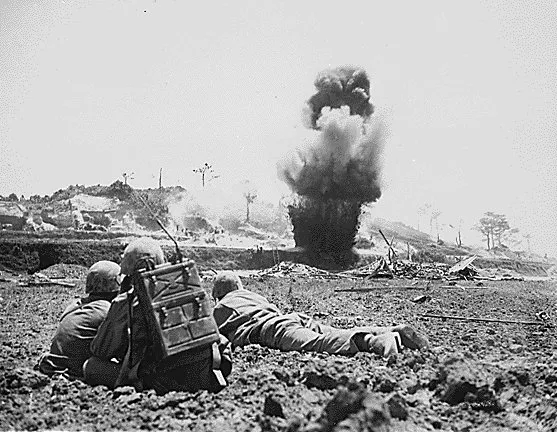
The Pacific Theater of World War II saw fierce fighting between the Allied Powers, mainly the United States, and the Empire of Japan. The strategy called island hopping was a turning point in the war, as Allied forces aimed to capture specific islands and move closer to the Japanese mainland. This approach was both a military and geographic response to the vast distances and numerous islands scattered across the Pacific Ocean.
The campaign began in 1943, following the costly battle at Guadalcanal. American leaders, including General Douglas MacArthur and Admiral Chester Nimitz, decided to bypass heavily fortified Japanese strongholds and instead seize strategically important islands. By doing so, they could establish airfields and naval bases, cutting off Japanese supply lines. One key example was the capture of the Gilbert Islands, especially Tarawa, in November 1943. The battle was intense, with primary sources such as letters from U.S. Marines describing the fierce resistance and high casualties. After Tarawa, the Allies advanced to the Marshall Islands (1944), then to the Marianas, including Saipan and Guam. The capture of Saipan was especially significant because it brought American bombers within range of Japan.
The island hopping strategy involved enormous logistical challenges. Supplies, troops, and equipment had to be transported over thousands of miles. Amphibious assaults, using landing crafts, were dangerous and required careful planning. The Japanese defenders often fought fiercely, using caves and bunkers to resist. For example, the battle for Iwo Jima in February 1945 was one of the bloodiest in the campaign. A famous photograph from this battle shows U.S. Marines raising the American flag atop Mount Suribachi, symbolizing perseverance and sacrifice. Archaeological evidence, such as tunnels and fortifications, still remains on these islands, providing historians with insights into the daily life and social hierarchy of both Japanese and American forces.
As the Allies moved from island to island, the effects were dramatic. Japanese communication and morale suffered as their isolated garrisons ran out of supplies. Civilians on the islands faced hardship, and the destruction of infrastructure was widespread. The capture of the Marianas allowed for the bombing of Japanese cities, leading to further devastation and ultimately contributing to Japan's surrender in August 1945. The cause-and-effect relationship between island hopping and the end of the war is clearly seen in the shrinking territory and resources available to Japan. Over time, the campaign showed the importance of technological innovation and coordination among Allied forces.
The island hopping campaign is significant because it highlights how geography, military strategy, and human determination can change the course of history. It also demonstrates the impact of war on both soldiers and civilians. Studying this campaign helps students understand the broader themes of World War II, such as the use of new technology, the role of leadership, and the consequences of global conflict.
This story of the Pacific War connects to broader history by showing how geography and innovation can influence the outcome of world events, a theme that appears throughout our study of history.
Interesting Fact: The battle for Okinawa, the last major island battle before Japan surrendered, resulted in over 200,000 military and civilian casualties, making it one of the deadliest battles in the Pacific.
Comprehension quiz (8 questions)
1. What was 'island hopping'?
2. Who led the Allies in the Pacific?
3. Which battle allowed bombers to reach Japan?
4. Why did Allies bypass some islands?
5. How did island hopping impact Japan?
6. What evidence remains on the islands today?
7. Island hopping ended World War II. True or false?
8. What does 'morale' mean?
Perfect for the way you teach
- Build comprehension skills
- Auto-graded quiz
- Differentiated reading
- Read together at home
- Improve fluency
- Quiet reading time
- Reading curriculum support
- Independent practice
- Track Lexile growth