The Atomic Bomb Ends the War
Interactive passage with audio narration, comprehension questions, and printable PDF.
By completing this purchase you agree to our Terms of Use and Privacy Policy. Your subscription renews automatically until you cancel. You can cancel anytime from your account settings. All sales are final and non-refundable. Digital content is available for download in your account immediately upon purchase.
What's included
The Atomic Bomb Ends the War preview and details
About this printable The Atomic Bomb Ends the War reading passage (Grades 5-8)
Sample passage and quiz from The Atomic Bomb Ends the War
Reading passage and comprehension quiz preview
The Atomic Bomb and the End of the War
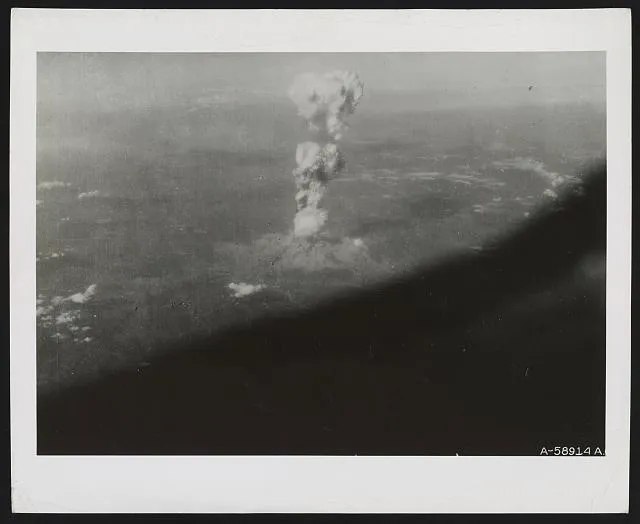
Source: Library of Congress
On August 6, 1945, the United States dropped an atomic bomb on the Japanese city of Hiroshima. This event, along with a second bombing on Nagasaki three days later, marked a major turning point in World War II. The use of the atomic bomb was the result of years of scientific research and military planning, and it had lasting effects on international relations and the lives of millions.
The creation of the atomic bomb was part of a top-secret project called the Manhattan Project. Starting in 1942, scientists and engineers from the United States, United Kingdom, and Canada worked together to develop a new, incredibly powerful weapon. Among the most famous scientists was J. Robert Oppenheimer, often called the 'father of the atomic bomb.' The project was based in several locations, including Los Alamos, New Mexico, where the first successful test of an atomic bomb, known as the 'Trinity Test,' took place on July 16, 1945. This test proved that the bomb could be used in warfare and changed the direction of the conflict.
By the summer of 1945, the war in Europe had ended, but fighting in the Pacific continued. The Japanese government refused to surrender, despite suffering heavy losses. American leaders, including President Harry S. Truman, faced a difficult decision. They wanted to end the war quickly and avoid a costly invasion of Japan. After receiving a warning that Japan would face "prompt and utter destruction" if it did not surrender, Truman authorized the use of the atomic bomb. On August 6, the bomb named "Little Boy" was dropped on Hiroshima, killing tens of thousands instantly. Three days later, a second bomb called "Fat Man" was dropped on Nagasaki. Survivors, known as hibakusha, described the devastation in diaries and interviews, offering primary evidence of the bomb’s effects.
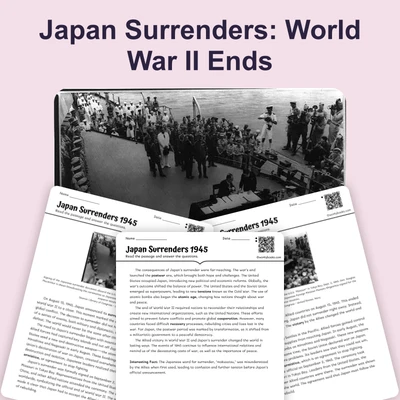
The immediate results were catastrophic. Both cities suffered massive destruction, with over 100,000 people killed and many more injured or exposed to radiation. Hospitals and schools were destroyed, and daily life was forever changed for survivors. On August 15, 1945, Japan announced its surrender, ending World War II. The surrender document was signed aboard the USS Missouri on September 2, 1945. While some historians argue the bombings were necessary to end the war, others question their morality and necessity, noting that Japan was already weakened. The use of atomic weapons also started a new era of international tension and the arms race during the Cold War.
The atomic bombings of Hiroshima and Nagasaki changed world history. They demonstrated the terrifying power of nuclear weapons and shaped international politics for decades. These events also raised important questions about ethics, science, and the responsibilities of nations during war. The story of the atomic bomb is a reminder of the human costs of conflict and the importance of diplomacy in solving disputes.
This period connects to broader themes in world history, such as technological innovation, the impact of war on societies, and the ethical choices faced by leaders.
Interesting Fact: Some pieces of glass in Hiroshima melted together from the intense heat, forming unique shapes that scientists still study today.
Comprehension quiz (8 questions)
1. What city was first bombed in 1945?
2. Who was the U.S. president in 1945?
3. What was the Manhattan Project?
4. Why did the U.S. use the atomic bomb?
5. What happened after the bombings?
6. Who are hibakusha?
7. Japan surrendered in 1945. True or false?
8. What does 'radiation' mean in the passage?
Perfect for the way you teach
- Build comprehension skills
- Auto-graded quiz
- Differentiated reading
- Read together at home
- Improve fluency
- Quiet reading time
- Reading curriculum support
- Independent practice
- Track Lexile growth