Major Battles Change the War's Course
Interactive passage with audio narration, comprehension questions, and printable PDF.
By completing this purchase you agree to our Terms of Use and Privacy Policy. Your subscription renews automatically until you cancel. You can cancel anytime from your account settings. All sales are final and non-refundable. Digital content is available for download in your account immediately upon purchase.
What's included
Major Battles Change the War's Course preview and details
About this printable Major Battles Change the War's Course reading passage (Grades 5-8)
Sample passage and quiz from Major Battles Change the War's Course
Reading passage and comprehension quiz preview
Turning Points of the War: Stalingrad, Midway, and El Alamein
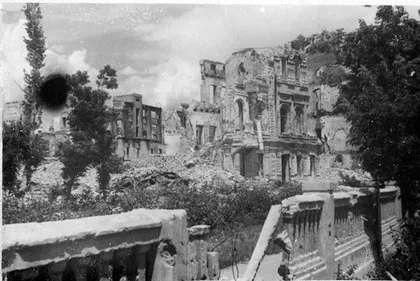
The Second World War was shaped by a few crucial battles that changed its direction. Three of the most important turning points were the Battles of Stalingrad, Midway, and El Alamein. Each fought in different regions—Europe, the Pacific, and North Africa—these battles forced the Axis powers to retreat and gave new hope to the Allied forces.
The Battle of Stalingrad, which raged from August 1942 to February 1943, marked a dramatic shift on the Eastern Front. The city of Stalingrad, located on the Volga River in the Soviet Union, was a vital industrial center. Nazi Germany, led by Adolf Hitler, aimed to capture it to secure oil fields and weaken the Soviets. The fighting was brutal, with soldiers and civilians trapped in the destroyed city. According to diaries and photographs from the time, people endured starvation, freezing temperatures, and constant bombing. The Soviet Red Army, under General Zhukov, launched a powerful counterattack, surrounding the German 6th Army. After months of siege, the Germans surrendered. This defeat destroyed German morale and showed the world that Hitler’s army could be beaten.
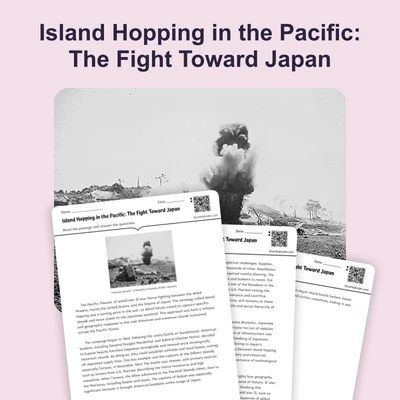
Thousands of miles away, the Battle of Midway took place in June 1942 in the Pacific Ocean. The Japanese Navy had been advancing rapidly, capturing territory across Asia and the Pacific. Using intercepted Japanese codes, Admiral Chester Nimitz and American forces prepared an ambush near the island of Midway. In a fierce four-day battle, U.S. aircraft sank four Japanese aircraft carriers, while losing only one themselves. This victory shifted naval power in the Pacific. Japanese expansion was halted, and the Allies began to push back, eventually leading to the island-hopping strategy that brought them closer to Japan’s home islands.
Meanwhile, in North Africa, the Battle of El Alamein took place between October and November 1942. British and Commonwealth forces, under General Bernard Montgomery, faced the German Afrika Korps led by Field Marshal Erwin Rommel. Control of North Africa was essential for access to oil and the Suez Canal, a key trade route. Primary sources like letters from soldiers describe the harsh desert conditions and use of tanks. The Allies’ victory forced Rommel’s army to retreat, ending the threat to Egypt and opening the way for Allied invasions in southern Europe.
These three battles not only stopped Axis advances but also changed the psychological outlook of the war. Each battle demonstrated the importance of strategy, intelligence, and the ability to adapt to different environments. The victories at Stalingrad, Midway, and El Alamein gave the Allies confidence and resources to launch further offensives, eventually leading to the end of the war in 1945.
These turning points reveal how geography, technology, and human decision-making can alter the course of history. They connect to broader themes in world history, such as the role of leadership, the impact of resources, and the resilience of ordinary people in times of crisis.
Interesting Fact: After the Battle of Stalingrad, over 90,000 German soldiers surrendered, but only about 5,000 survived captivity and returned home years later.
Comprehension quiz (8 questions)
1. Where did the Battle of Midway occur?
2. Who led the Soviet army at Stalingrad?
3. Which battle stopped Japanese expansion?
4. What was a main goal at El Alamein?
5. How did the Allies win at Midway?
6. What effect did Stalingrad have on Germany?
7. Stalingrad is in the Soviet Union. True or false?
8. What does 'siege' mean?
Perfect for the way you teach
- Build comprehension skills
- Auto-graded quiz
- Differentiated reading
- Read together at home
- Improve fluency
- Quiet reading time
- Reading curriculum support
- Independent practice
- Track Lexile growth