Industrial Revolution Working Conditions — Reading Comprehension
Rate this|
2
Present
Present in classroom. No work saved
Assign
Classroom with student accounts, Track progress
Quick Play
No student accounts, assign with a link
Grades
5
6
7
8
PRINT+DIGITAL RESOURCE
This learning resource is available in interactive and printable formats. The interactive worksheet can be played online and assigned to students. The Printable PDF version can be downloaded and printed for completion by hand.
This world history reading passage examines the working conditions and workers' struggles during the Industrial Revolution. Students will learn how industrialization changed the daily lives of factory workers, including children, and led to dangerous, exhausting conditions. The passage explores how workers organized through strikes and unions to demand better treatment, referencing specific examples, such as the 1833 Factory Act and labor protests in England. Activities include a glossary, multiple-choice quiz, writing prompts, and graphic organizers. The resource also provides a Spanish translation and read aloud audio, making it accessible for diverse learners. Aligned with CA HSS 7.11 and CCSS RH.6-8.1, this passage emphasizes historical causation, evidence use, and the significance of labor reforms in shaping modern work environments.
CONTENT PREVIEW
Expand content preview
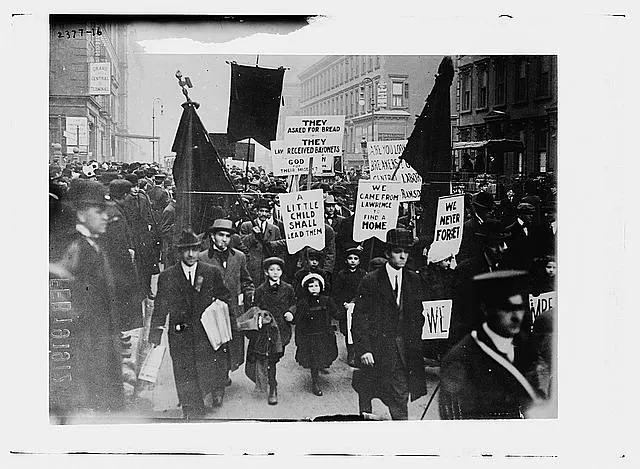
"Lawrence, Mass strikers parading in N.Y.C. 1911" by Bain News Service / Library of Congress.
The Industrial Revolution was a period of major economic and social change that began in Britain in the late 1700s and spread to other parts of the world. During this time, new machines, such as the steam engine, allowed factories to produce goods faster and at a larger scale. However, these technological advances also led to difficult and often dangerous working conditions for millions of people.
Factory work was very different from previous jobs in farming or small workshops. In early factories, employees—including men, women, and even children—worked long hours, often from sunrise to sunset or for more than 12 hours a day. The work was repetitive and exhausting, with little time for breaks. Factory owners wanted to maximize production, so they did not always consider the health or safety of their workers. For example, in textile mills in Manchester, England, in the early 1800s, children as young as eight operated heavy machinery. These children risked injury every day, as documented by government inspectors in 1832, who reported accidents involving crushed fingers and even deaths.
The conditions inside factories could be dangerous. Many buildings had poor ventilation, so dust and smoke filled the air and caused workers to develop lung diseases. In some cases, machines were not properly guarded, leading to serious injuries. According to a letter written by a factory worker in Leeds in 1833, "We work in heat and noise, and our bodies are always tired." Workers were paid very low wages, and there was little job security. Some families depended on every member, including children, to earn enough to survive.
Over time, workers began to organize to demand better treatment. They formed early labor unions—groups of workers who joined together to ask for better pay and safer conditions. In 1833, the British government passed the Factory Act, which limited the working hours of children and required factory inspections. Strikes, or organized work stoppages, also became more common. For example, in 1842, thousands of British coal miners went on strike to protest dangerous conditions and low pay. Although not all strikes were successful, these actions helped raise public awareness and pushed governments to pass more reforms.
The struggles of industrial workers in the 1800s led to important changes in laws, working hours, and safety rules. Over time, labor unions grew stronger and spread to other countries, including the United States. These changes improved the lives of millions and continue to shape workplaces today.
The fight for better working conditions during the Industrial Revolution connects to larger themes in world history, such as human rights, social change, and the impact of technology on daily life.
Interesting Fact: In 1912, thousands of textile workers in Lawrence, Massachusetts, organized a strike known as the "Bread and Roses" strike, demanding not only fair wages but also dignity and respect at work.
Where did the Industrial Revolution begin?
BritainUnited StatesFranceGermany
Who worked long hours in early factories?
Men, women, and childrenOnly menOnly childrenOnly women
What law limited children's work hours in 1833?
Factory ActLabor LawTextile ActUnion Law
Why did workers form labor unions?
To get better payTo travelTo buy goodsTo avoid work
How did factory owners increase production?
Long hours, little concern for safetyShort hours for allHiring only adultsClosing factories
What was one effect of strikes?
Increased public awarenessLess pollutionMore child laborCheaper goods
The Bread and Roses strike happened in 1912.
TrueFalse
What is a 'strike'?
A work stoppageA pay increaseA new machineA government law
Perfect For:
👩🏫 Teachers
• Reading comprehension practice
• Auto-graded assessments
• Literacy skill development
👨👩👧👦 Parents
• Reading practice at home
• Comprehension improvement
• Educational reading time
🏠 Homeschoolers
• Reading curriculum support
• Independent reading practice
• Progress monitoring
Reading Features:
📖
Reading Passage
Engaging fiction or nonfiction text
❓
Comprehension Quiz
Auto-graded questions
📊
Instant Feedback
Immediate results and scoring
📄
Printable Version
Download for offline reading
🔊
Read Aloud
Voice-over with word highlighting
Reviews & Ratings
No reviews yet. Be the first to share your experience!
Related Content
American Industrial Revolution
This World History reading passage explores the spread of the Industrial Revolution from Britain to the United States, f...
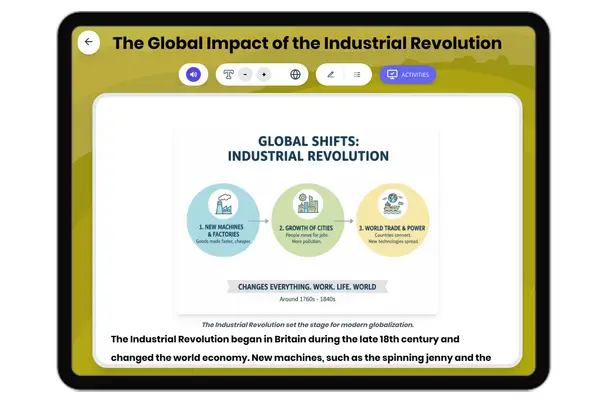
Industrial Revolution Global Impact
This world history reading passage examines the global impact of the Industrial Revolution, focusing on how industrializ...
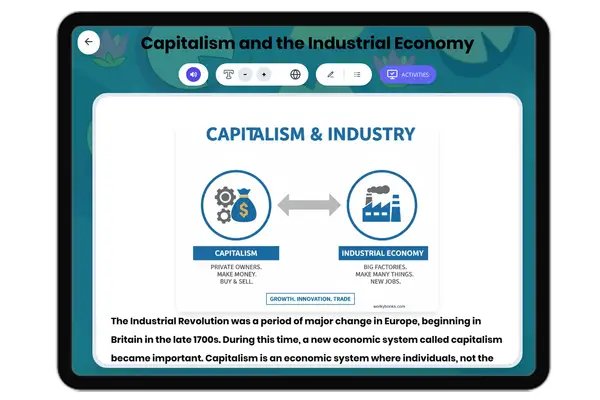
Capitalism Industrial Revolution
This engaging world history passage examines the rise of capitalism and its critical role in the Industrial Revolution. ...
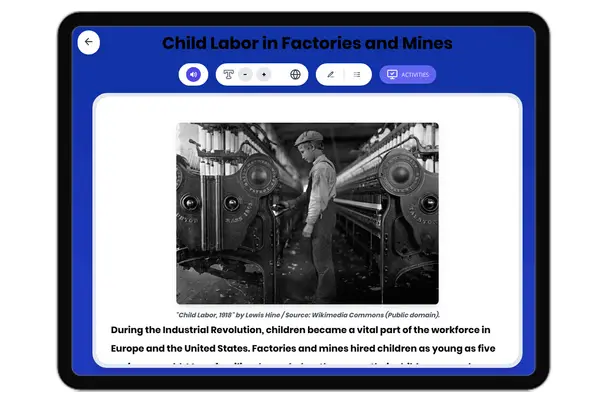
Industrial Revolution Child Labor
This rigorous world history reading passage examines the harsh reality of child labor in factories and mines during the ...
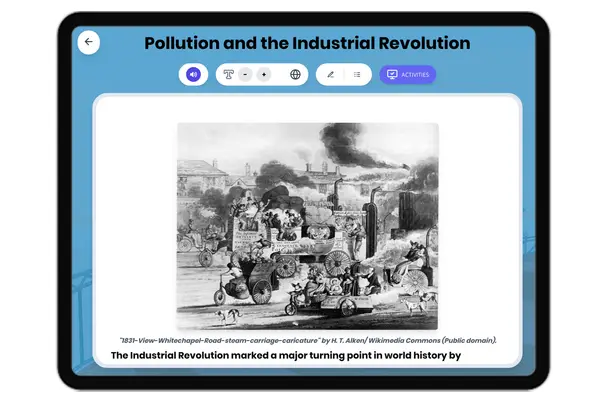
Pollution and the Industrial Revolution
This passage explores the environmental costs of industrialization during the Industrial Revolution, focusing on air and...
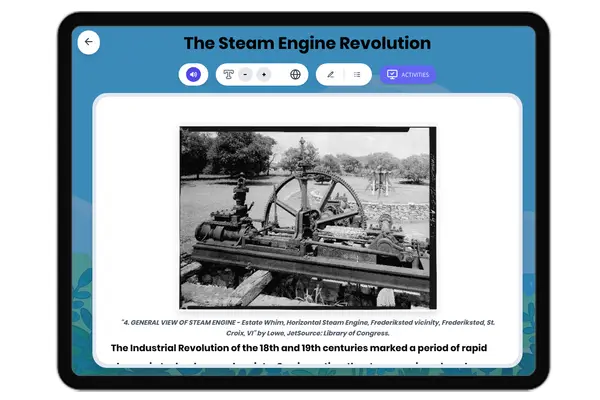
The Steam Engine Revolution
This rigorous world history passage explores the origins and impact of the steam engine during the Industrial Revolution...
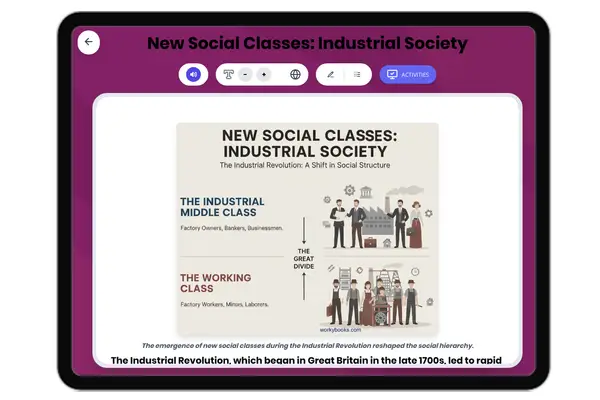
New Social Classes: Industrial Society
This reading passage examines how the Industrial Revolution led to the development of new social classes and changed the...
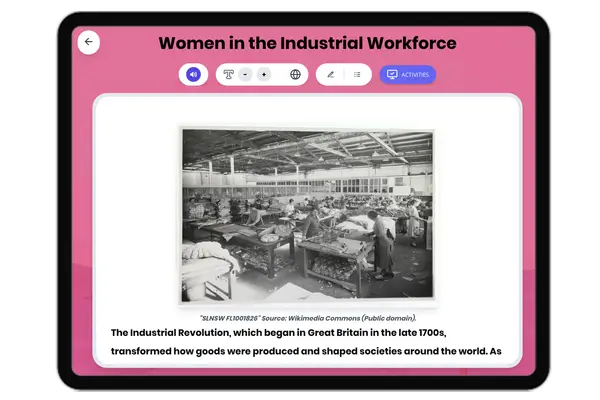
Women in the Industrial Workforce
This rigorous world history reading passage explores the key role women and girls played in the industrial workforce dur...
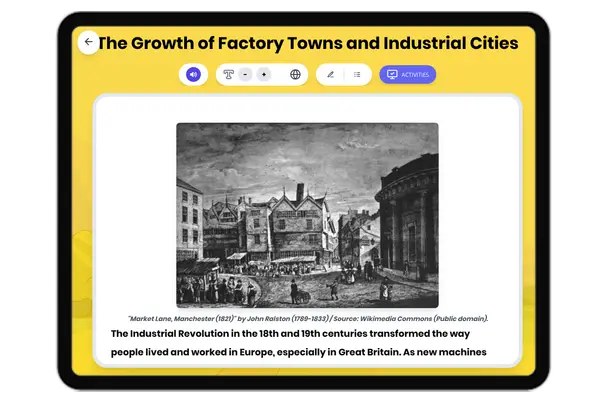
The Growth of Factory Towns and Industrial Cities
This history reading passage examines how the Industrial Revolution caused the rapid growth of factory towns and industr...
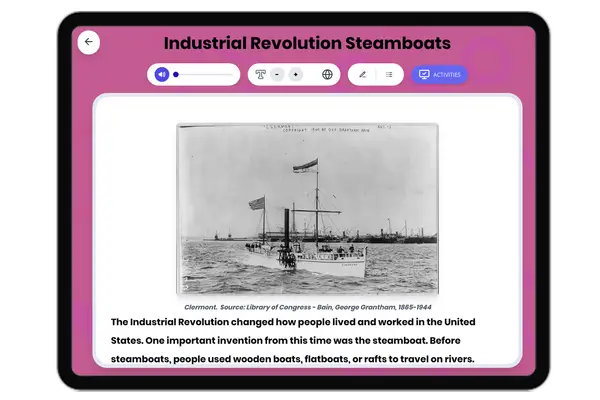
Steamboat Industrial Revolution
This engaging passage introduces students to the impact of steamboats during the Industrial Revolution in U.S. history. ...
D2.HIS.1.3-5D2.HIS.2.3-5RI.4.3RI.4.4
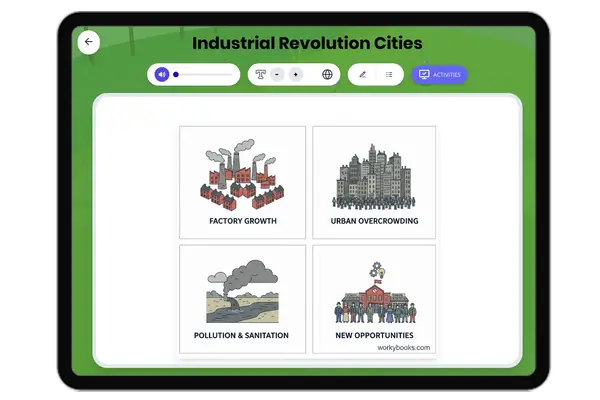
Industrial Revolution Cities
This engaging U.S. history passage explores the growth and transformation of American cities during the Industrial Revol...
D2.HIS.2.3-5D2.HIS.3.3-5RI.4.3RI.4.4
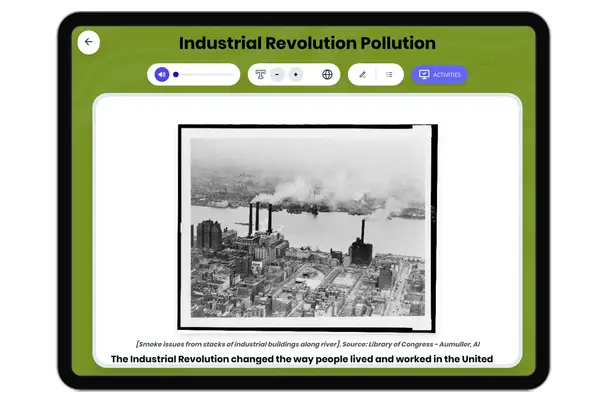
Industrial Revolution Pollution
This reading passage explores the impact of the Industrial Revolution on pollution in the United States, focusing on the...
D2.HIS.2.3-5D2.HIS.3.3-5RI.4.3RI.4.4
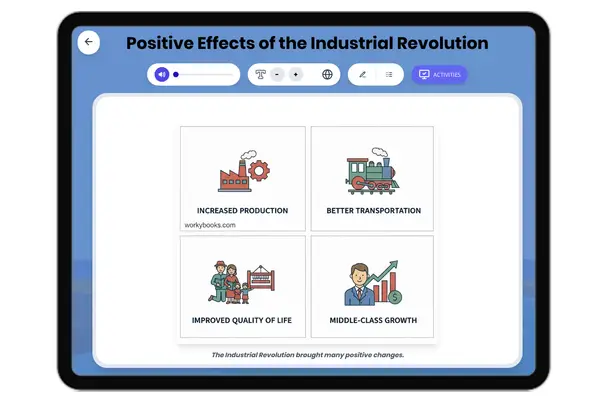
Industrial Revolution Benefits
This engaging reading passage explores the positive effects of the Industrial Revolution in the United States, highlight...
D2.HIS.3.3-5D2.HIS.14.3-5RI.4.3RI.4.4
Child Labor in the Industrial Revolution
This engaging history reading passage introduces students to the topic of child labor during the Industrial Revolution i...
D2.HIS.2.3-5D2.HIS.16.3-5RI.4.3RI.4.4
Industrial Revolution Schools
This engaging reading passage explores how schools changed during the Industrial Revolution and Progressive Era in the U...
D2.HIS.2.3-5D2.HIS.3.3-5RI.4.3RI.4.4
American Revolution Global Influence
This engaging U.S. History reading passage explores how the American Revolution influenced revolutions around the world,...
D2.HIS.2.3-5D2.HIS.3.3-5RI.4.3RI.4.4
The Industrial Revolution in America
This engaging history reading passage explores the Industrial Revolution in America, a time of great change and innovati...
D2.HIS.1-6.3-5RI.4.3RI.4.4
From Farms to Factories
This engaging passage, "From Farms to Factories," delves into the profound changes brought by the Industrial Revolution ...
Textiles Industry Revolution
This history reading passage examines how the spinning jenny, water frame, and power loom revolutionized textile product...