Capitalism Industrial Revolution
Interactive passage with audio narration, comprehension questions, and printable PDF.
What's included
Capitalism Industrial Revolution preview and details
About this printable Capitalism Industrial Revolution reading passage (Grades 5-8)
Sample passage and quiz from Capitalism Industrial Revolution
Reading passage and comprehension quiz preview
Capitalism Industrial Revolution
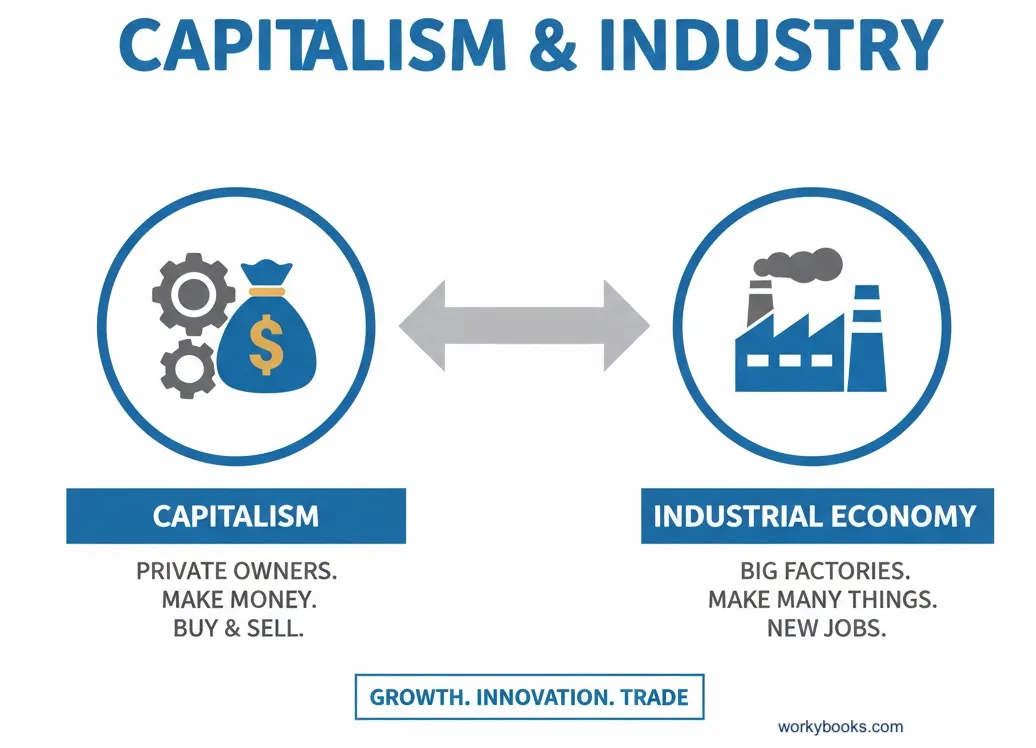
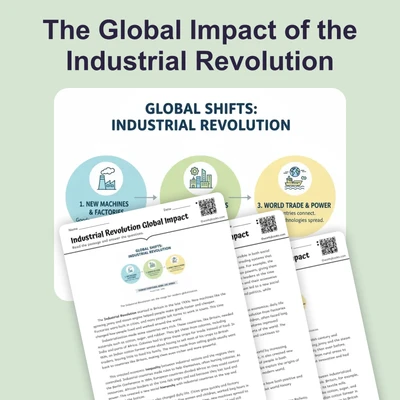
The Industrial Revolution was a period of major change in Europe, beginning in Britain in the late 1700s. During this time, a new economic system called capitalism became important. Capitalism is an economic system where individuals, not the government, own businesses and invest money to earn a profit. This system allowed people called entrepreneurs to create factories and buy machines to make goods faster. The Industrial Revolution changed how people made products, how they lived, and how societies were organized.
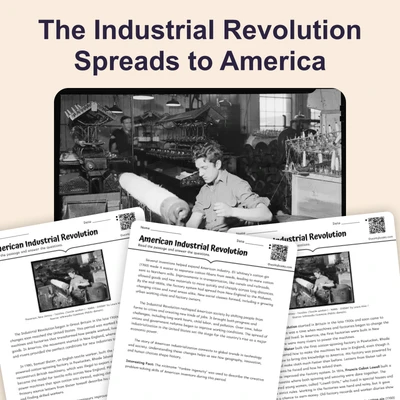
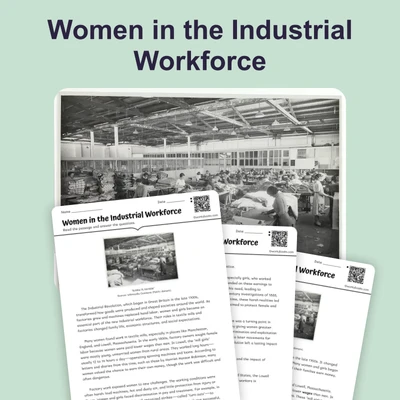
One of the first industries to use capitalism was the textile industry in Britain. Before the 1700s, most textiles were made by hand in small workshops or homes. With the rise of capitalism, investors built large factories filled with machines like the spinning jenny and the power loom. Entrepreneurs such as Richard Arkwright opened the first water-powered cotton spinning mill in 1771. These machines needed lots of workers, and many people moved from rural villages to cities for factory jobs. This movement from the countryside to cities is called urbanization. By 1850, cities like Manchester and Liverpool had grown rapidly, showing the deep impact of capitalism and industrialization on society.
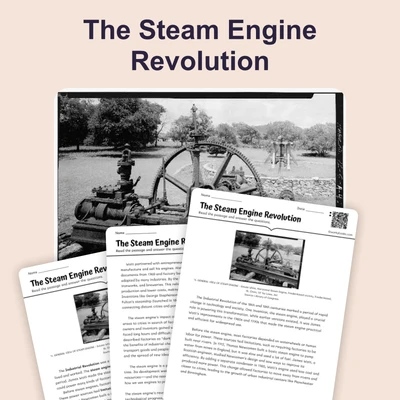
Technological innovation was crucial to the Industrial Revolution. The development of the steam engine by James Watt in the 1760s allowed factories to be built away from rivers and closer to coal mines or cities. Steam engines powered trains, ships, and machines, making transportation and production much faster. Capitalism encouraged people to invest in these new technologies because they could make more money by producing and selling more goods. Factory owners competed to lower costs and increase profits, which led to even more rapid innovation and growth.
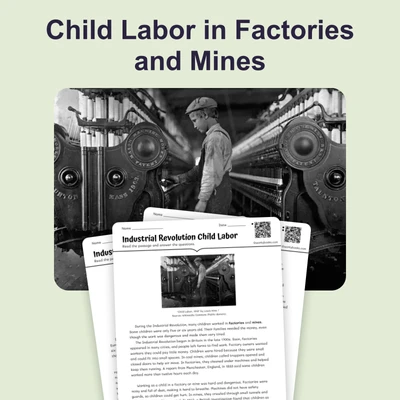
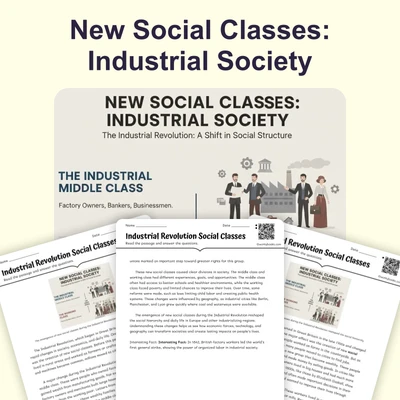
The rise of capitalism and the industrial economy had both positive and negative effects. On one hand, it led to increased production, new inventions, and greater wealth for some people. Factory jobs gave many workers steady pay, but working conditions were often harsh, with long hours and low wages. Social classes changed, as a new middle class of business owners and skilled workers emerged. At the same time, poor working conditions led to labor movements, where workers demanded better treatment. Primary sources from the time, such as factory rules from 1844 or diaries of child workers, show both the hopes and hardships of life in industrial cities.
Overall, capitalism helped drive the Industrial Revolution, which transformed economies and societies across the globe. The changes that began in Britain spread to Europe, the United States, and beyond. Understanding the relationship between capitalism and industrialization helps us see how economic systems shape people's lives and the course of world history.
Interesting Fact: The first successful steam-powered locomotive, George Stephenson's "Rocket," was built in 1829 and revolutionized railway travel.
Comprehension quiz (8 questions)
1. Who developed the improved steam engine?
2. What year was the first water-powered mill opened?
3. Where did the Industrial Revolution begin?
4. Why did people move to cities?
5. What is urbanization?
6. How did capitalism affect invention?
7. The Rocket was a steam train. True or false?
8. What does 'entrepreneur' mean?
Perfect for the way you teach
- Build comprehension skills
- Auto-graded quiz
- Differentiated reading
- Read together at home
- Improve fluency
- Quiet reading time
- Reading curriculum support
- Independent practice
- Track Lexile growth