Industrial Revolution Global Impact
Interactive passage with audio narration, comprehension questions, and printable PDF.
By completing this purchase you agree to our Terms of Use and Privacy Policy. Your subscription renews automatically until you cancel. You can cancel anytime from your account settings. All sales are final and non-refundable. Digital content is available for download in your account immediately upon purchase.
What's included
Industrial Revolution Global Impact preview and details
About this printable Industrial Revolution Global Impact reading passage (Grades 5-8)
Sample passage and quiz from Industrial Revolution Global Impact
Reading passage and comprehension quiz preview
Industrial Revolution Global Impact
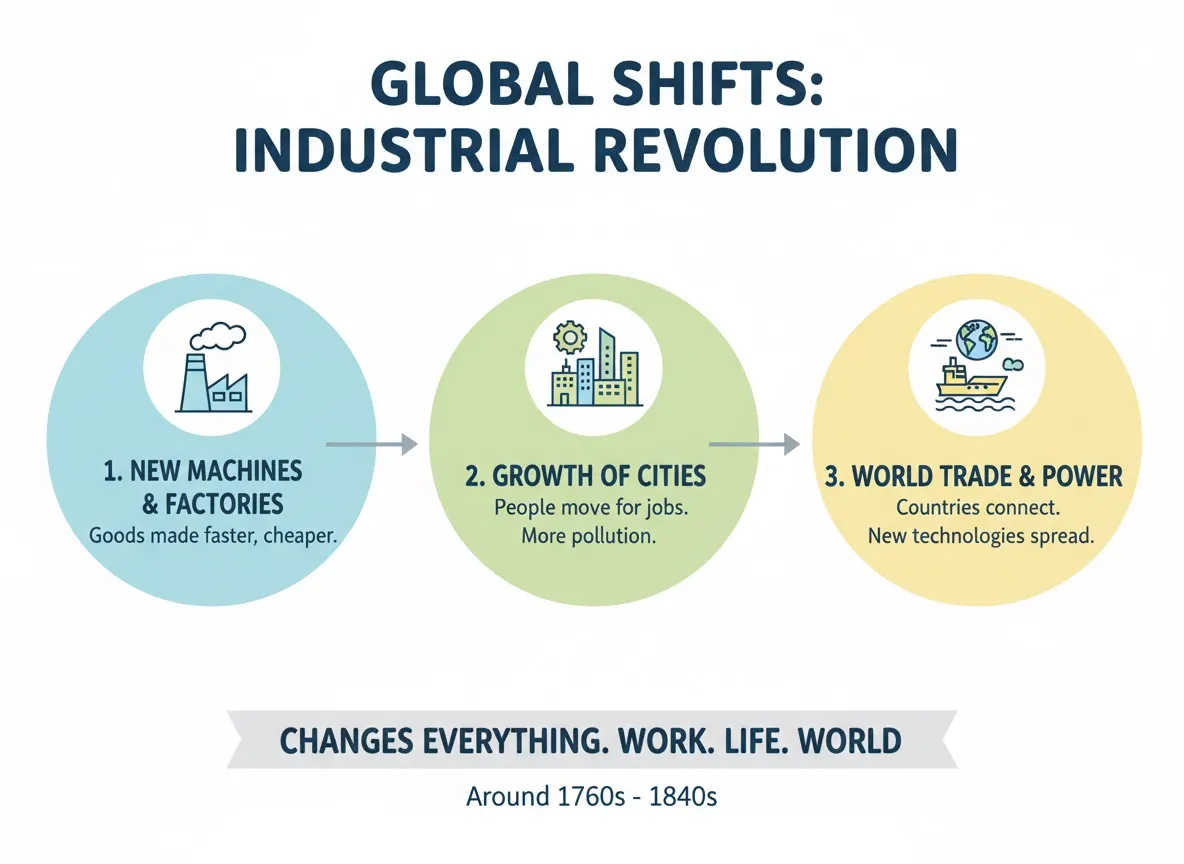
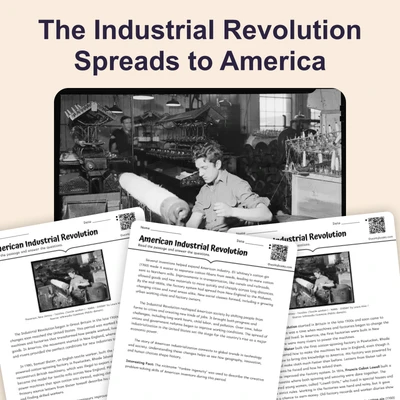
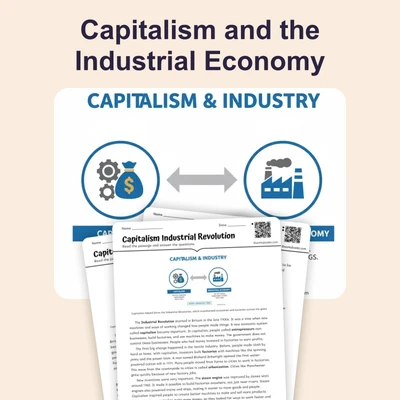
The Industrial Revolution began in Britain during the late 18th century and changed the world economy. New machines, such as the spinning jenny and the steam engine, allowed goods to be produced faster and more cheaply than ever before. Factories grew in cities like Manchester, and workers moved from rural areas to urban centers in search of jobs. This era was marked by great innovation and had far-reaching effects on societies around the globe.
The spread of industrialization created a sharp divide between industrialized nations and the colonies that provided them with raw materials. Britain, for example, imported cotton from India and the American South to supply its textile mills. Colonized regions often had to focus on growing cash crops like cotton, sugar, and rubber, rather than food for local people. A letter from an Indian cotton farmer in 1834 described how local farmers were forced to sell most of their crop to British traders, making it difficult to feed their families. Meanwhile, the profits from manufacturing went back to Britain and other industrialized countries, increasing their wealth and power.
The economic inequality created by industrialization was visible in both social and political structures. Industrialized countries established trading systems that benefited themselves, often at the expense of colonized regions. For example, the Berlin Conference of 1884-1885 divided Africa among European powers, giving them control over natural resources. Primary sources from African leaders at the time reveal feelings of frustration and loss as their land was taken and their economies were reshaped to serve European industries. This global system led to a new social hierarchy, where industrial nations dominated world trade and politics, while colonized peoples had fewer rights and opportunities.
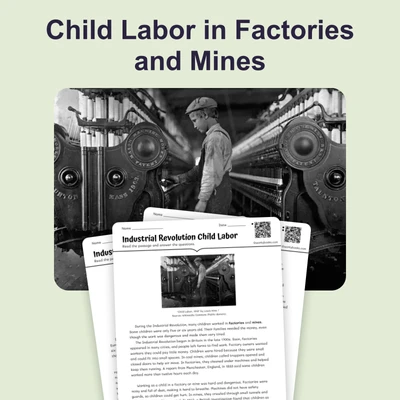
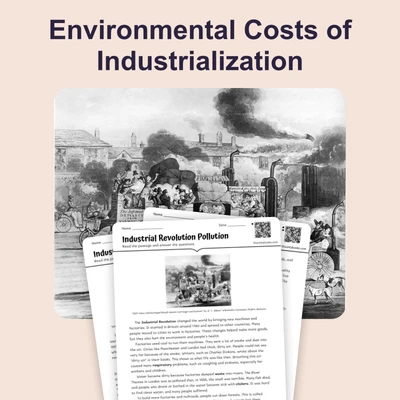
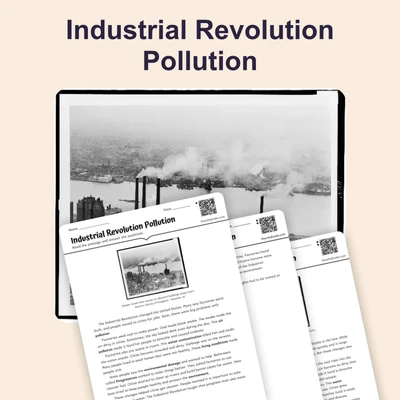
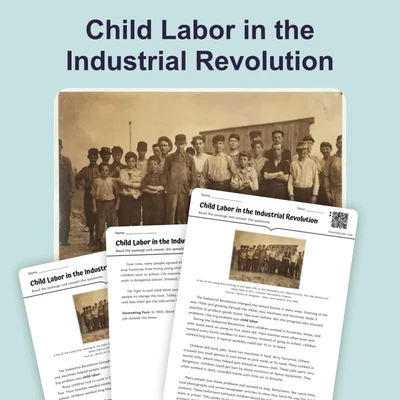
The effects of the Industrial Revolution were not limited to economics; daily life and the environment also changed. Cities grew rapidly, and pollution from factories became a serious problem. Workers, including women and children, often faced long hours and dangerous conditions. However, over time, some reforms improved working conditions, and new technologies spread to other parts of the world. The Industrial Revolution set the stage for modern globalization and continues to influence economic relationships between countries today.
In conclusion, the Industrial Revolution transformed the world by increasing production and connecting distant regions through trade. Yet, it also created new forms of economic inequality and shaped the lives of millions of people in both industrial and colonized societies. Understanding this era helps explain the origins of many challenges and opportunities that countries face in the modern world.
The Industrial Revolution shows how technological change can have both positive and negative effects on societies, a theme that appears throughout world history courses.
Interesting Fact: The first public steam railway, the Stockton and Darlington Railway, opened in England in 1825 and carried both passengers and coal, marking a key development in transportation.
Comprehension quiz (8 questions)
1. Where did the Industrial Revolution begin?
2. Which machine helped speed up textile production?
3. What did the Berlin Conference do?
4. Why did colonized regions grow cash crops?
5. How did industrialization affect cities?
6. What was a negative effect of factories?
7. The Industrial Revolution led to economic inequality. True or false?
8. What does 'hierarchy' mean in the passage?
Perfect for the way you teach
- Build comprehension skills
- Auto-graded quiz
- Differentiated reading
- Read together at home
- Improve fluency
- Quiet reading time
- Reading curriculum support
- Independent practice
- Track Lexile growth