From Farms to Factories
Interactive passage with audio narration, comprehension questions, and printable PDF.
By completing this purchase you agree to our Terms of Use and Privacy Policy. Your subscription renews automatically until you cancel. You can cancel anytime from your account settings. All sales are final and non-refundable. Digital content is available for download in your account immediately upon purchase.
What's included
From Farms to Factories preview and details
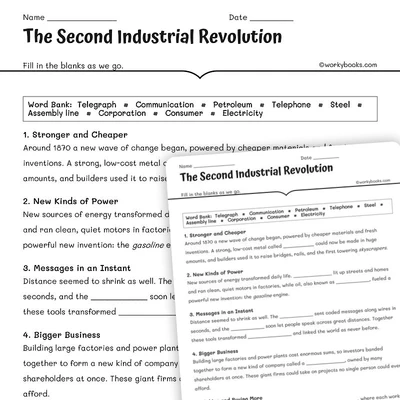
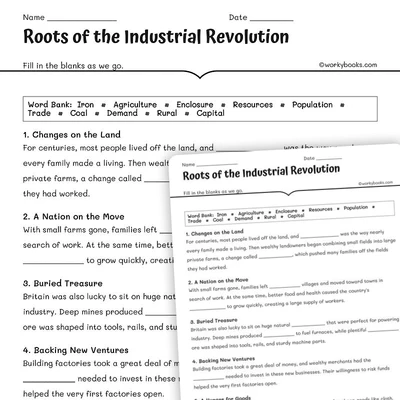
About this printable From Farms to Factories reading passage (Grades 5-8)
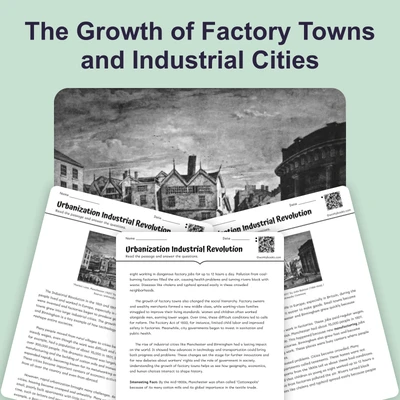
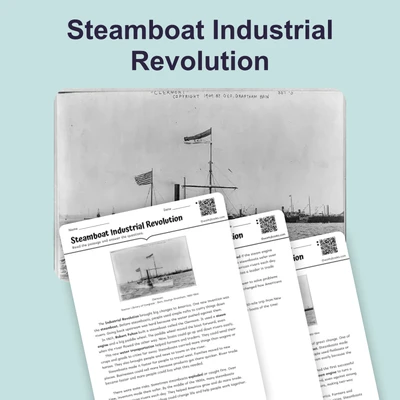
Sample passage and quiz from From Farms to Factories
Reading passage and comprehension quiz preview
From Farms to Factories
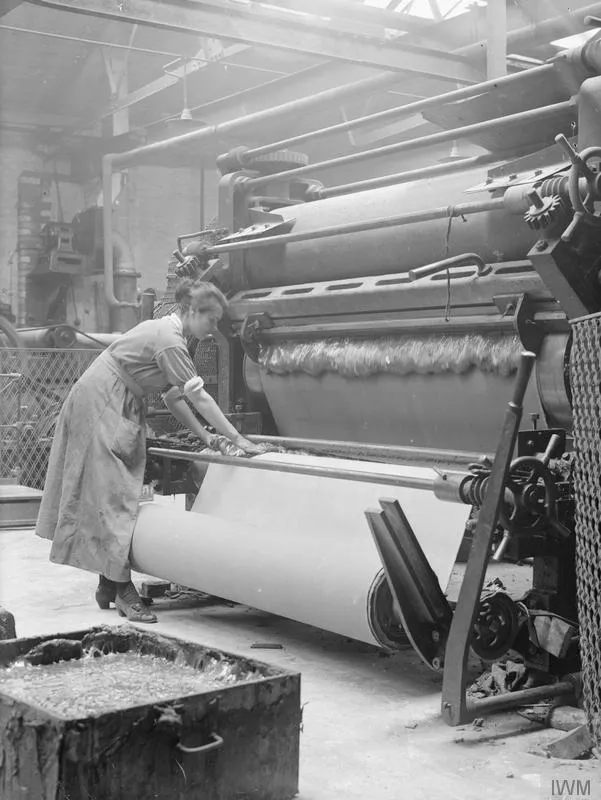
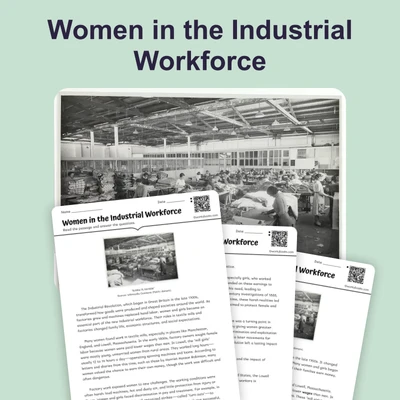
"The Employment of Women in Britain, 1914-1918 Q28230" by George P. Lewis /
Source: Wikimedia Commons (Public domain).
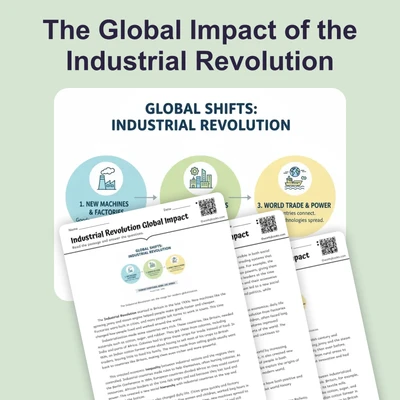
The Industrial Revolution began in Great Britain in the late 1700s and quickly spread to other countries. This period marked a turning point in world history, as people left rural areas to work in urban factories. New technologies, like the steam engine and spinning jenny, changed the way goods were produced and transported. These innovations led to the development of large cities and changed family life forever.
Before the Industrial Revolution, most people lived in small villages and worked as farmers. Families grew their own food and made clothing by hand. Life was shaped by the seasons and local traditions. With the invention of new machines, such as James Watt’s improved steam engine in 1776, factories could now use mechanization to produce goods faster and more efficiently. For example, the spinning jenny, invented by James Hargreaves in 1764, allowed workers to spin many threads at once. This increased production and reduced the need for skilled hand spinners.
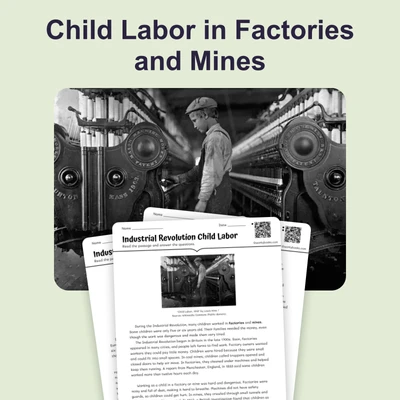
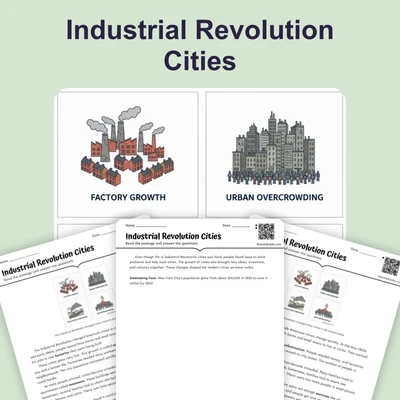
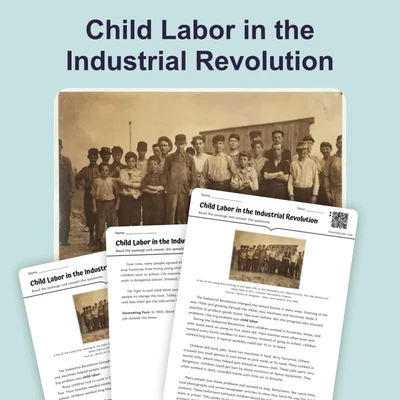
The growth of factories created new job opportunities, drawing people from the countryside into rapidly expanding cities like Manchester and Liverpool. Urbanization brought both benefits and challenges. While factory jobs provided regular wages, the work was often difficult and dangerous. Many families lived in crowded tenements with poor sanitation. Child labor was common, as children as young as eight worked long hours alongside adults. Historical records, such as parliamentary investigations from 1832, describe children working 12-hour days in cotton mills. Factory owners, sometimes called industrialists, became wealthy, while workers often faced harsh conditions.
The Industrial Revolution also changed family roles and daily routines. In rural areas, families worked together, but in the city, men, women, and children often worked in different factories. This shift led to new social hierarchies and class divisions. Some people welcomed the new opportunities, while others struggled with the loss of traditional ways of life. The growth of railroads, such as the Liverpool and Manchester Railway in 1830, made it easier for goods and people to move between cities, further accelerating change.
This transformation had a lasting impact on society. The move from farms to factories helped create the modern industrial world, but it also raised questions about workers’ rights and the environment. The Industrial Revolution’s legacy can still be seen today in the way cities are organized and how people work. Understanding these changes helps us see how human innovation and adaptation shape our world.
Interesting Fact: The first photograph of a factory, taken in 1835, shows rows of power looms and hundreds of workers, giving historians a glimpse into early industrial life.
Comprehension quiz (8 questions)
1. Where did the Industrial Revolution begin?
2. What invention did James Watt improve?
3. Which city grew quickly due to factories?
4. Why did families move to cities?
5. What was one effect of mechanization?
6. How did the Industrial Revolution affect families?
7. The spinning jenny was invented in 1764. True or false?
8. What does 'urbanization' mean?
Perfect for the way you teach
- Build comprehension skills
- Auto-graded quiz
- Differentiated reading
- Read together at home
- Improve fluency
- Quiet reading time
- Reading curriculum support
- Independent practice
- Track Lexile growth