Pollution and the Industrial Revolution
Interactive passage with audio narration, comprehension questions, and printable PDF.
What's included
Pollution and the Industrial Revolution preview and details
About this printable Pollution and the Industrial Revolution reading passage (Grades 5-8)
Sample passage and quiz from Pollution and the Industrial Revolution
Reading passage and comprehension quiz preview
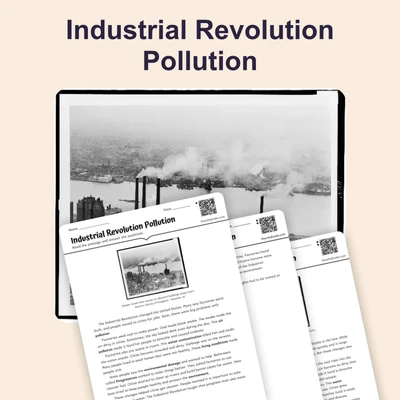
Industrial Revolution Pollution
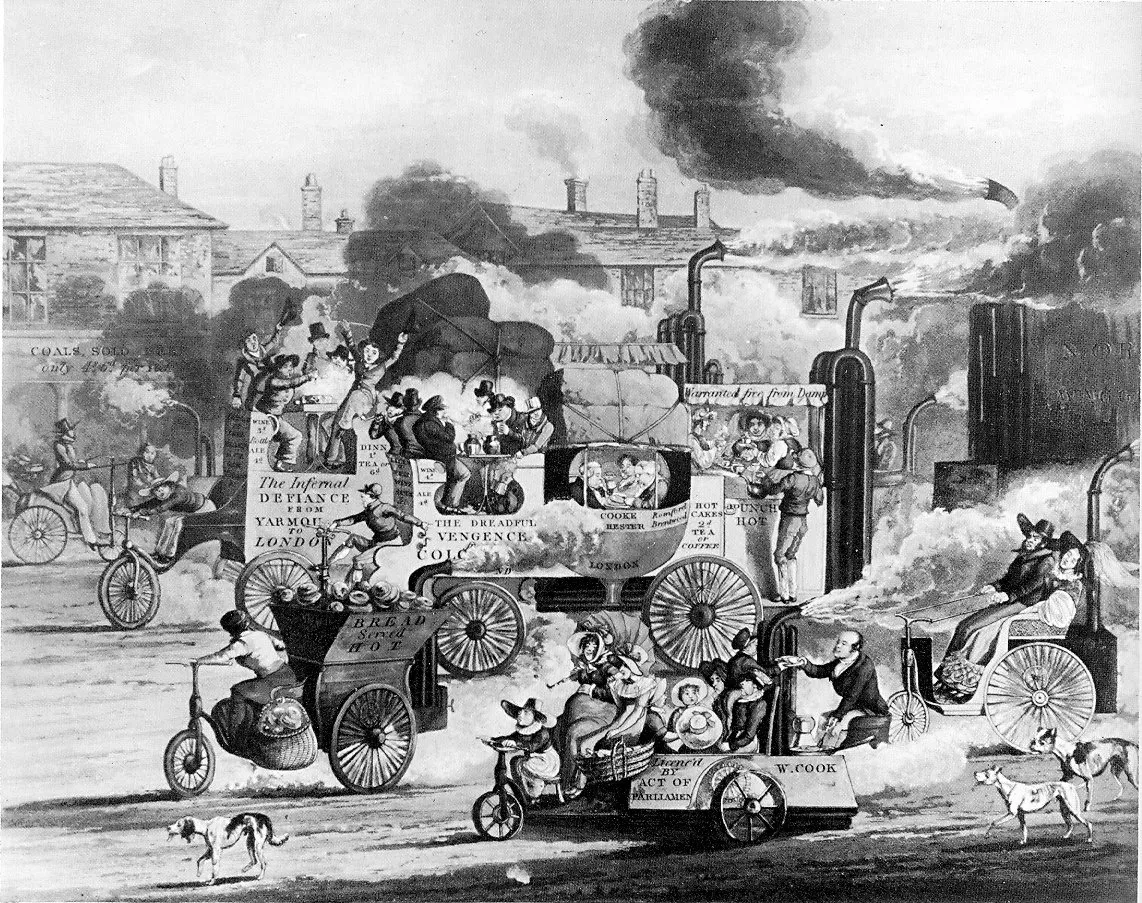
"1831-View-Whitechapel-Road-steam-carriage-caricature" by H. T. Alken/ Wikimedia Commons (Public domain).
The Industrial Revolution marked a major turning point in world history by introducing new machines and methods of production. Beginning in Britain in the late 18th century, this era saw the rise of factories, mass production, and urban growth. While these changes led to increased goods and economic development, they also resulted in significant environmental costs that shaped daily life for millions of people.
Factories powered by coal released large amounts of smoke and soot into the air. In cities like Manchester and London, thick clouds of pollution often blocked the sunlight. Reports from the 1840s describe how people could barely see a few feet ahead due to heavy smog. The famous English writer Charles Dickens wrote about the "blackened air" and dirty streets in his novels, providing primary sources that help historians understand the living conditions of the time. This pollution was not only unpleasant, but also dangerous. Fine particles and chemicals in the air caused respiratory problems, such as asthma and bronchitis, especially among factory workers and children.
Water pollution was another major issue. Factories dumped waste and chemicals directly into rivers and streams. The River Thames in London became so polluted that in 1858, the smell was so bad it became known as the "Great Stink." Archaeological findings and city records show that fish died, and people who drank or bathed in the water often became ill with cholera and other diseases. Clean water became scarce, and public health suffered greatly.
Industrialization also led to rapid deforestation. To build factories, railroads, and homes, forests were cleared at a fast pace. This changed the landscape and reduced animal habitats. Without enough trees to absorb carbon dioxide, air quality worsened. The loss of green spaces also made cities hotter and less pleasant to live in. Maps and paintings from the time show how countryside areas were replaced by factories and smoke stacks.
These environmental changes affected social hierarchy and daily life. Wealthy factory owners often lived in cleaner suburbs, while poor workers lived close to polluted sites. Over time, people began to demand reforms. By the late 19th century, some governments passed laws to reduce pollution and improve public health, showing a growing awareness of the need to protect the environment.
The environmental costs of industrialization show how technological progress can bring both benefits and challenges. Understanding these impacts helps explain why environmental protection remains important today, linking past choices to modern debates about industry and nature.
Interesting Fact: In 19th-century London, some people used special cloths called "smog masks" to cover their mouths and noses when walking outside during heavy pollution.
Comprehension quiz (8 questions)
1. When did the Industrial Revolution begin?
2. Which city had the 'Great Stink'?
3. Who wrote about 'blackened air' in novels?
4. What caused urban air pollution?
5. Why did deforestation increase?
6. How did pollution affect the poor?
7. The Industrial Revolution improved air quality.
8. What is 'deforestation'?
Perfect for the way you teach
- Build comprehension skills
- Auto-graded quiz
- Differentiated reading
- Read together at home
- Improve fluency
- Quiet reading time
- Reading curriculum support
- Independent practice
- Track Lexile growth