Are All Stars the Same
Interactive passage with audio narration, comprehension questions, and printable PDF.
By completing this purchase you agree to our Terms of Use and Privacy Policy. Your subscription renews automatically until you cancel. You can cancel anytime from your account settings. All sales are final and non-refundable. Digital content is available for download in your account immediately upon purchase.
What's included
Are All Stars the Same preview and details
About this printable Are All Stars the Same science reading passage, NGSS-aligned (Grades 5-8)
Sample passage and quiz from Are All Stars the Same
Reading passage and comprehension quiz preview
Are All Stars the Same
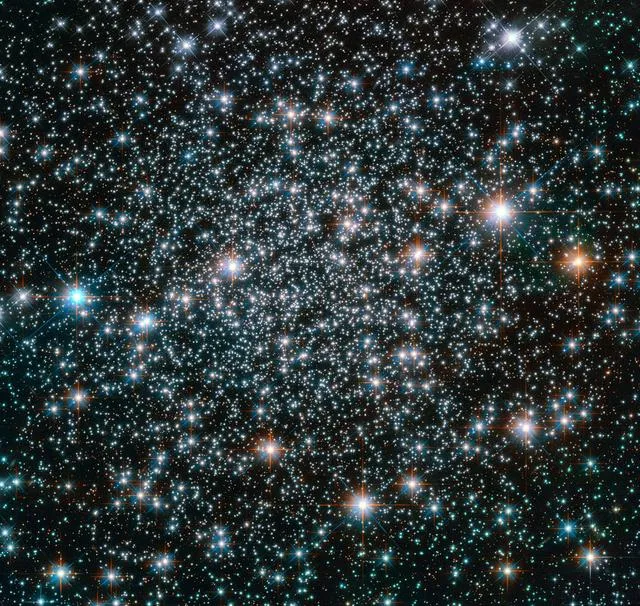
Are all stars the same? The answer is no. Stars differ greatly from one another in many important ways. When you look at the night sky, stars may appear similar. However, scientists have discovered that stars vary enormously in size, temperature, color, brightness, and lifespan.
Stars come in many different sizes. Some stars, called red dwarfs, are much smaller than our Sun. Red dwarfs can be only one-tenth the Sun's size. These small stars burn their fuel very slowly. Evidence shows that red dwarfs can shine for trillions of years. On the other end, blue giants are massive stars that can be hundreds of times larger than the Sun. These enormous stars burn extremely hot and bright.
Temperature and color are closely connected in stars. Scientists observe that hotter stars appear blue or white. Cooler stars glow red or orange. A star's surface temperature determines its color. Blue giants can reach temperatures over 30,000 degrees Celsius. Red dwarfs may have surface temperatures around 3,000 degrees Celsius. Our Sun, a yellow star, has a surface temperature of about 5,500 degrees Celsius.
Star brightness, or luminosity, also varies dramatically. A star's brightness depends on both its size and temperature. Large, hot stars shine much brighter than small, cool stars. Some stars can be millions of times brighter than others. Distance from Earth also affects how bright a star appears to us.
Stars have very different lifespans based on their mass. Massive blue stars live fast and die young. These stars may exist for only a few million years before exploding as supernovas. Medium-sized stars like our Sun can shine for about 10 billion years. Small red dwarfs burn so slowly they can last for trillions of years.
Stars can end their lives in different ways. Some stars explode violently in supernovas. Others may collapse into incredibly dense objects called neutron stars or black holes. Some stars pulse regularly, changing brightness in predictable patterns. Scientists study these different stellar behaviors to understand how stars form, live, and die.
Understanding star diversity helps scientists explain the universe. Our Sun is just one type of star among billions. It is a medium-sized, yellow star with an average temperature and brightness. Recognizing that stars vary helps us appreciate the complexity of space and how different stellar processes shape galaxies.
Interesting Fact: The largest known star, UY Scuti, is so enormous that if placed at the center of our solar system, its surface would extend beyond Jupiter's orbit. This red supergiant is about 1,700 times larger than our Sun!
Comprehension quiz (10 questions)
1. According to the passage, what is the main reason stars are NOT all the same?
2. How do red dwarfs differ from blue giants in terms of lifespan?
3. What does the term 'luminosity' mean in the context of stars?
4. Based on the passage, what determines a star's color?
5. Why do massive blue stars have shorter lifespans than red dwarfs?
6. If scientists discover a star that appears orange in color, what can they infer about its temperature?
7. How does understanding star diversity help scientists?
8. What might happen to a massive star at the end of its life?
9. True or False: All stars appear the same when viewed from Earth.
10. True or False: Our Sun is considered a medium-sized star with average temperature and brightness.
Perfect for the way you teach
- Build comprehension skills
- Auto-graded quiz
- Differentiated reading
- Read together at home
- Improve fluency
- Quiet reading time
- Reading curriculum support
- Independent practice
- Track Lexile growth