What Can We See in the Night Sky?
Interactive passage with audio narration, comprehension questions, and printable PDF.
By completing this purchase you agree to our Terms of Use and Privacy Policy. Your subscription renews automatically until you cancel. You can cancel anytime from your account settings. All sales are final and non-refundable. Digital content is available for download in your account immediately upon purchase.
What's included
What Can We See in the Night Sky? preview and details
About this printable What Can We See in the Night Sky? science reading passage, NGSS-aligned (Grades 5-8)
Sample passage and quiz from What Can We See in the Night Sky?
Reading passage and comprehension quiz preview
What Can We See in the Night Sky?
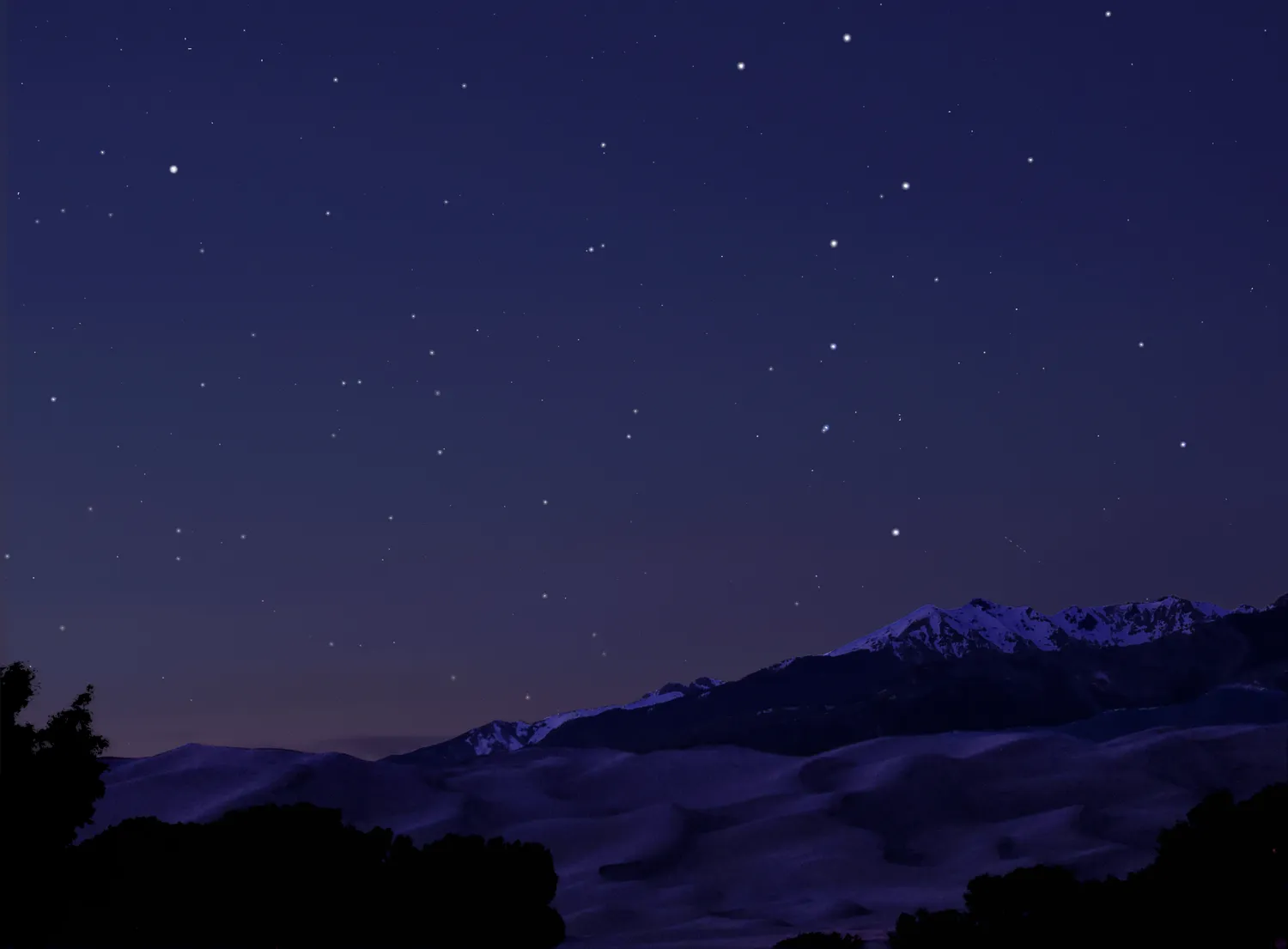
Big Dipper over Dunes and Cleveland Peak by Great Sand Dunes National Park and Preserve / Wikimedia Commons (Public domain).
The night sky is a complex, ever-changing system that offers clues about Earth's place in the universe. Each night, observers can see a variety of objects, such as stars, planets, the Moon, satellites, and sometimes the International Space Station or meteors streaking across the sky. Understanding what we see depends on knowing how Earth's rotation and other factors influence our view. Scientists study these patterns to unlock mysteries about space and time.
Apparent Motion and Patterns in the Sky
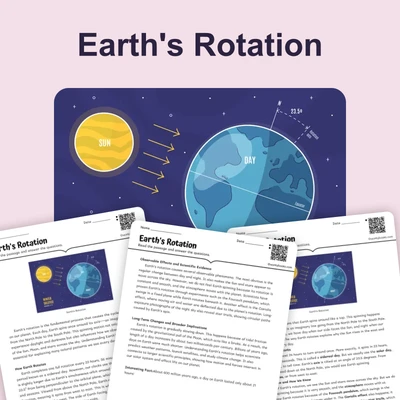
Earth rotates once every 24 hours, causing the sky to appear to move. As a result, most stars rise in the east and set in the west, a movement called apparent motion. This is not because the stars are moving, but because Earth is spinning. Some stars, known as circumpolar stars, appear to circle the celestial pole and never set. For example, in the Northern Hemisphere, the Big Dipper is a well-known circumpolar asterism. The concept of the celestial sphere helps astronomers map these objects: it is an imaginary sphere surrounding Earth, with all celestial objects projected onto its surface. The sky is divided into 88 official constellations, each representing a pattern of stars.
Cultural Significance and Observation Challenges
Different cultures identify unique patterns in the sky. For example, the Greeks saw Orion as a hunter, while Native American stories often describe the same stars differently. Constellations have been crucial for navigation, creating calendars, and sharing myths. However, light pollution—artificial light from cities—makes it harder to see stars. In fact, about 80% of people in North America cannot see the Milky Way from their homes. Dark sky preserves are areas where lights are controlled to protect night views for science and enjoyment. Best viewing occurs on clear, moonless nights, away from city lights.
Observing the Night Sky: Methods and Interactions
To get the most from observing, let your eyes adjust to the dark for at least 20 minutes. Use a red flashlight to avoid losing night vision. Star charts or astronomy apps can help identify objects. Sometimes, you may see satellites moving steadily, or the International Space Station shining brightly as it orbits Earth. Meteors appear briefly as streaks of light. The interaction of Earth's motion, atmospheric conditions, and human technology shapes what we see and how we interpret it. These observations help scientists make discoveries about our universe.
The night sky is a dynamic system shaped by Earth's movements, cultural perspectives, and technology. By understanding its patterns and challenges, we deepen our knowledge of astronomy and our place in the cosmos.
Interesting Fact: On a clear, dark, moonless night, a person with good eyesight can see about 2,500 stars without a telescope.
Comprehension quiz (10 questions)
1. What causes the stars to appear to move across the night sky?
2. Which of the following is a circumpolar star pattern in the Northern Hemisphere?
3. Why are dark sky preserves important?
4. What is the celestial sphere?
5. What is the main reason people in cities see fewer stars?
6. What does the word 'constellations' mean in this passage?
7. What does 'apparent motion' refer to?
8. If you want to see more stars, what should you do?
9. True or False: The Big Dipper is an official constellation.
10. True or False: Meteors can appear as quick streaks of light in the night sky.
Perfect for the way you teach
- Build comprehension skills
- Auto-graded quiz
- Differentiated reading
- Read together at home
- Improve fluency
- Quiet reading time
- Reading curriculum support
- Independent practice
- Track Lexile growth